





Antique Brass Vases
These antique brass vases range from nineteenth-century church vessels to Japanese cloisonné pieces, offering solid metalwork and varied decorative styles for your home.
Antique Brass Vases
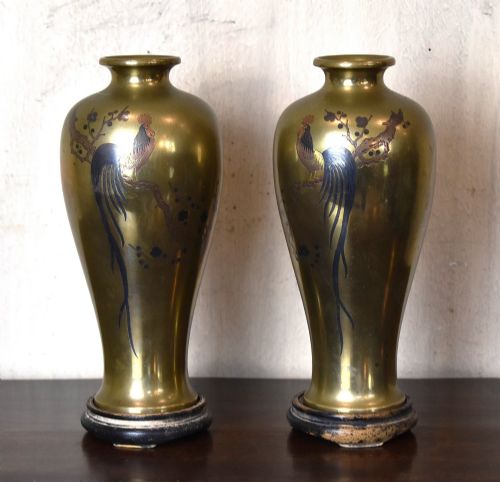
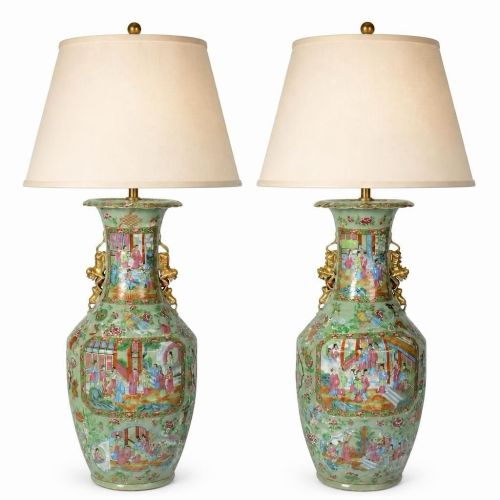
When you search for antique brass vases, you encounter decorative vessels, church furnishings, and urns shaped by nineteenth-century and early twentieth-century makers. The versions most commonly met on this page include pairs of twin-handled vessels, small cast pieces, and items adapted into table lamps.
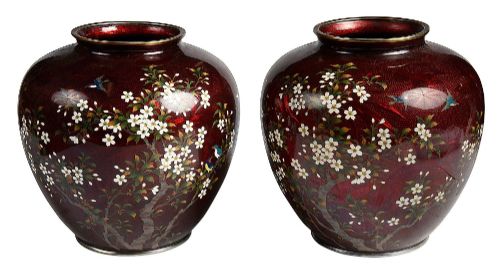
The selection encompasses diverse stylistic influences, including Chinese export pieces, Japanese Meiji period enamelwork, and European Grand Tour souvenirs. Formats stretch from miniature receptacles to monumental baluster shapes and wall pockets.
Many of these objects originate from domestic European settings, French chateaux, or East Asian workshops, reflecting utilitarian church use as well as purely decorative display. Their survival demonstrates the enduring appeal of heavy metalwork in interior decoration.
How they were made
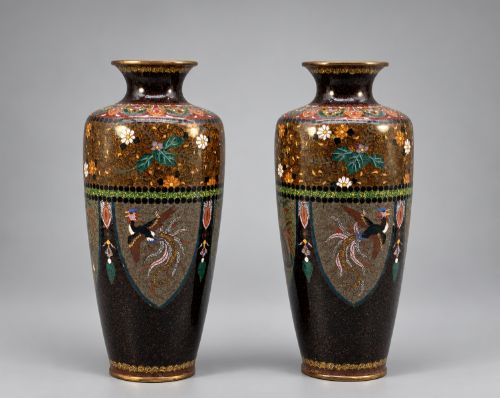
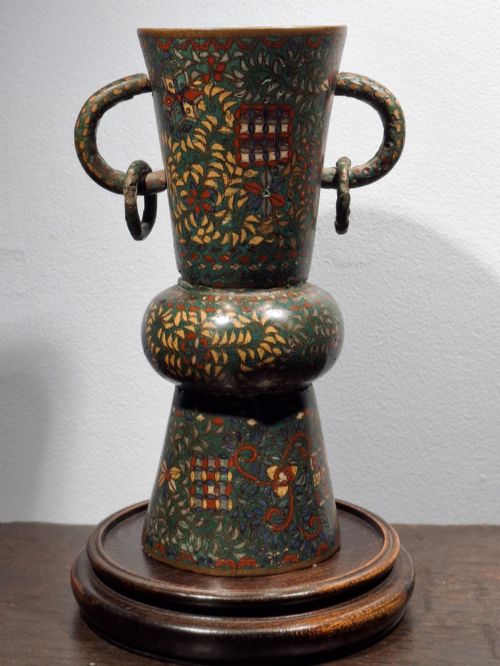
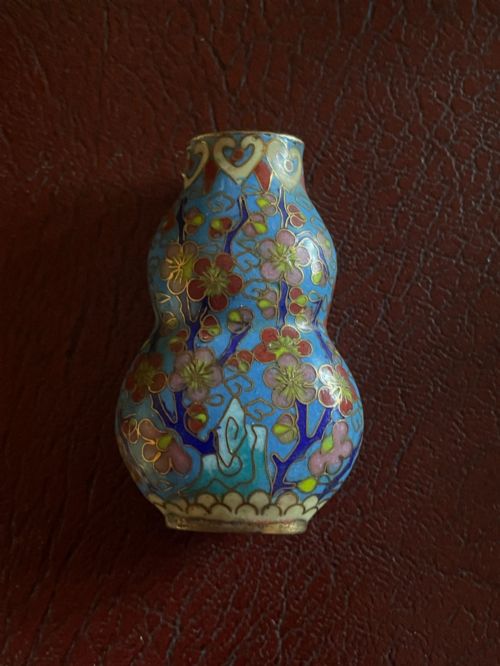
Makers utilised casting, hammering, and piercing techniques to shape the primary metal body, often combining brass with copper, bronze, or gilt bronze. Surface enrichment frequently involved champlevé or cloisonné enamel work, incorporating porcelain, marble, or glass elements.
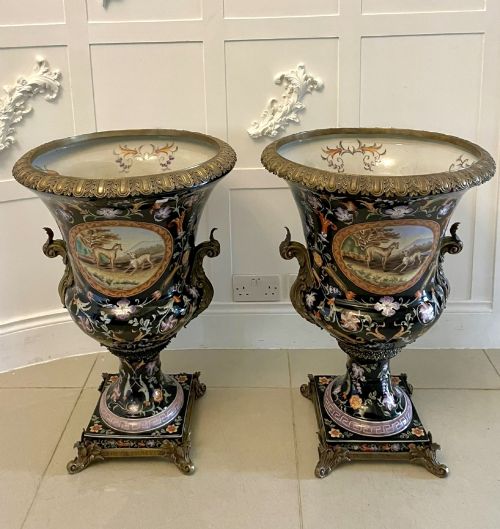
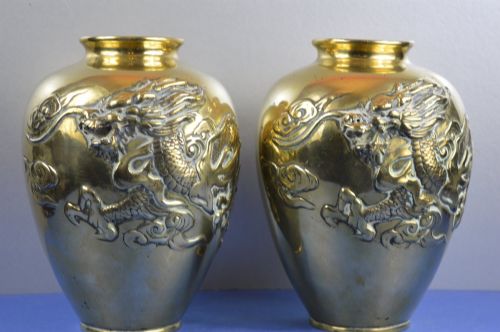
Detailing on these pieces relies on chased floral motifs, high-relief figural casting, and applied mounts. Many surviving examples integrate mixed media, binding metal frames to ceramic bodies or stone plinths.
Antique Brass Vases Retail Price Guide 2026
Typical asking prices for brass vases among the pieces listed under this phrase on Sellingantiques today, from the lower quarter to the upper quarter. They describe what is for sale here now, not the wider market.
Listings feature items spanning the eighteenth, nineteenth, and early twentieth centuries, incorporating brass, porcelain, enamel, marble, and bronze.
What varies in quality
The distinction between standard production and superior work lies in the crispness of the cast detail and the depth of the chased or enameled decoration. Heavier metal gauge and intricate hand-finished elements separate finer pieces from simpler utilitarian items.
Integration of mixed materials, such as well-fitted porcelain inserts or substantial marble bases, indicates higher workshop standards. The precision of applied handles and the complexity of surface patterns further distinguish exceptional examples.
The Antique Brass Vases Glossary
- Champlevé
- Enamelling technique where troughs are gouged into the metal surface and filled with vitreous enamel before firing. This method creates bold coloured patterns flush with the metal partitions.
- Cloisonné
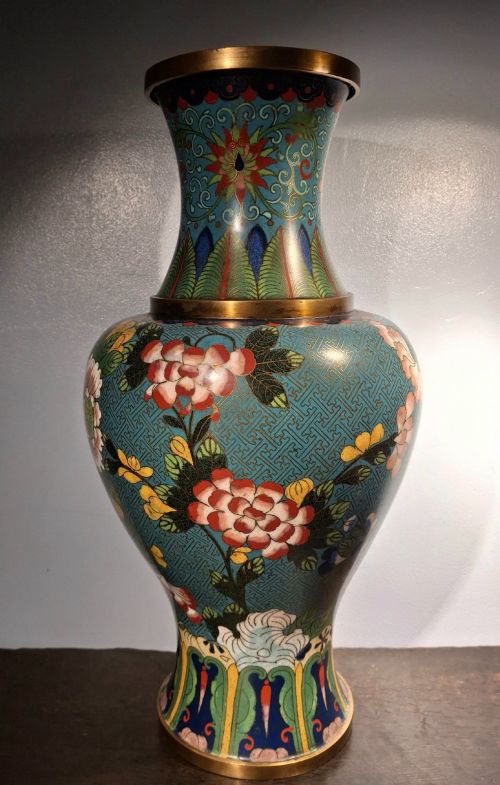
- Decorative work where metal wires are soldered to the base to form compartments filled with enamel paste. These wire boundaries keep distinct colours separated during the firing process.
- Campana urn
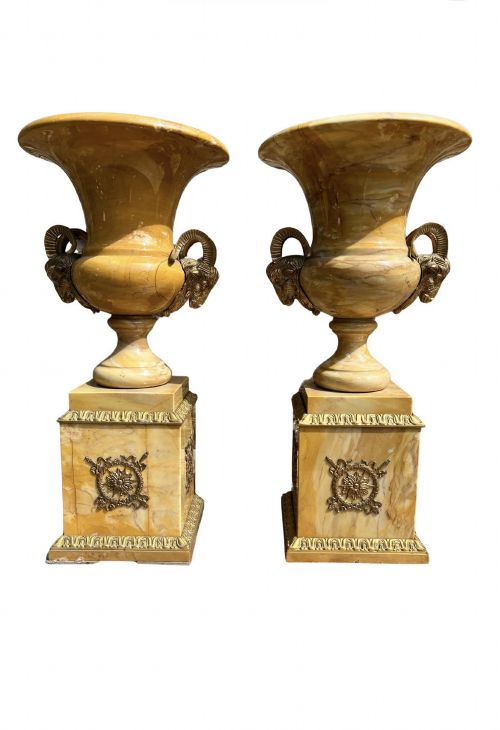
- Bell-shaped classical vessel derived from ancient Roman models. These forms frequently appear in nineteenth-century decorative metalwork.
- Jardiniere
- Ornamental container designed to hold potted plants or floral arrangements. They often share similar brass and bronze construction methods with tall vases.
- Ormolu
- Finely ground high-carat gold cast and chased upon a bronze or brass base. This decorative coating provides a rich golden finish on mounts and trimmings.
Antique Brass Vases: Frequently Asked Questions
How were antique brass vases used?
These vessels served diverse purposes, functioning as altar garnitures in churches, decorative ornaments in nineteenth-century drawing rooms, and souvenir pieces from European travels.
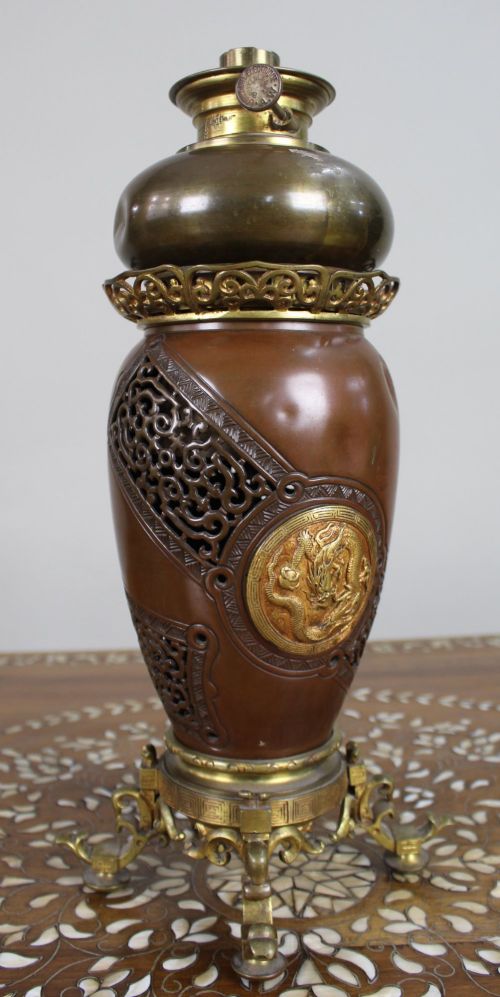
Over time, many of these metal and ceramic pieces were converted into table lamps or oil lanterns to suit changing domestic lighting needs.
How do I live with antique brass vases?
Display these heavy vessels on sturdy mantelpieces, sideboards, or tables where their weight and metallic sheen can anchor the room.
Keep them away from direct moisture and clean them gently with a soft dry cloth to preserve the natural patina developed over the centuries.
How can I tell different periods apart?
Stylistic clues and manufacturing marks offer the clearest indication of date, ranging from neoclassical Grand Tour motifs to late Victorian aesthetic movement designs.
Japanese Meiji pieces and Chinese export objects display distinct regional casting techniques and enamel palettes characteristic of their specific eras of production.
Are these vases suitable for fresh flowers?
While original church and decorative vessels held water or foliage, many surviving examples now feature converted electrical fittings or delicate enamel interiors.
It is wise to check the internal condition of each piece before introducing water, as older metal seams and converted bases may not hold liquid securely.