


Classical Mask Vase
A classical mask vase brings monumental antique sculptural weight and mythological theatre into a room.
Classical Mask Vase
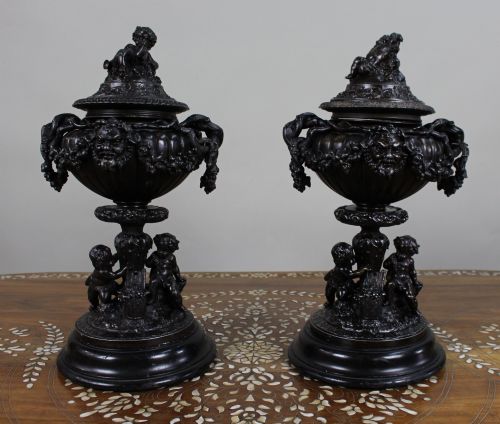
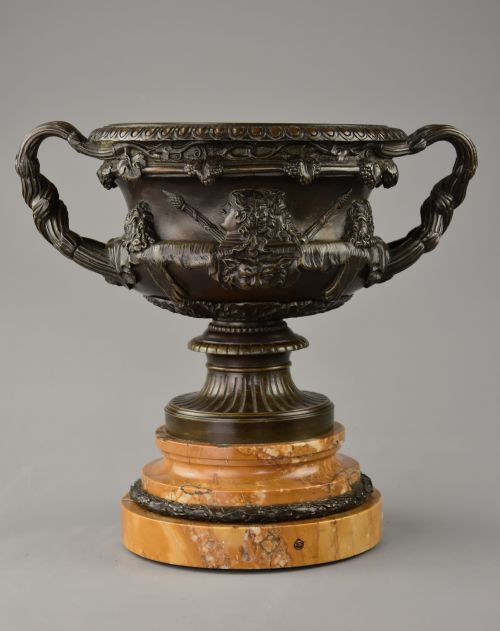
A classical mask vase takes the form of an urn or ornamental ewer decorated with sculptural faces, Bacchic motifs or mythological figures derived from antiquity. These pieces draw heavily on Neoclassical and Grand Tour aesthetics, capturing the spirit of classical excavation sites and Italian souvenir culture.
Most examples encountered here date from the nineteenth century, ranging from Victorian productions to specific Grand Tour bronze reductions modelled after famous antiquities like the Warwick Vase and the Albani Vase. Forms vary from large decorative garden or table urns and jardiniere planters down to paired mantel ornaments.
Buyers look for these vessels to anchor a mantelpiece, console table or library shelving with robust architectural presence and historical narrative. The typical version met on this page is a nineteenth century bronze, brass, terracotta or marble urn carrying distinct classical ornament.
How they were made
Metal vessels in this group rely on traditional casting techniques, utilising bronze, brass, or bronzed spelter to achieve crisp relief work on handles and facial masks. Ormolu mounts and chased details often accent the primary metal structure to heighten the sculptural contrast.
Stone and earth derivatives utilise heavy carved marble, alabaster, scagliola or moulded terracotta. These media require skilled turning, carving, or fired earthenware preparation to emulate the dense, monolithic character of ancient excavated artefacts.
Current listings feature pieces cast in bronze, brass, and bronzed spelter, alongside carved marble, alabaster, and moulded terracotta.
What varies in quality
Material integrity and weight also separate the tiers, as solid marbles and substantial bronzes carry a commanding presence compared to lighter alloys or composite materials. The fidelity of the classical revival design and the nuance of the antique reduction further define the upper range.
The Classical Mask Vase Glossary
- Grand Tour
- A cultural journey undertaken by wealthy young Europeans through France and Italy to study classical antiquities. Souvenirs from these travels included bronze reductions and marble urns.
- Campana Urn
- A bell-shaped vessel with a flaring rim and foot, originating in ancient Greek and Roman pottery and revived extensively during the eighteenth and nineteenth centuries.
- Spelter
- A zinc alloy commonly cast and patinated to imitate bronze in decorative objects. It was a popular material for Victorian decorative urns and sculptural figures.
- Scagliola
- A composite material made from selenite, glue, and pigments, applied to mimic marble and other fine stones. Craftsmen use it to create decorative architectural elements and urns.
- Ormolu
- Gilded bronze used for decorative mounts and accents on furniture and objects. The technique involves applying a gold amalgam to bronze.
Classical Mask Vase: Frequently Asked Questions
What is a classical mask vase?
A classical mask vase is a decorative urn or ewer featuring sculptural faces, typically Bacchic masks, derived from ancient Roman and Greek art.
These pieces were largely produced during the nineteenth century as part of the Neoclassical revival and Grand Tour traditions.
How were these urns used historically?
Historically, these vessels served as decorative centrepieces, ornamental garden planters, and library ornaments. Grand Tour examples functioned as cultured souvenirs brought back from travels in Italy.
Today, they are used primarily as decorative focal points on mantelpieces, sideboards, and architectural consoles.
Are these pieces actually ancient?
Almost all pieces found here date from the nineteenth century rather than antiquity. They are revival items and nineteenth century reductions modelled after famous ancient prototypes like the Warwick Vase.
Craftsmen of the Victorian era and Grand Tour period created these works to satisfy a widespread fascination with classical archaeology.
What materials should I expect?
The material palette spans cast metals such as bronze, brass, and bronzed spelter, alongside carved stone and earth media including marble, alabaster, scagliola, and terracotta.
Many pieces also incorporate ormolu mounts or patinated finishes to enhance their sculptural detail.