



Polished Brass Vases
Polished brass vases bring a bright, reflective warmth to a room, ranging from simple turned shapes to ornate domestic vessels.
Polished Brass Vases
When you search for polished brass vases, you encounter a varied assortment of decorative vessels spanning the nineteenth and early twentieth centuries. These pieces encompass domestic ornaments, wall pockets, jardiniere, and fireside accessories that highlight the versatile metalwork of their respective eras.
The selections you meet here most frequently include pairs of decorative urns, twin-handled vessels, and trench art created from shell cases. Alongside these, items originating from Chinese export workshops and French revival periods appear to offer alternative decorative vocabulary.
The forms range from small mantel ornaments to large exhibition pieces measuring considerable heights. Their shared trait is the polished golden alloy surface, often paired with contrasting elements of copper or bronze.
How they were made
The construction of these items relies heavily on traditional metalworking methods, utilising cast and turned brass components joined to form structural bodies. Many examples incorporate hand-beaten textures and applied decorative motifs, particularly within the Arts and Crafts and trench art traditions.
Makers utilised sheet brass and cast bronze, sometimes integrating copper elements for visual contrast on handles, rims, and base mounts. Surface finishes were carefully burnished to a high lustre, allowing the natural golden hue of the alloy to dominate.
Polished Brass Vases Retail Price Guide 2026
Typical asking prices for polished brass vases among the pieces listed under this phrase on Sellingantiques today, from the lower quarter to the upper quarter. They describe what is for sale here now, not the wider market.
Among the domestic metalware, a pair of heavy brass boot fireside ornaments stands ready to warm the hearth.
What varies in quality
Quality in these pieces is dictated by the crispness of the casting and the weight of the metal utilised in the body. Finer examples display deliberate proportions, secure joinery, and refined hand-chased detailing rather than rushed mass production.
The Polished Brass Vases Glossary
- Brass
- An alloy of copper and zinc, highly valued for its bright golden appearance and malleability. It forms the primary structural material for the majority of vessels on this page.
- Wall pocket
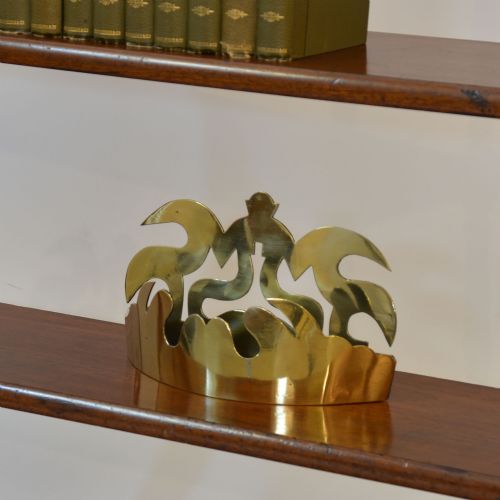
- A flat-backed decorative vessel designed to be hung directly onto a wall surface for holding dried stems or small objects. These often feature ornate crown or repoussé motifs.
- Trench art
- Decorative or utilitarian objects fashioned by soldiers, civilians, or prisoners of war from discarded military materials. Shell cases serve as the common foundation for this category.
- Jardiniere
- A large ornamental pot or stand designed to hold live plants or floral arrangements. They frequently appear in heavy copper or brass with twin handles.
- Repoussé
- A metalworking technique where the metal is hammered from the reverse side to create a raised design in relief on the front.
Polished Brass Vases: Frequently Asked Questions
How do I clean polished brass?
Maintenance involves gentle dusting and the occasional application of a mild metal polish to maintain the reflective surface without removing the underlying patina.
Avoid harsh abrasive cleaners that can scratch the soft alloy and diminish the historical character of the object.
Are these vases watertight?
Many older metal vessels were constructed for decorative display rather than holding water, particularly those with assembled or soldered seams.
It is advisable to use a glass liner inside antique metal vases if you intend to display fresh flowers with water.
What is trench art?
Trench art comprises items fashioned from military debris, such as artillery shell cases, during periods of active conflict. Makers utilised simple hand tools to engrave and shape these metals into vases and ornaments.
These pieces carry distinct historical narratives tied directly to early twentieth-century conflicts.
How do I date a brass vase?
Dating relies on stylistic clues, manufacturing techniques such as casting marks or machine threads, and the specific proportions popular in periods like the Victorian era or the Arts and Crafts movement.
Comparing the weight, wear patterns, and decorative motifs against documented examples helps narrow down the period.