




Pair of Brass Vases
When you search for a pair of brass vases, you encounter symmetrical vessels designed to balance a mantelpiece, table, or sideboard.
Pair of Brass Vases
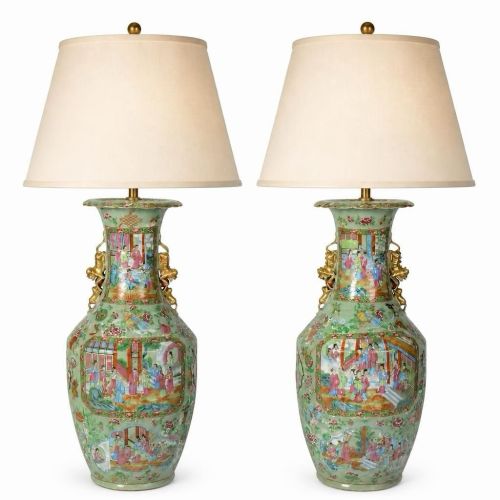
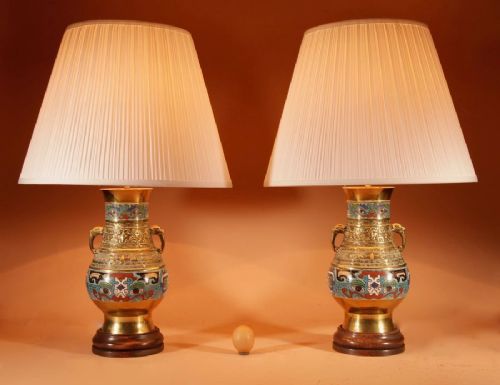
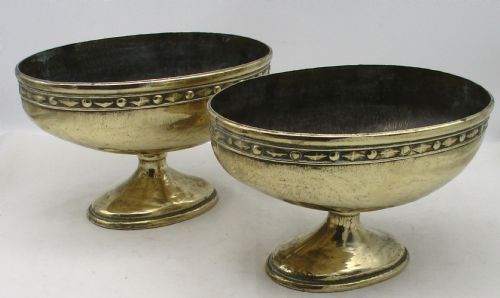
A search for a pair of brass vases brings up decorative metalwork spanning the nineteenth and early twentieth centuries, alongside items adapted as table lamps. The selection includes domestic European castings, Arts and Crafts hand-beaten pieces, and items drawing on Eastern ornamental traditions.
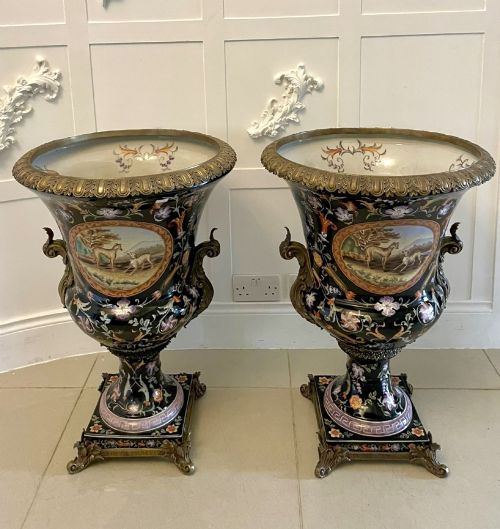
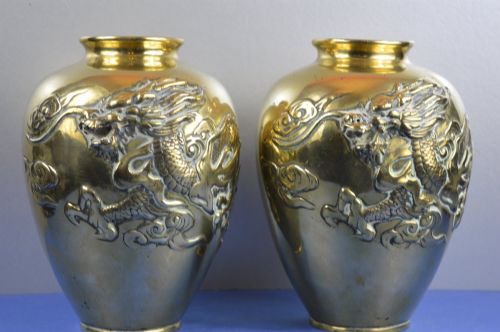
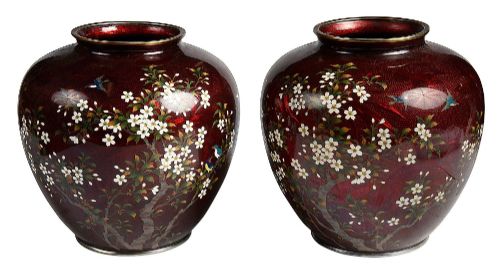
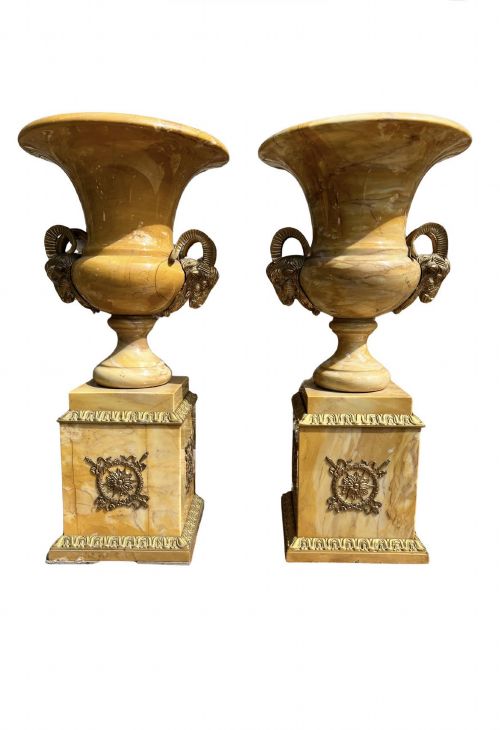
The objects take many forms, from simple turned cylinders and campana urns to heavily embossed vessels and altar garniture. Many examples combine brass with copper, porcelain, marble, or cloisonné enamel, reflecting diverse international tastes from the Victorian period onward.
Materials and construction methods
Makers shaped these vessels through casting, spinning, and hand-beating sheet metal, often joining separate brass components with mechanical fasteners or solder. Surface decoration relied on chasing, piercing, engraving, and applied patination to create textured or contrasting visual effects.
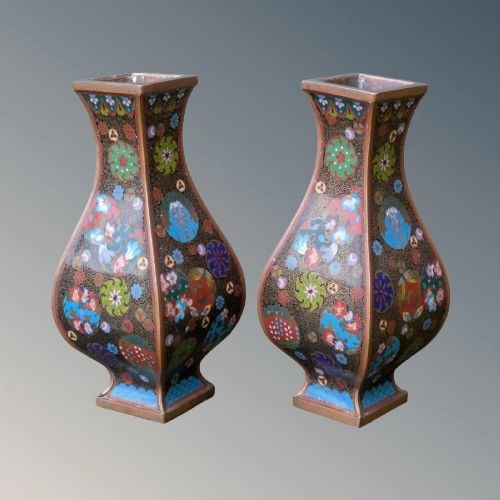
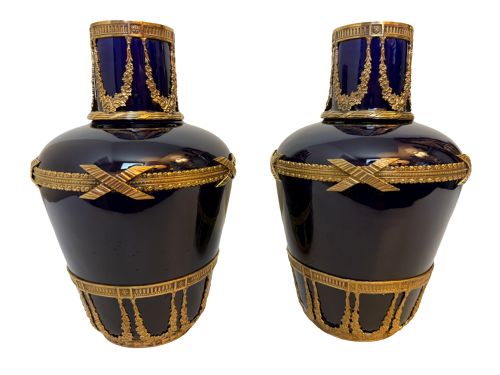
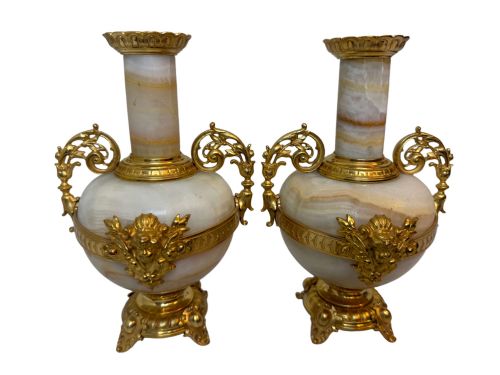
Many items incorporate contrasting materials such as champlevé and cloisonné enamels, marble bases, or porcelain bodies mounted with cast brass rims and handles. This multi-media approach required specialised collaboration between metalworkers, ceramicists, and enamelers.
Listings feature items from the 18th, 19th, and early 20th centuries, utilising brass, bronze, copper, porcelain, marble, and cloisonné enamel.
Distinctions in manufacture and finish
Quality rests in the crispness of the casting, the precision of chased or pierced details, and the weight of the metal used in the construction. Heavier specimens with substantial gauge brass and well-executed hand finishing sit distinctly apart from lighter, mass-produced stamped alternatives.
The integrity of secondary materials also dictates standard, such as the precision of wirework in cloisonné items or the stability of marble and porcelain mounts. Superior examples maintain balanced symmetry between the two pieces, with harmonious patination developed over decades.
Gebruder Bing
The Pair of Brass Vases Glossary
- Campana urn
- A bell-shaped vessel modelled on classical antiquity, commonly found in nineteenth-century Grand Tour souvenirs. These pieces often feature handles springing from the lower body.
- Cloisonné
- A technique where enamel paste is applied within compartments created by soldered metal wires on a metallic base. The piece is then fired and polished smooth.
- Champlevé
- An enamelwork method where troughs or cells are hollowed out of the metal surface and filled with vitreous enamel before firing. This differs from wire-formed cloisonné by utilising a carved recess.
- Ormolu
- Gilded bronze or brass mounts applied to decorative objects, ceramics, and furniture. The finish provides a bright golden accent against darker materials.
- Garniture
- A set of matching decorative vessels, such as vases or urns, intended to be displayed together on a mantelpiece or sideboard. They typically comprise three or more matching pieces.
Pair of Brass Vases: Frequently Asked Questions
Were these always intended as lamps?
Many examples began life as decorative ornaments, urns, or church vessels before receiving electrical conversions in later decades. Collectors frequently encounter pieces where wiring has been threaded through drilled bases or fitted neatly inside the necks.
Original oil lamp configurations also exist from the nineteenth century, utilising burners fitted directly to the metal or ceramic bodies. Reversible adaptations allow modern owners to display the items with or without shades.
Why are they almost always found in pairs?
Victorian and Edwardian interior design placed a high value on symmetry, particularly for mantle displays, sideboards, and architectural settings. Matching vessels anchored a room's focal points by framing mirrors, clocks, or fireplaces.
Manufacturing processes often produced these items simultaneously from the same workshop batch to ensure consistent sizing and decoration. Surviving together down the generations preserves their intended visual balance.
How can I tell the period?
Stylistic clues such as Aesthetic Movement motifs, Arts and Crafts hand-beating, or Neoclassical Grand Tour forms point toward specific decades of manufacture. Construction methods, including the type of fasteners and casting seams, also provide chronological markers.
Materials offer further context, as certain enamel techniques and porcelain bodies align closely with late nineteenth or early twentieth-century production centres. Comparing the wear patterns with known historical examples helps confirm the timeline.