


Brass Flower Vases
Brass flower vases bring warmth and weight to a room, ranging from simple Victorian domestic metalwork to intricate imported cloisonné.
Brass Flower Vases
When you search for brass flower vases, you encounter a mix of domestic metalwork and imported decorative pieces spanning the nineteenth and early twentieth centuries. These vessels serve primarily as ornamental containers, shifting from utilitarian table settings to substantial decorative centrepieces.
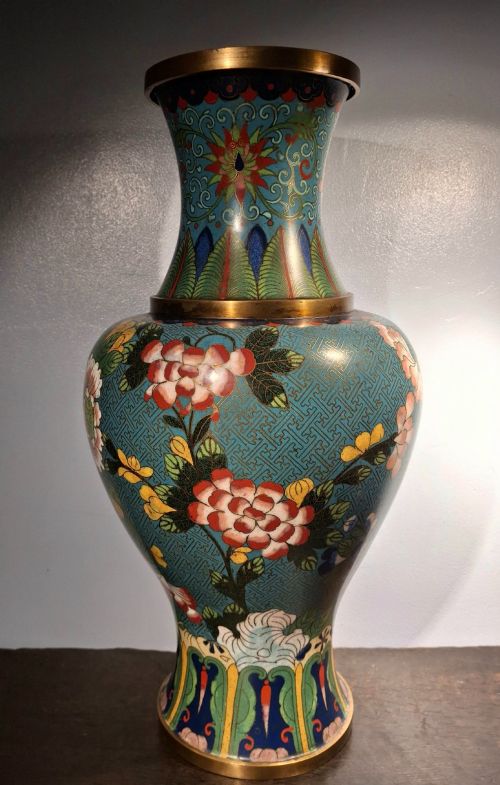
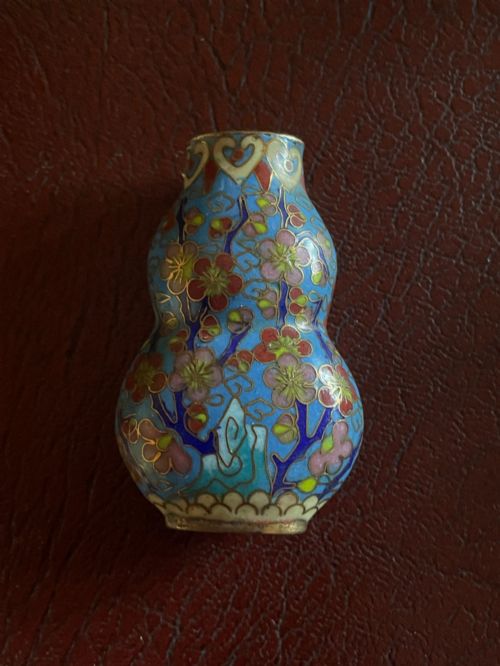
The selection on this page relies heavily on Victorian and Edwardian British production alongside Chinese export metalwork and Arts and Crafts examples. You will find matched pairs of handled urns alongside single miniature cloisonné vessels and cast bronze forms.
Forms vary from sturdy twin-handled urns meant for heavy mantel displays to delicate posy vases and large baluster shapes. Each piece reflects the decorative tastes of its period, whether through classical revival styling or hand-chased oriental motifs.
How they were made
Makers shaped these vessels using traditional foundry and metal-spinning techniques, often combining cast brass or bronze bodies with applied handles and detailed surface tooling. Artisans employed hand-chasing and engraving to cut patterns directly into the metal surface, creating textured backgrounds that catch the light.
Enamelling techniques such as cloisonné bring vibrant colour to the metal framework through soldered wire cells filled with vitreous paste. Other pieces incorporate contrasting materials like copper, gilt bronze, crystal inserts, and painted porcelain panels to build up layered decorative surfaces.
Listings include materials ranging from plain brass and copper to gilt bronze, crystal, porcelain, and intricate cloisonne enamel.
What varies in quality
Quality in these vessels rests upon the crispness of the casting and the depth of the hand-finishing work. Superior examples show precise chasing without soft edges, robust construction in handles and mounts, and carefully fitted components rather than hasty assembly.
Materials also dictate standard, with heavier gauges of metal and richer applications of gilt bronze or cloisonné enamel marking out the finer workshops. The articulation of decorative details, from floral bands to figurative elements, distinguishes standard production from exceptional pieces.
Charles Korschann
The Brass Flower Vases Glossary
- Cloisonné
- An enamelling technique where metal wire is soldered to a base to form compartments filled with paste and fired. This method produces intricate coloured patterns across the body of the vessel.
- Chasing
- The art of indenting and texturing metal from the front using hammers and small punches. It adds fine surface detail to cast bronze and brass.
- Baluster
- A vertical architectural form with a swelling lower portion tapering towards the neck. It provides a stable and balanced profile for display vessels.
- Jardiniere
- A large ornamental pot or stand designed to hold growing plants or heavy floral arrangements. These sit lower and wider than standard display vessels.
- Gilt bronze
- Bronze metal treated with a thin layer of gold or gold-coloured alloy to give a rich, reflective surface. It prevents tarnishing and enhances decorative impact.
Brass Flower Vases: Frequently Asked Questions
What periods do these vases span?
The listings on this page span from the mid-nineteenth century through to the early decades of the twentieth century. This covers Victorian and Edwardian domestic eras alongside concurrent international production.
Production methods and artistic styles evolved during this window, shifting from heavy classical revival metalwork to Arts and Crafts simplicity and detailed oriental export wares.
How were these metal vases used?
Many of these vessels functioned as ornamental pieces on mantelpieces, sideboards, and large dining tables rather than holding daily cut flowers. Larger urns and jardiniere forms were designed to anchor a room's decorative scheme.
Smaller posy vases and miniature cloisonné pieces served as delicate tabletop ornaments. Their sturdy construction allowed them to support heavy floral displays where required.
How do I distinguish brass from bronze?
Brass is an alloy primarily of copper and zinc, which typically yields a brighter, more golden yellow tone when polished. Bronze is an alloy of copper and tin, producing a deeper, redder, or warmer brown coloration.
Weights and casting qualities also differ, as bronze generally allows for sharper detail in cast figures and decorative mounts.
Are these pieces suitable for holding water?
While many metal vessels are watertight, older pieces with soldered joints or delicate internal linings require caution. Enamelled or porcelain-lined vessels benefit from careful hand-washing rather than immersion.
Using a small glass or plastic insert protects the interior of antique metalwork from mineral deposits and moisture damage.