
Antique Brass Chime
An antique brass chime is a resonant piece of historic metalwork used to signal meals or gatherings, prized for its clear tone and period character.
What an antique brass chime is
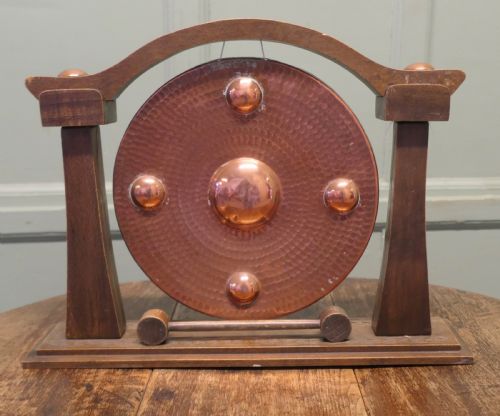
An antique brass chime combines a resonant brass plate, bowl or bell with a timber mounting or freestanding frame, designed to summon households or guests. When searching for an antique brass chime, buyers encounter dinner gongs, wall-mounted bells, table chimes and school bells intended for domestic and institutional use.
The pieces appearing on this page span the Victorian era, the Edwardian period and the early twentieth century, taking the form of wall-mounted brackets or tabletop stands. Oak and bamboo frequently provide the structural support for the brass element, creating a sturdy contrast of warm timber and polished metal.
Stylistic influences run from the ornate details of the Victorian period to the pared-down lines of the Arts and Crafts movement and the geometric severity of Gothic Revival design. Aesthetic Movement examples also feature, bringing distinct decorative flair to the domestic interior.
How they were made
Makers fashioned the sounding vessels from beaten or cast brass, selecting alloys that produce a sustained and resonant tone when struck. These plates and gongs hang from metal loops or cords secured to wooden structures.
The supporting frames utilise seasoned oak or bamboo, often shaped and chamfered with simple hand tools. Wall-mounted versions incorporate carved wooden backplates with pre-drilled fixing points, while tabletop iterations rest on stable wooden bases.
Retail Price Guide 2026
Typical UK retail prices for brass chime, calculated from the Sellingantiques database of over a million retail prices indexed since 2003. This retail price guide relies exclusively on Sellingantiques data; no external sources or auction records are used, so the figures do not describe the wider market.
The design styles recorded across these pieces include Gothic Revival, Aesthetic Movement and Arts and Crafts.
What varies in quality
Quality rests in the purity of the metal casting and the resonance of the chime itself, separating utilitarian items from pieces designed for decorative reception halls. Heavier brass plates retain their pitch longer and yield a richer sound.
The joinery of the wooden mounts dictates the overall integrity of the piece, with tightly fitted oak frames and clean grain patterns marking out superior examples. Secondary materials such as textile suspensions and matched strikers also influence the cohesion of the design.
The Antique Brass Chime Glossary
- Gong
- A percussion instrument consisting of a flat or concave circular metal disc that produces a sustained tone when struck with a mallet. It forms the primary sounding element in many dinner chimes.
- Striker
- The mallet or small hammer used to hit the brass chime or gong. These often feature a turned wooden handle and a padded or solid striking head.
- Aesthetic Movement
- A late nineteenth-century design style that prioritised visual beauty over narrative or moral function. Pieces from this movement often incorporate stylized ornamentation.
- Gothic Revival
- An architectural and decorative style drawing on medieval forms, featuring pointed arches and heavy timber work. It is frequently seen in the oak mounts of Victorian gongs.
- Wall mounting
- A method of installation where the chime secures directly to a vertical surface via a backplate. This configuration projects the sound outward into the room.
Frequently Asked Questions
How were antique brass chimes used?
Households utilised these chimes primarily to announce the serving of meals, ringing them from a hallway or dining room to gather family and guests. Schools and lodges also employed them to signal the start of activities or services.
The clear tone carried across multiple rooms, serving a practical communicative function before the widespread use of electric bells.
What is the difference between a wall gong and a table chime?
Wall gongs feature a wooden backplate designed to be secured permanently to a wall, suspending the metal chime at a convenient height for striking. Table chimes rest on a small wooden base or stand, allowing them to be moved freely between surfaces.
Both types utilise similar brass plates and strikers, differing only in their mounting configuration and placement within the home.
How do I date an antique brass chime?
Dating relies on stylistic clues found in the woodwork, such as the heavy geometric carvings of Gothic Revival oak mounts or the clean profiles of Arts and Crafts pieces. Material choices, including the use of bamboo alongside brass, point toward specific late nineteenth-century decorative trends.
Reference marks, construction techniques and period hardware styles further help narrow down the decade of manufacture.
How do I care for an antique brass chime?
Keep the brass dry and dust the wooden mounts regularly with a soft cloth to preserve the finish of the timber. Avoid harsh chemical cleaners that strip the aged patina from the metal.
Checking the hanging cords or suspension loops periodically ensures the gong remains secure on its mount during use.