



Antique Dinner Gong
An antique dinner gong brings the resonant chime of a country house or tea ceremony into a modern hall.
Antique Dinner Gong
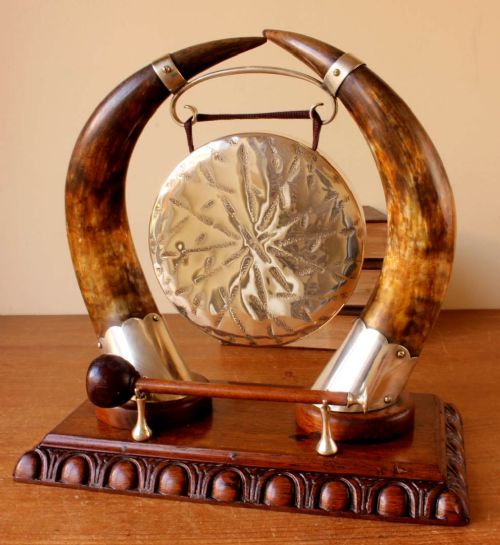
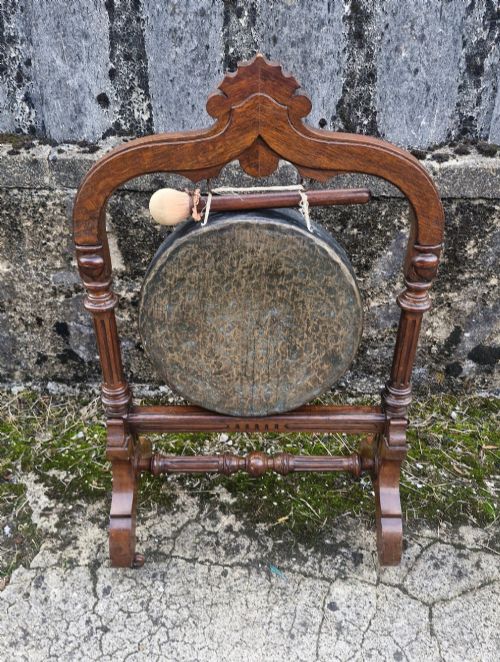
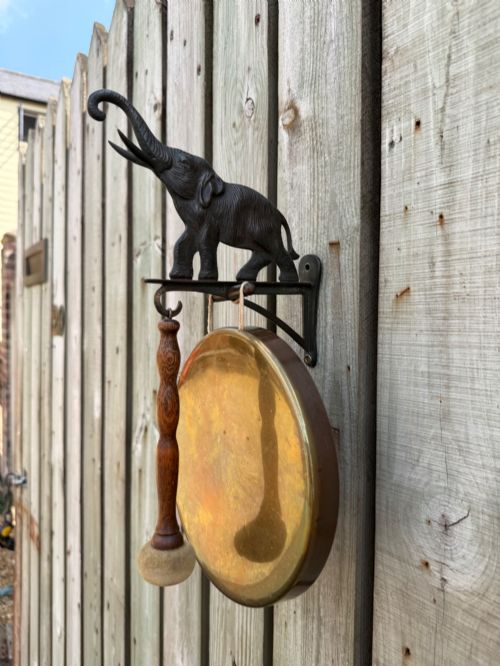
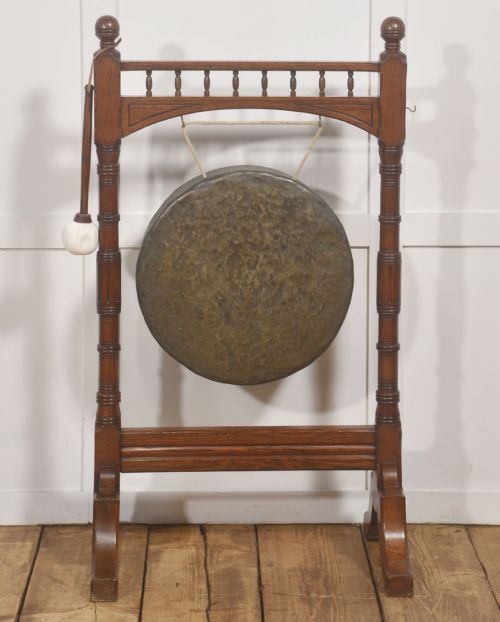
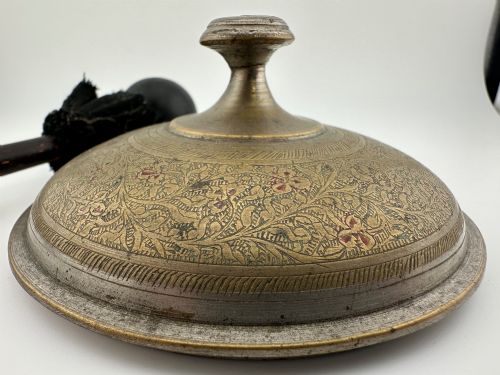
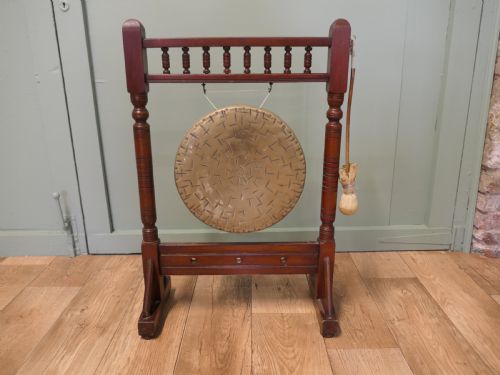
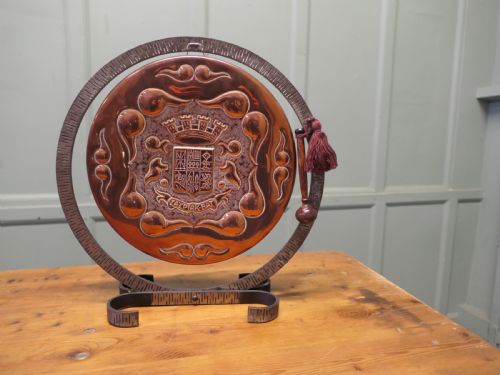
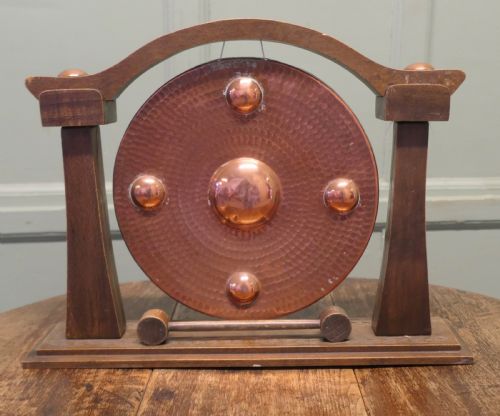
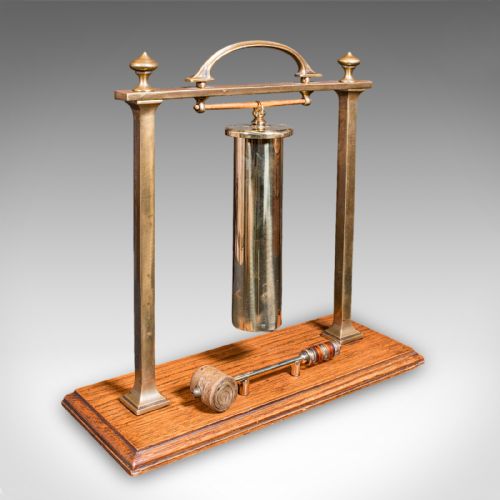
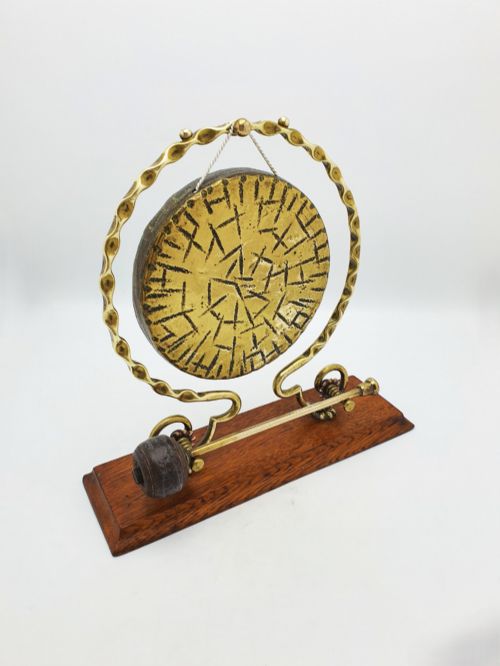
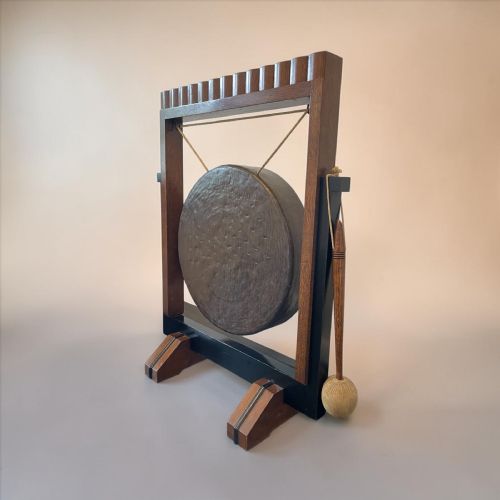
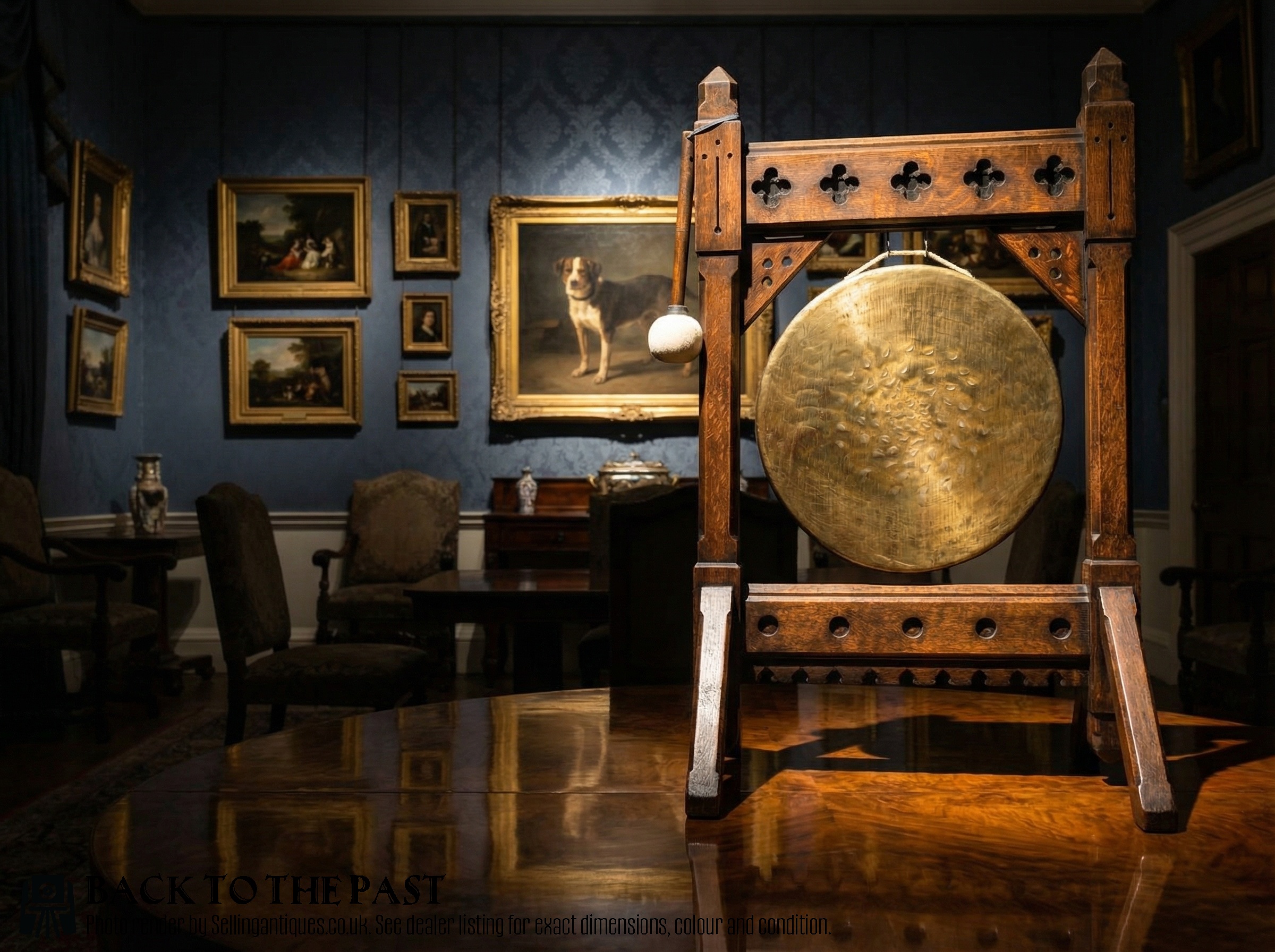
An antique dinner gong serves to summon household members and guests to the table with a deep acoustic note. The pieces seen here encompass table-top models, wall-hanging chimes, and substantial floor-standing or framed variations.
The domestic versions most frequently encountered combine a metal disc or bell with a sturdy timber stand made from oak, walnut, or bamboo. These incorporate stylistic influences from the Victorian, Edwardian, and Arts and Crafts periods alongside Chinese Export and Aesthetic Movement designs.
Country houses and shooting lodges utilised these items to regulate daily routines, often pairing the metal disc with a suspended wooden or metal striker.
Materials and Construction
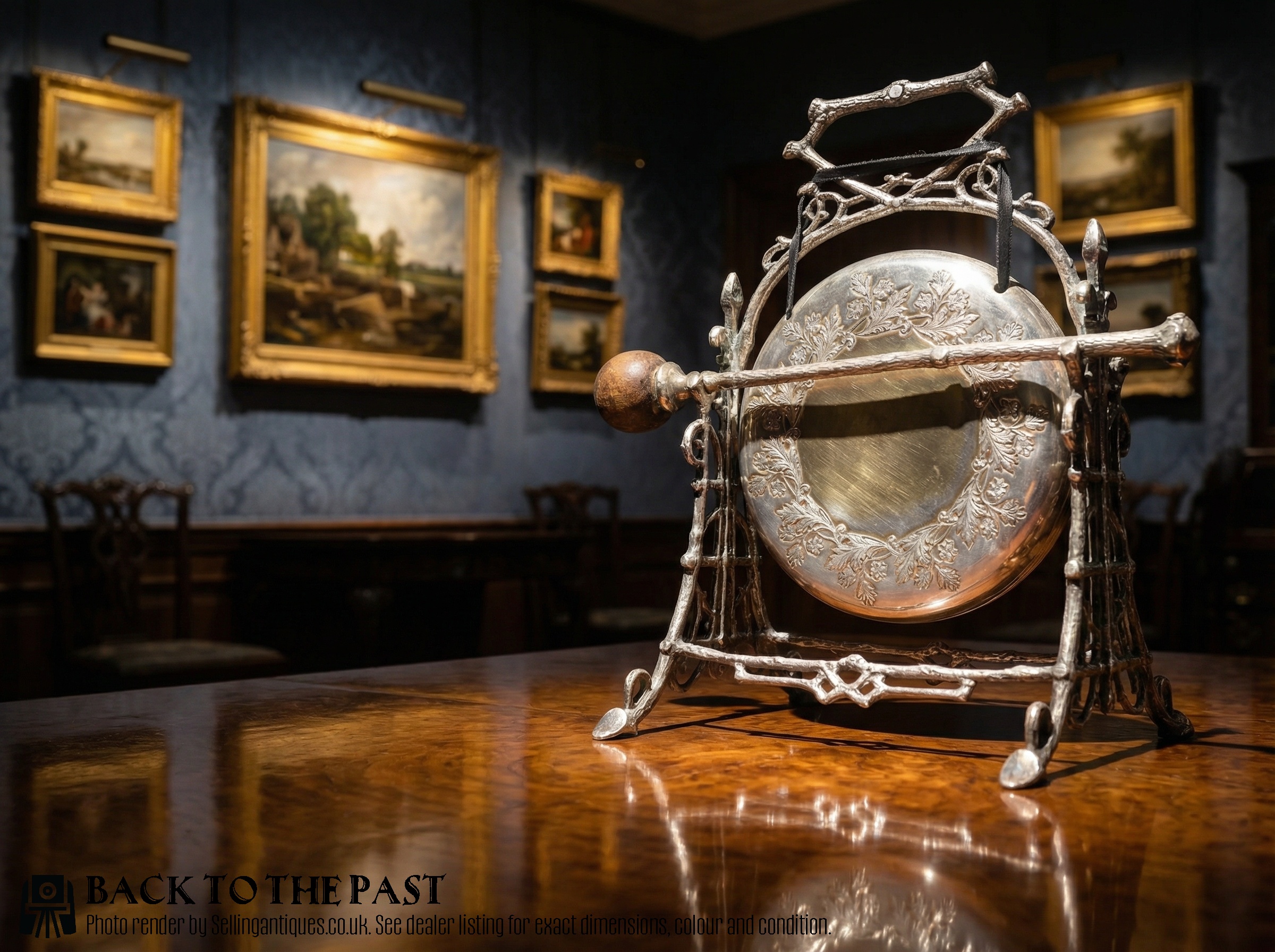
Makers utilised resonant metals such as brass, bronze, copper, and silver plate for the hanging discs and bells, often shaping them through hand-hammering to secure a sustained tone. Frames combined durable timbers like carved oak, mahogany, fruitwood, and bamboo with iron or cord supports.
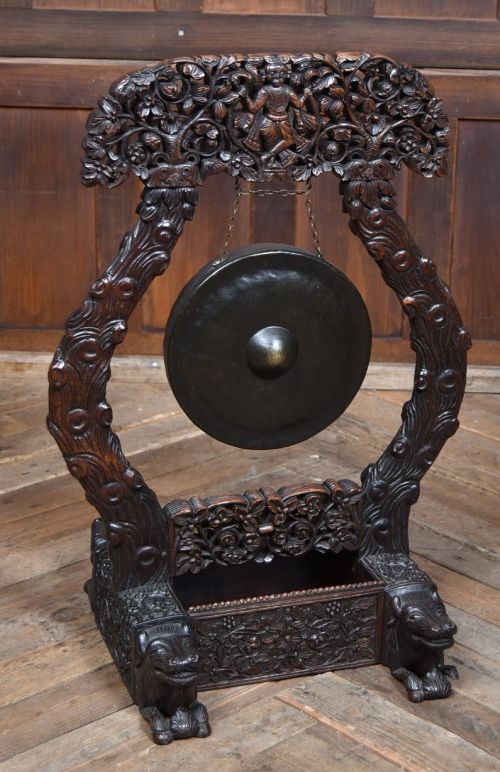
The structural mounts exhibit period joinery, ranging from simple bobbin-turned supports to elaborate Gothic Revival tracery and carved dragons. Specialist additions such as cattle horns and horse head mounts reflect specific regional tastes and Victorian animalier motifs.
Antique Dinner Gong Retail Price Guide 2026
Typical asking prices for dinner gong among the pieces listed under this phrase on Sellingantiques today, from the lower quarter to the upper quarter. They describe what is for sale here now, not the wider market.
Several pieces incorporate actual cattle horns into the frame, ensuring dinner was announced with genuine rustic spirit.
Craftsmanship and Resonance
The acoustic clarity and resonance of the metal chime dictate the primary tier of quality, alongside the weight and stability of the supporting frame. Heavier cast bronze and hand-hammered copper deliver a richer sustain than lighter stamped alternatives.
Carving depth and timber selection separate standard factory production from bespoke country house commissions. Pieces featuring intricate oriental dragon carvings or detailed Arts and Crafts metalwork display superior execution in the secondary decorative elements.
William Tonks
The Antique Dinner Gong Glossary
- Gong
- A percussion instrument consisting of a flat or curved metal disc that produces a resonant note when struck. It forms the central acoustic element of every dinner assembly.
- Striker
- A handheld mallet or hammer used to hit the metal disc. These typically feature a wooden handle paired with a padded, leather, or metal head.
- Gothic Revival
- An architectural and decorative style popular during the nineteenth century. Pieces in this manner utilise pointed arches, heavy tracery, and dark oak timbers.
- Aesthetic Movement
- A late nineteenth-century design current that emphasised visual and compositional beauty over narrative function. Items from this movement often display Anglo-Japanese motifs.
- Silver Plate
- A thin layer of silver applied to a base metal core such as copper or brass. This finish offered the lustre of solid silver at a reduced weight and cost.
Antique Dinner Gong: Frequently Asked Questions
How loud is an antique dinner gong?
The volume depends largely on the diameter of the metal disc and the alloy used, with larger bronze and brass chimes producing a deep, far-carrying resonance suited to large halls.
Lighter table-top models generate a softer, more contained tone appropriate for smaller rooms.
Where were these gongs typically placed?
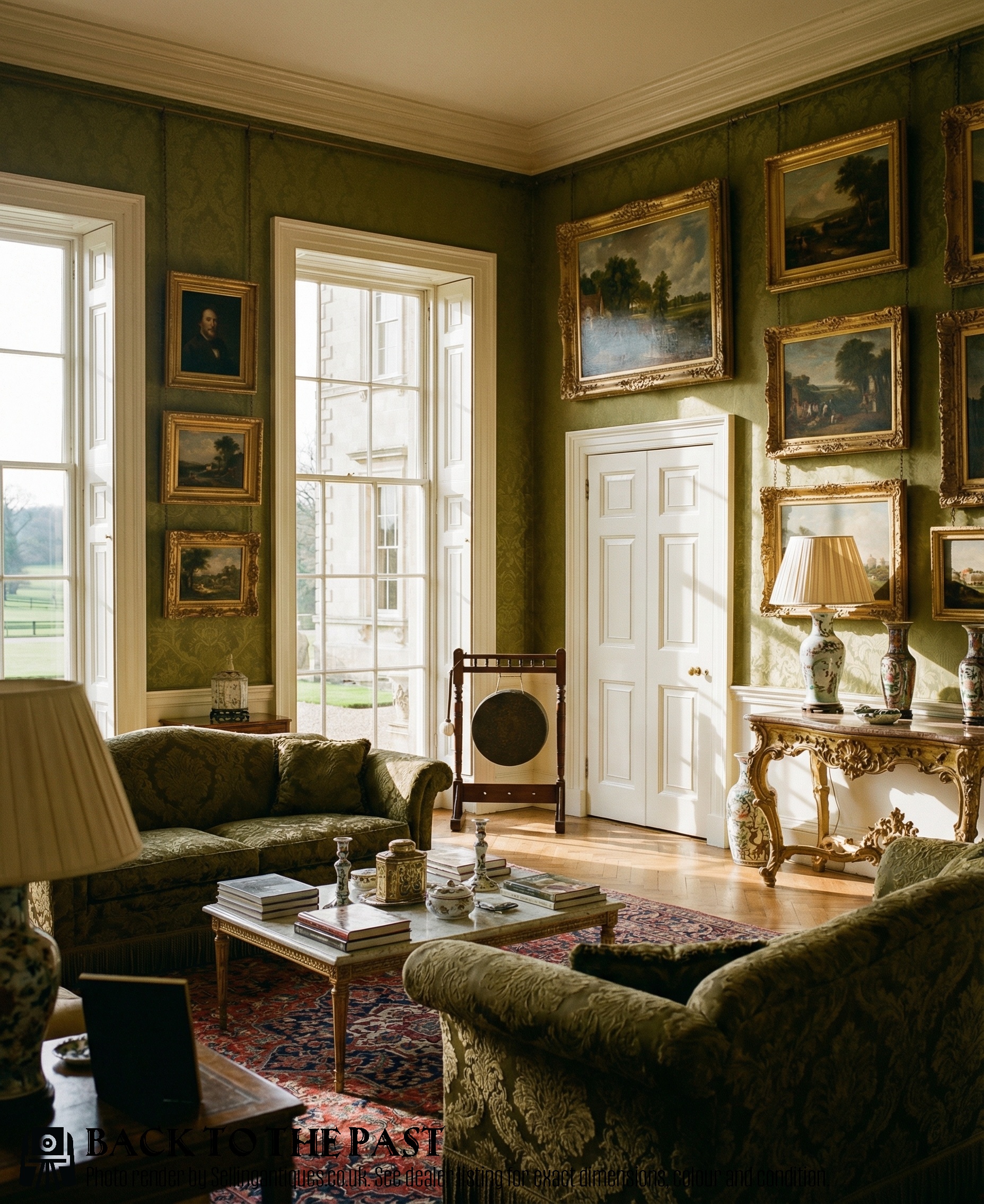
Domestic versions sat upon entrance hall tables, hung from walls near dining spaces, or stood directly on the floor in country residences.
Wall-mounted units saved valuable surface space while projecting the sound freely down corridors.
What woods were used for the stands?
Oak appears most frequently in British and European designs, often carved with Gothic or Arts and Crafts motifs.
Cabinetmakers also employed walnut, mahogany, fruitwood, and exotic bamboo to complement oriental and Aesthetic Movement chimes.
How do I date a dinner gong?
Dating relies on stylistic clues within the woodwork and metal framing, such as the characteristic motifs of the Victorian, Edwardian, or Art Deco eras.
Turned supports and carved dragon mounts help place items within the nineteenth and early twentieth centuries.