




Victorian Dinner Gong
A victorian dinner gong summons household and guests to table with a resonant chime that carried across country houses and grand halls.
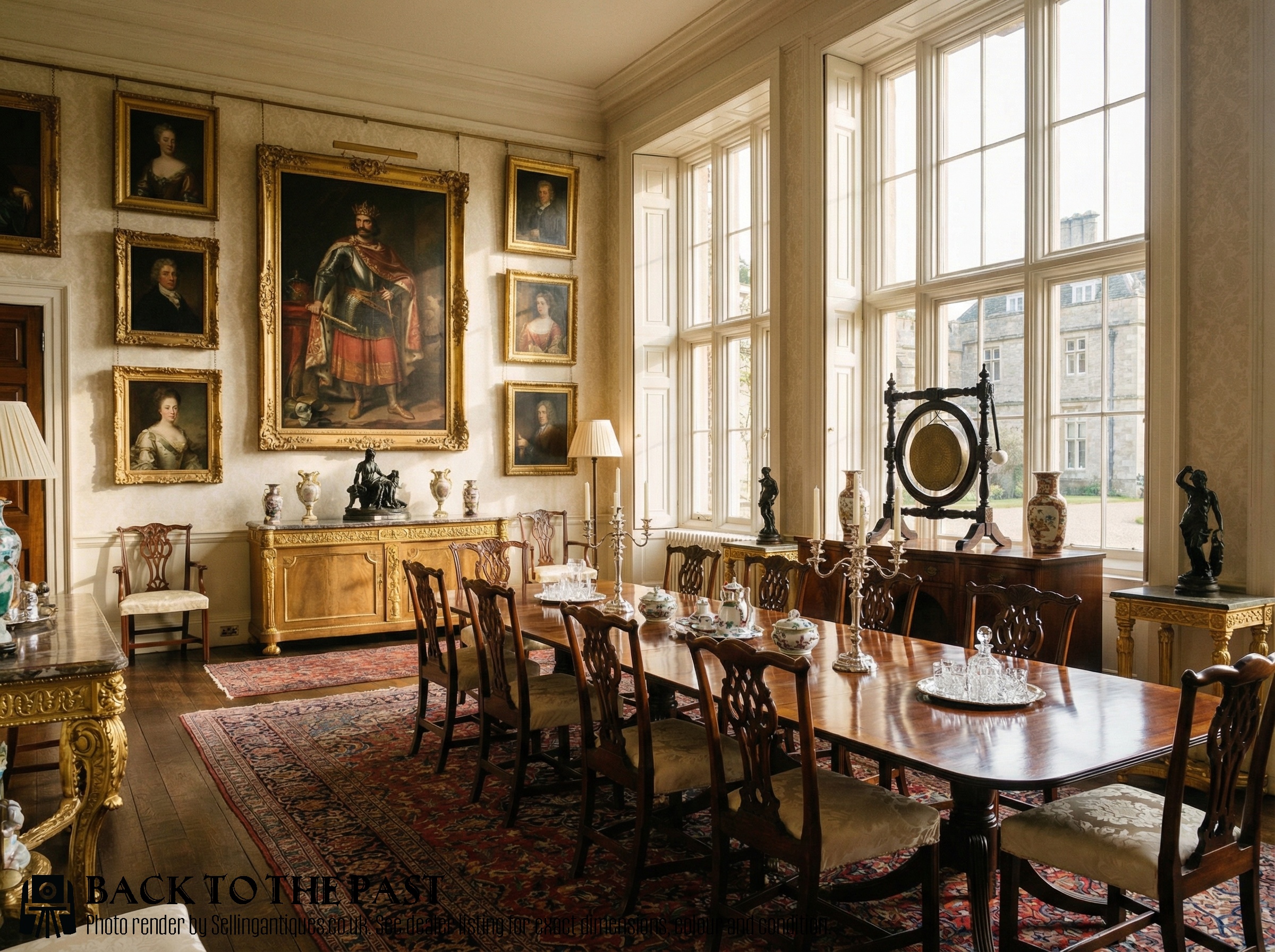
Victorian Dinner Gong
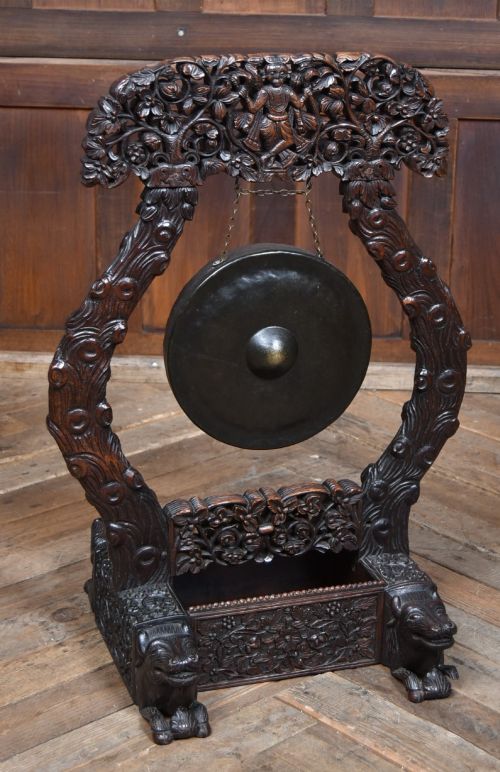
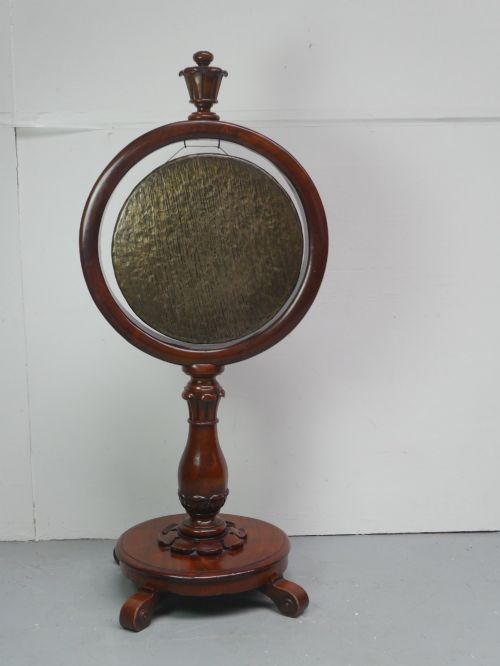
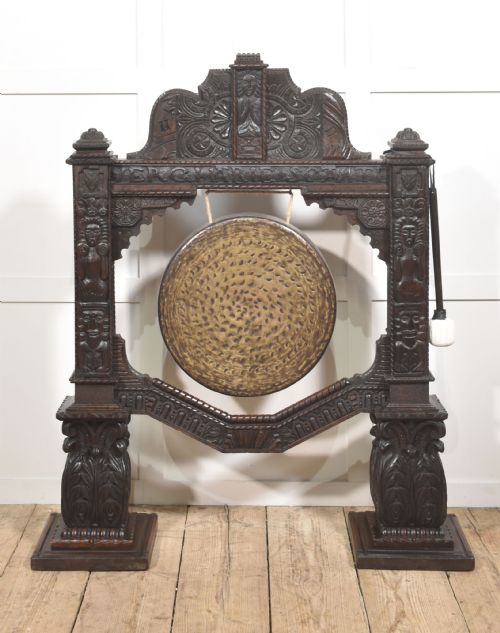
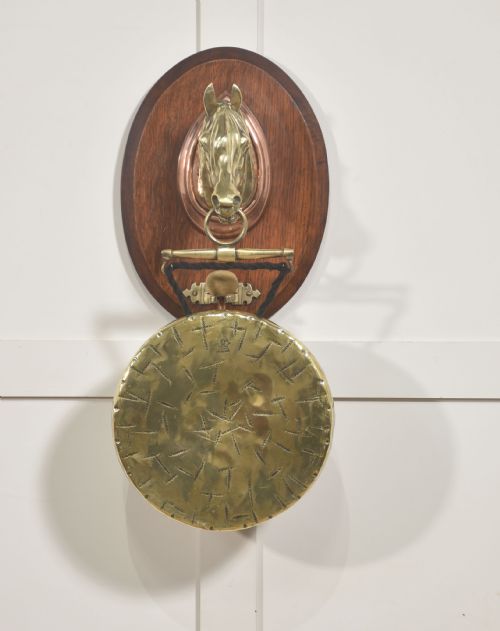
A victorian dinner gong is a percussion piece designed to summon household and guests to meals, suspended from a sturdy frame made of oak, walnut, or bamboo. These sound-makers take the form of table-top stands, wall-hanging arrangements, and larger floor-standing pieces intended for grand hallways. Most examples pair a resonant metal disc or bowl with a sturdy wooden support, often styled in Gothic Revival, Aesthetic Movement, or Arts and Crafts designs.
The version most commonly met on this page is the oak-framed table or wall gong, frequently accented with brass mountings and sometimes paired with cattle horn or silver plate. Such pieces originated in country houses, shooting lodges, and suburban villas where summoning the household required a distinct tone. Alongside standard domestic models, international influences appear through Japanese bronze discs, Chinese carved woodwork, and Anglo-Indian or Burmese detailing.
Beyond simple domestic metal discs, many survive with distinctive animal horn or antler mounts, reflecting the sporting tastes of the period. These variations range from compact table models to substantial wall chimes and multi-strike palazzo arrangements. The frames themselves show considerable carpentry skill, utilising turned bobbin woodwork, carved foliage, or heavy Gothic arches.
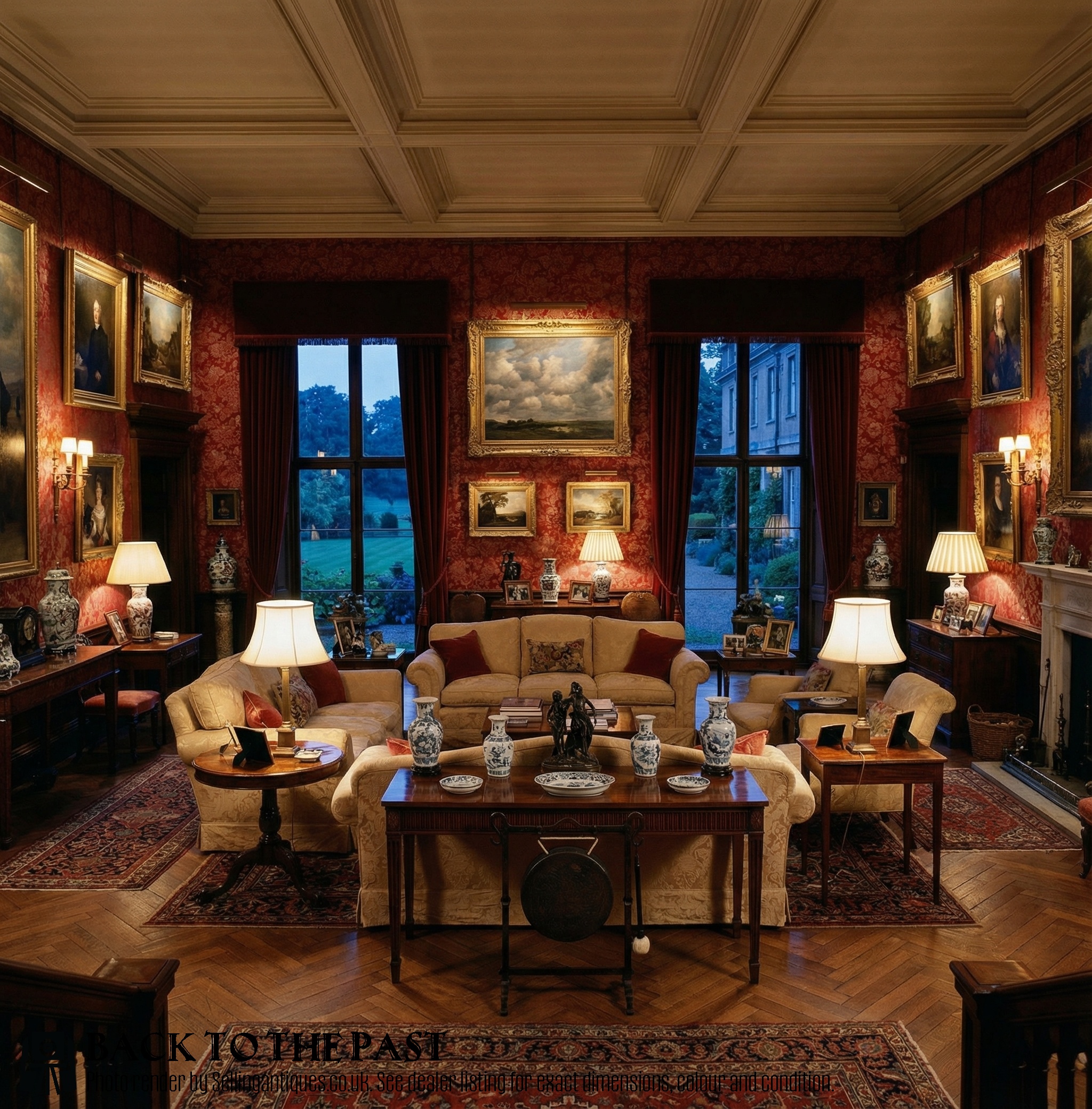
How they were made
Makers constructed the supportive frames using seasoned timbers like oak, walnut, mahogany, and bamboo, frequently shaping the wood through turning, carving, or joinery. Oak stands often feature carved panels or bobbin-turned supports that complement the heavier metal hanging components. Alternatively, bamboo frames provide a lighter structural approach influenced by Japonisme tastes.
The striking elements themselves consist of cast brass, bronze, or silver-plated metal, matched with hanging cords and occasionally natural materials such as cow horn, cattle horn, or deer antler. Artisans utilised cast iron for specific industrial or architectural frames, while others incorporated polished brass gongs that produced a clear, echoing chime when struck with a matching mallet.
Victorian Dinner Gong Retail Price Guide 2026
Typical asking prices for victorian dinner gong among the pieces listed under this phrase on Sellingantiques today, from the lower quarter to the upper quarter. They describe what is for sale here now, not the wider market.
Several Victorian pieces incorporate carved Black Forest monkeys or cattle horns into their frames, bringing wildlife directly into the hallway.
What varies in quality
Proportion and material harmony further separate standard domestic items from exceptional commissions. Better examples balance the heavy weight of the metal gong with sturdy, well-balanced stands made from dense oak or walnut. Lesser examples rely on thinner gauge metal and plain, unadorned frames with minimal structural detailing.
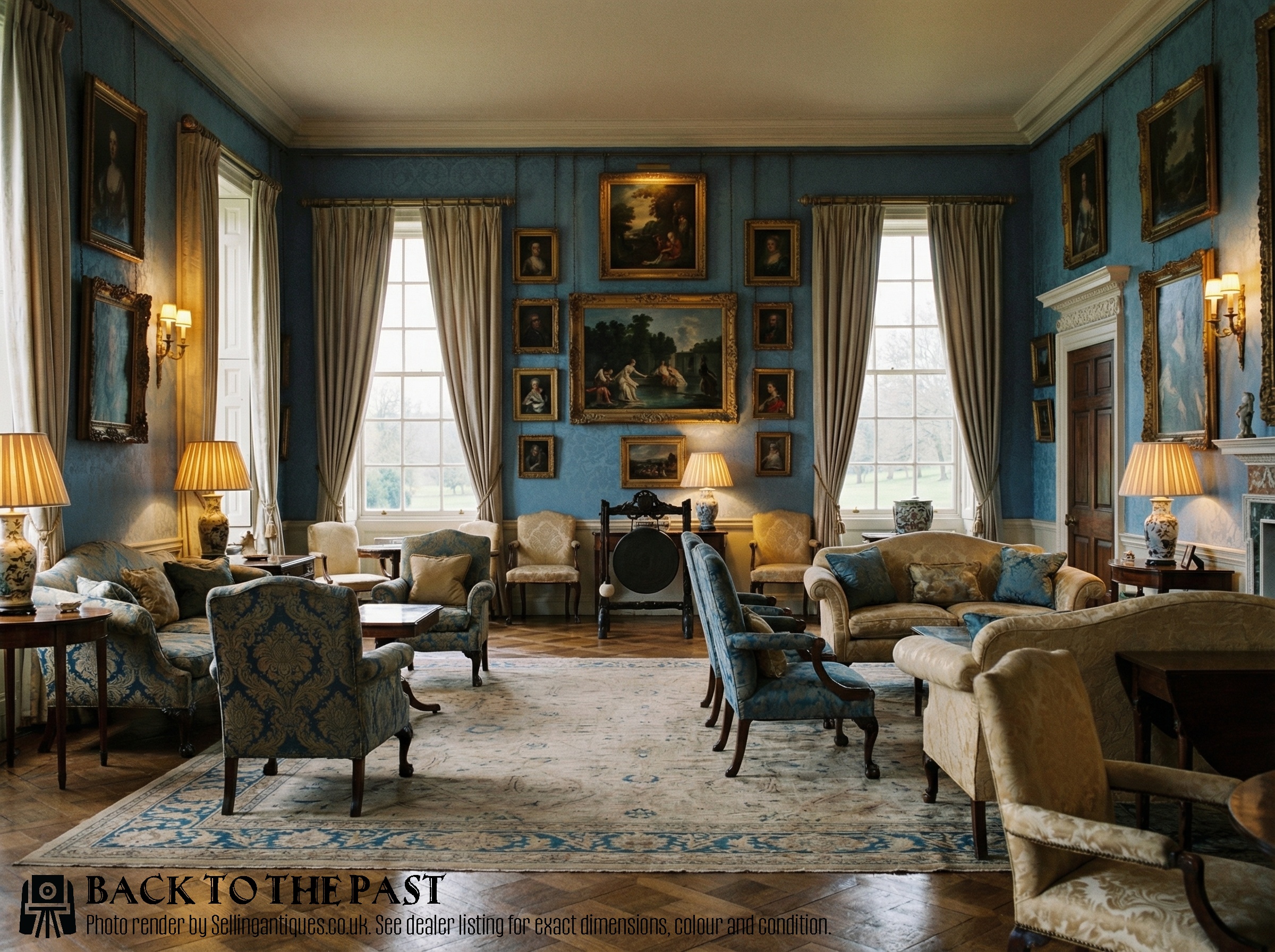
The Victorian Dinner Gong Glossary
- Gothic Revival
- An architectural and decorative style drawing on medieval forms, featuring pointed arches, heavy carvings, and ecclesiastical motifs. This aesthetic produced many substantial wooden frames for household chimes.
- Aesthetic Movement
- A late nineteenth-century design current emphasising visual beauty over narrative content, often incorporating Japanese and oriental motifs into domestic metalwork and furniture. Pieces from this movement display clean lines and artistic brass detailing.
- Silver Plate
- A thin layer of silver fused to a base metal, frequently utilised on dinner chimes and decorative mounts to provide a bright, reflective finish without solid silver costs. This treatment appears on both the hanging gongs and structural mountings.
- Bobbin Turned
- A method of woodturning that creates a series of rounded, spool-like shapes along the length of a support leg or stretcher. This technique added decorative texture to the frames of domestic percussion pieces.
Victorian Dinner Gong: Frequently Asked Questions
How were dinner gongs used?
These pieces served to announce the evening meal throughout large country houses and domestic residences. Servants struck the suspended metal disc with a padded mallet to create a far-carrying tone that reached distant rooms.
In daily practice, the striking signalled that dinner was served, gathering family members and guests to the dining room. Their placement in hallways ensured the sound dispersed efficiently across the floor plan.
Where were they placed in the home?
Domestic chimes typically stood in entrance halls, corridors, or near dining room doorways where the sound could travel freely. Wall-hanging versions attached directly to hallway paneling or plaster.
Smaller table-top variants sat upon sideboards or hall tables, remaining accessible for use before formal meals. Floor-standing examples occupied larger vestibules in country estates.
What materials make up the frames?
Frames consist primarily of native hardwoods such as oak, walnut, and mahogany, shaped through carving, turning, or joinery. Some variations utilise bamboo or wrought iron to achieve distinct aesthetic styles.
Natural elements like cattle horn and deer antler also appear as structural supports or decorative mounts, reflecting period sporting tastes. Silver plating frequently coats the brass or bronze fittings.
How do I care for the wood and metal?
Maintain the timber frame by applying appropriate furniture wax periodically to nourish the polished oak or walnut surfaces. Avoid placing the piece near direct heat sources that might dry the wood.
Clean the metal gong and mounts with a soft cloth to remove dust, avoiding harsh chemical polishes that could strip surface patination. Check hanging cords regularly to ensure secure suspension of heavy metal discs.