



Carved Oak Gong
A carved oak gong brings deep, resonant acoustic presence and bold Victorian character to a hallway or reception room.
Understanding carved oak gongs
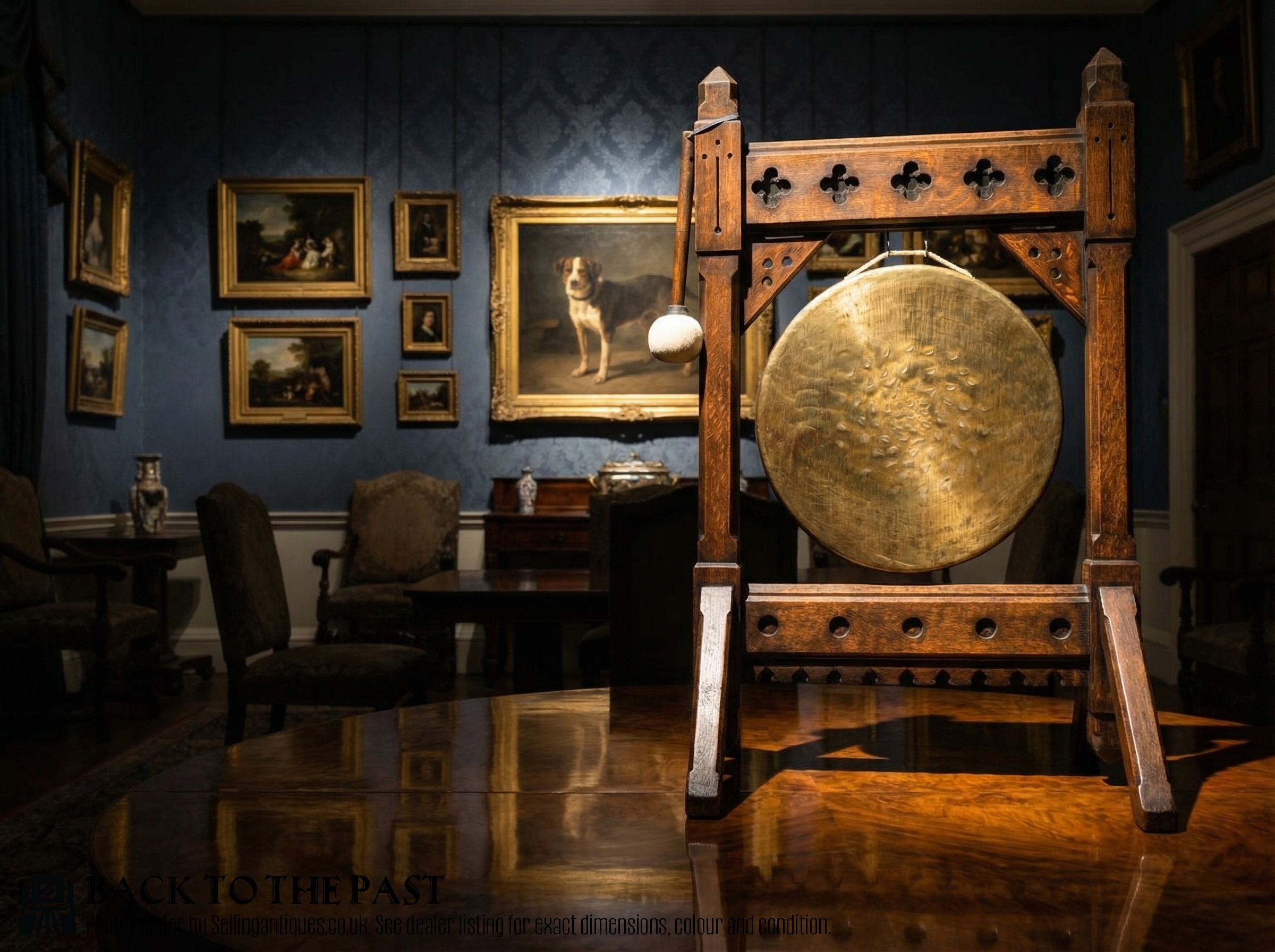
A carved oak gong is a substantial household object designed primarily as a dinner signal in nineteenth-century country houses and large residences. These pieces combine a heavy wooden frame with a metal disc and a striking mallet.
The versions most commonly met on this page date from the nineteenth century and the Victorian period, frequently displaying the distinctive architectural motifs of the Gothic Revival style.
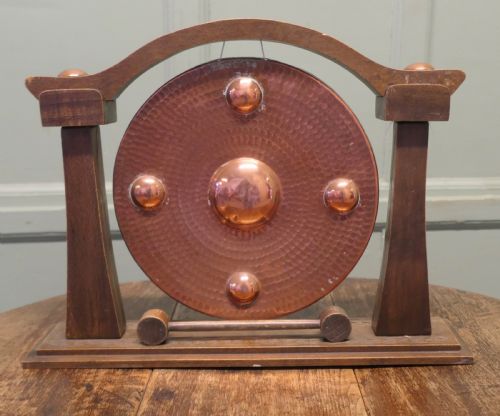
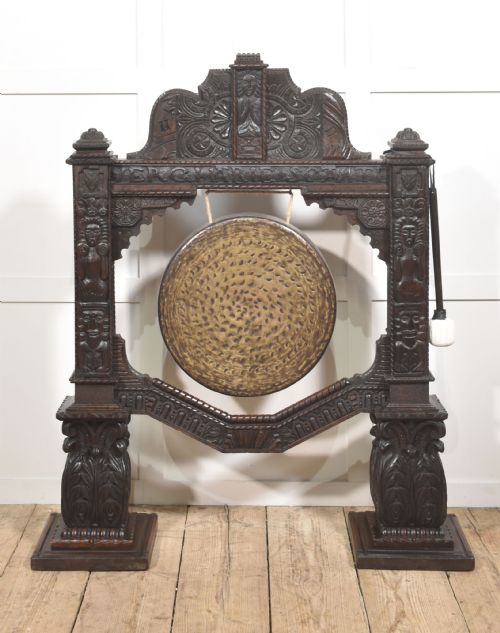
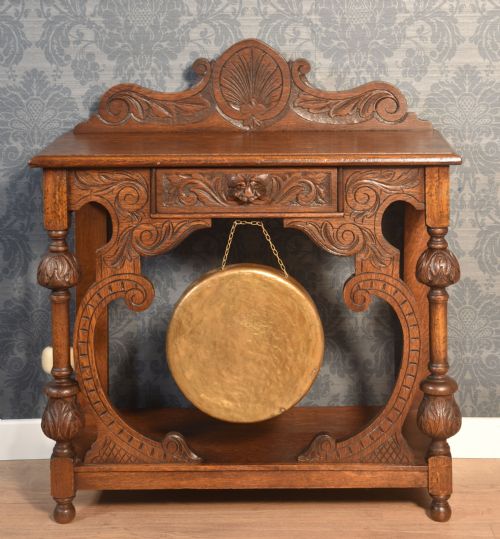
Makers produced these items in various scales, ranging from table versions to monumental freestanding and hall table combinations designed to impress visitors upon entry.
Materials and construction
Constructed primarily from solid oak, the frames of these pieces demonstrate traditional carpentry and heavy timber framing techniques. Woodcarvers worked the timber by hand to create deep relief decoration and structural framing.
Makers incorporated contrasting materials into the design, suspending metal gongs from the oak framework using sturdy rope or cord. Some examples integrate cattle horn or brass elements to complete the assembly.
Retail Price Guide 2026
Typical UK retail prices for carved oak gong, calculated from the Sellingantiques database of over a million retail prices indexed since 2003. This retail price guide relies exclusively on Sellingantiques data; no external sources or auction records are used, so the figures do not describe the wider market.
Listings for this phrase focus exclusively on nineteenth-century and Victorian periods, utilising oak combined with brass, rope, cord, and horn.
Assessing quality and craftsmanship
The distinction between standard examples and the finest pieces lies in the ambition and depth of the woodcarving. Superior items feature crisp, deeply undercut relief work, often incorporating specialised motifs such as green man faces.
Scale and material integration also dictate the standing of a piece, with monumental frames and heavy cast brass discs representing the upper tier of nineteenth-century production. The proportion between the substantial oak surround and the suspended disc determines the visual balance.
The Carved Oak Gong Glossary
- Gothic Revival
- An architectural and decorative style popular during the nineteenth century that draws inspiration from medieval design. It is characterised by pointed arches, heavy tracery, and solemn vertical lines.
- Green man
- A sculptural motif depicting a human face emerging from or entwined with foliage and leaves. This traditional symbol frequently appears carved into the woodwork of Victorian furniture and frames.
- Dinner gong
- A domestic percussion instrument utilised in large country houses to summon household members and guests to meals. The deep tone carried across multiple rooms.
- Cattle horn
- A natural material employed by nineteenth-century makers for decorative accents or handles. It provides a contrasting texture against carved dark wood.
Frequently Asked Questions
How were dinner gongs used in houses?
Household staff struck the suspended metal disc with a padded mallet at specific times to announce the evening meal. The deep acoustic resonance carried clearly through large Victorian hallways and reception rooms.
Beyond functionality, the prominent placement in entrance halls served to display the household's status to arriving visitors through impressive woodwork.
What periods do these pieces date from?
The available selection consists entirely of nineteenth-century and Victorian pieces, with many items attributed specifically to the later decades of the 1800s. Design characteristics closely follow the Victorian Gothic Revival aesthetic popular during that era.
Makers utilised solid oak and traditional joining methods typical of nineteenth-century British cabinet making and architectural joinery workshops.
How do I care for an oak frame?
Maintain the timber by keeping the oak away from direct heat sources and sudden temperature fluctuations that can cause the wood to dry out. Regular light dusting with a dry cloth preserves the finish without requiring harsh polishes.
Check the hanging cords or ropes periodically to ensure the heavy metal disc remains securely suspended from the upper wooden crossbeam.
What styles are common in these gongs?
Gothic Revival is the dominant aesthetic seen across these pieces, featuring architectural elements like pointed arches and heavy mouldings. Some examples incorporate figurative carvings such as green man masks within the oak surround.
Other variations include simpler framed structures or pieces integrated directly into hall tables designed for nineteenth-century domestic interiors.