


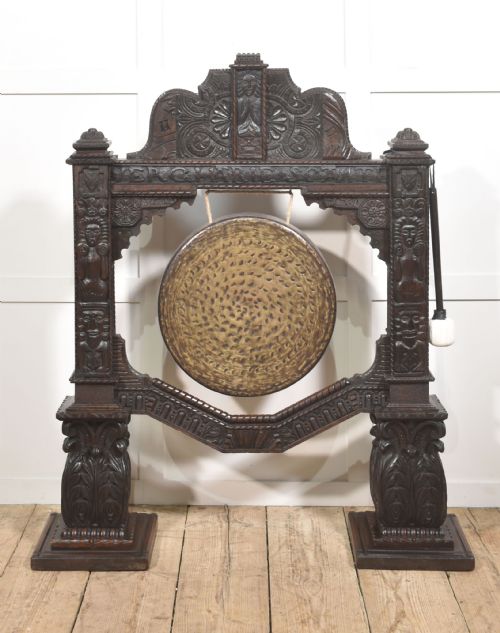


Oak Dinner Gong
An oak dinner gong summons households to the table with resonant brass or horn suspended in sturdy timber.
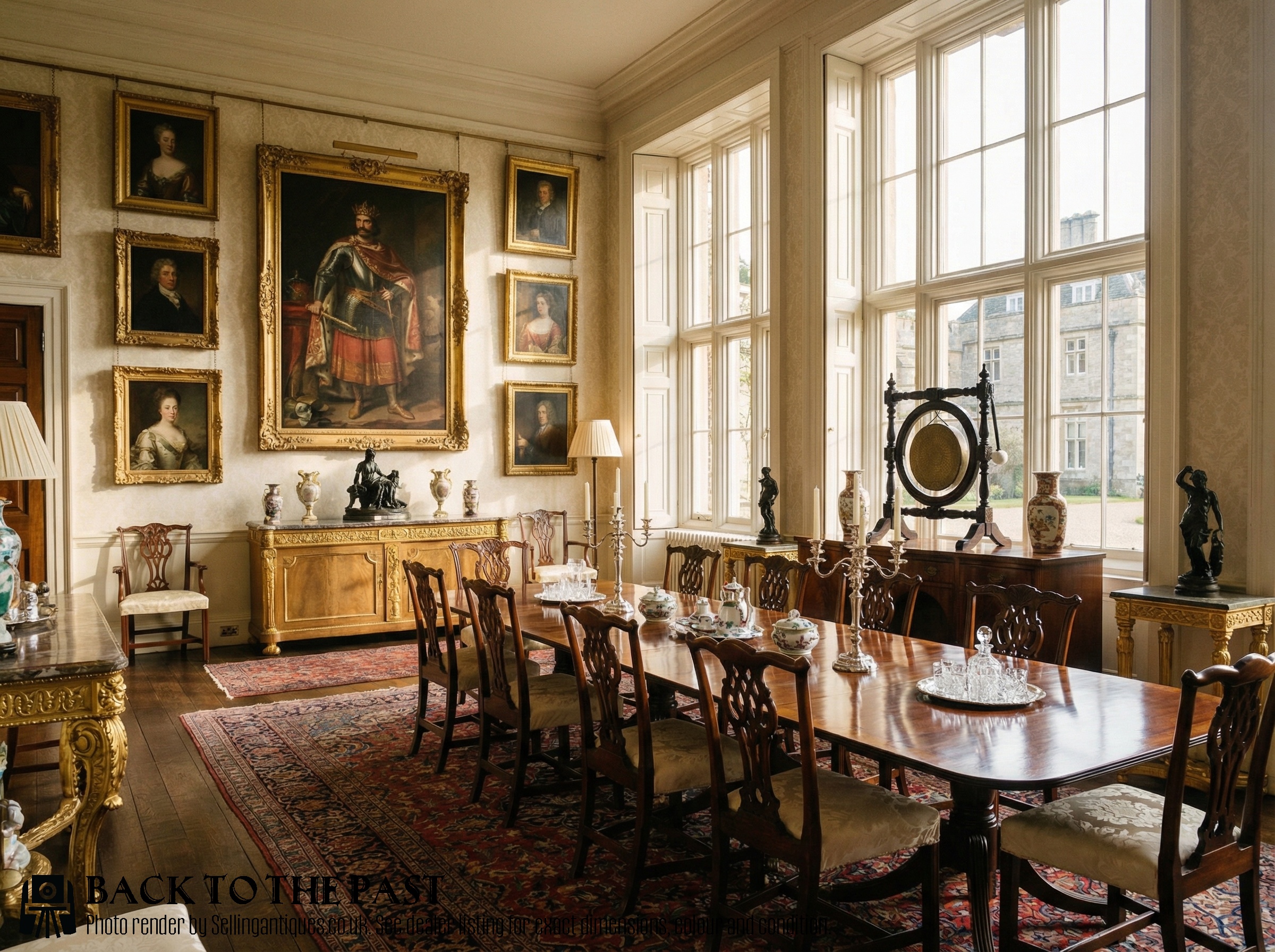
Oak Dinner Gong
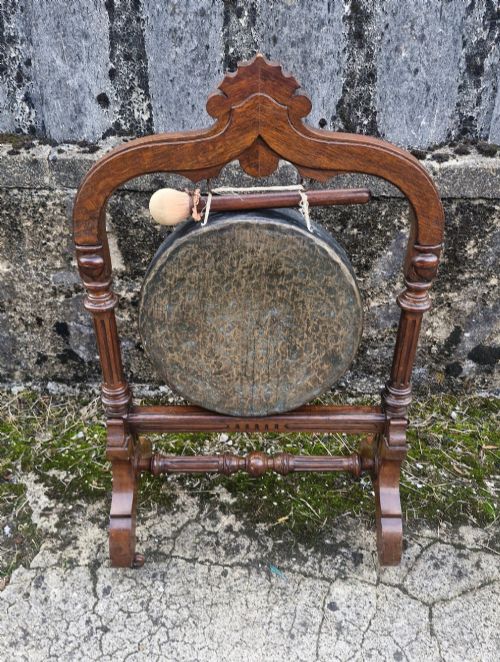
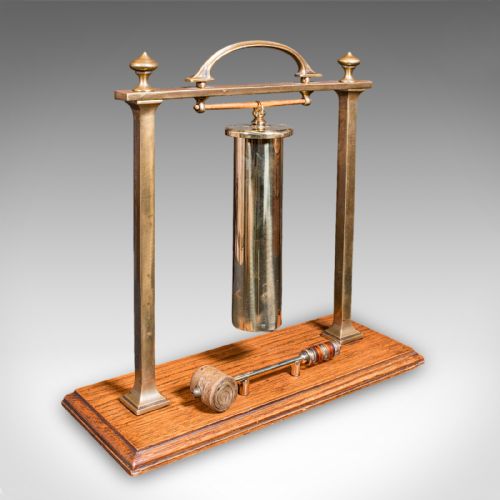
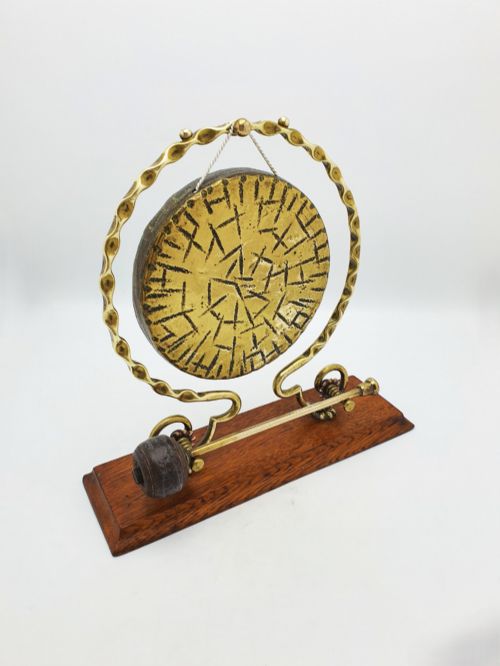
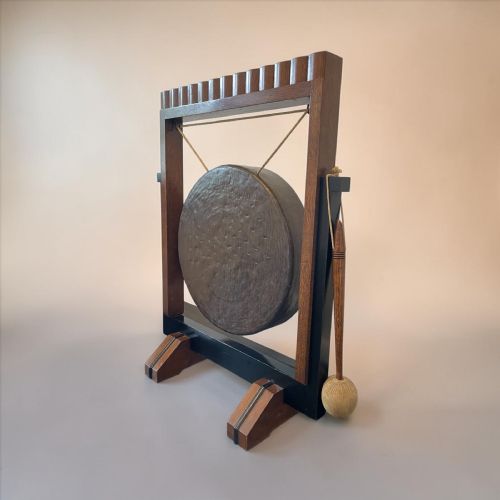
An oak dinner gong combines a solid timber frame with a suspended metal disc, tube, or horn designed to be struck with a mallet. These pieces date principally from the Victorian and Edwardian eras, extending into the 1920s and 1930s with occasional Arts and Crafts or Gothic Revival interpretations.
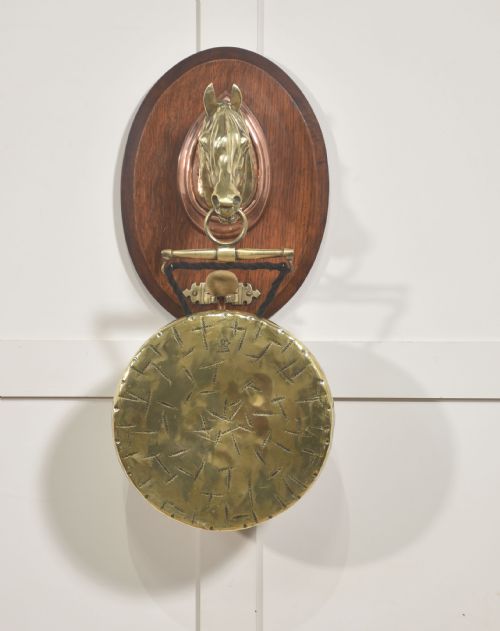
Originating in country houses and suburban villas to announce meals, these objects survive in forms adapted for both wall placement and surface display. The pairing of oak with resonant metal defines the domestic soundscape of the nineteenth and early twentieth centuries.
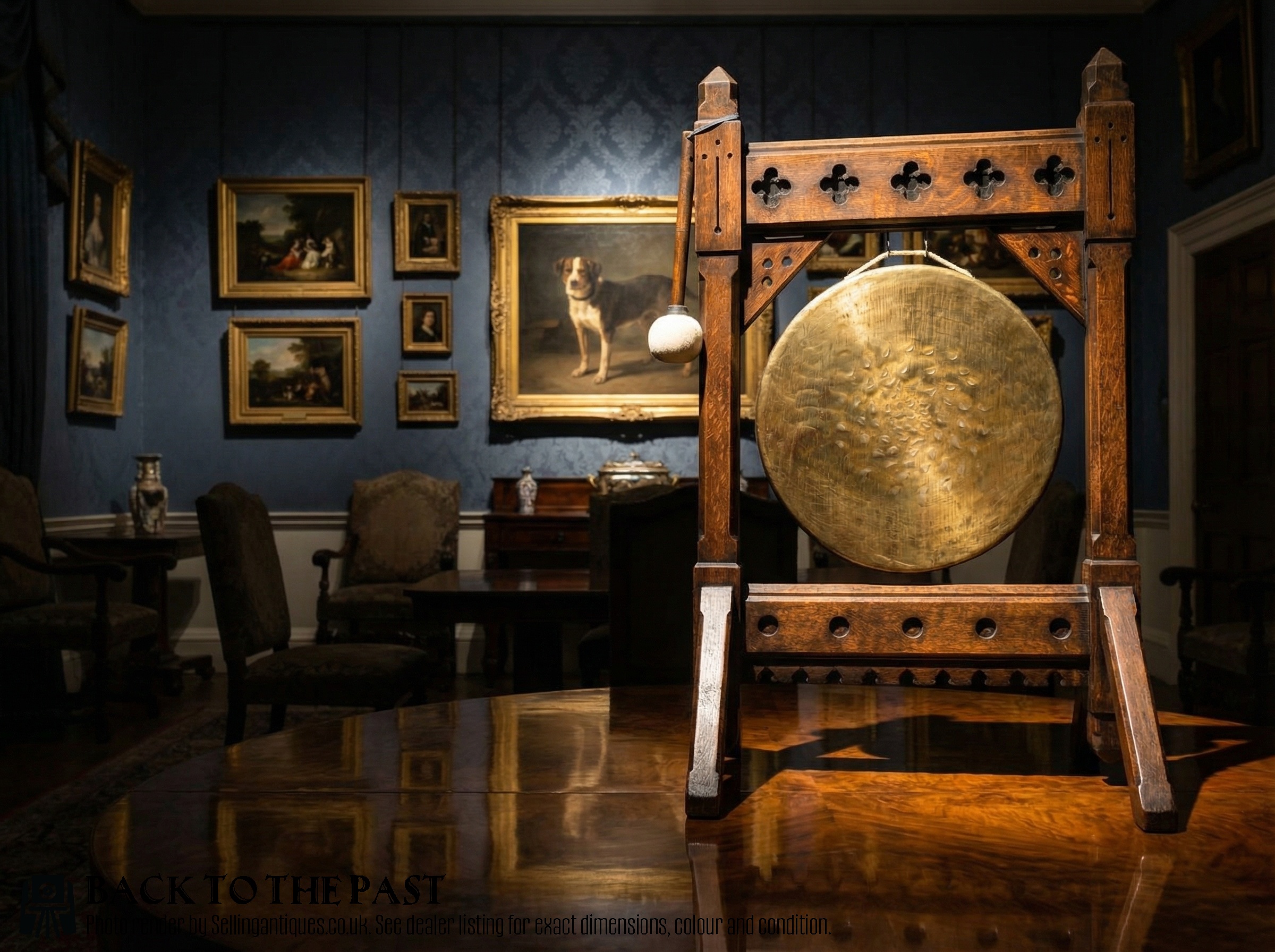
How they were made
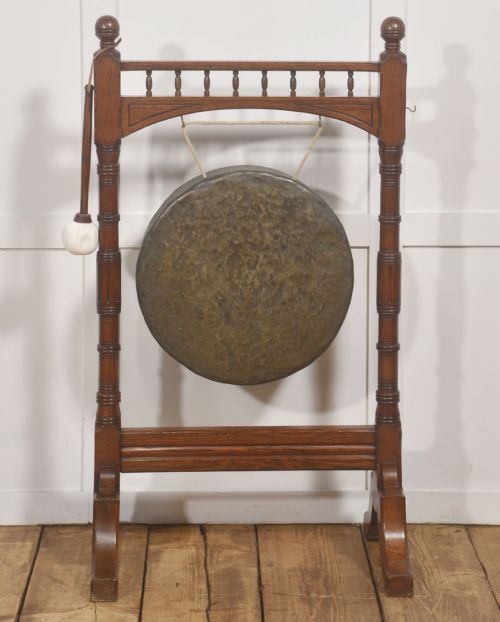
Frames rely on seasoned oak, shaped through turning, bobbin turning, or carving in styles that span plain rustic utility to elaborate Gothic Revival and Arts and Crafts ornamentation. Timber surfaces often display deep patination achieved through decades of polishing.
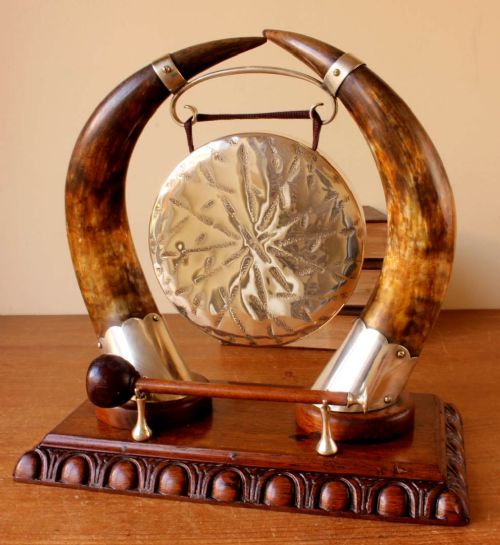
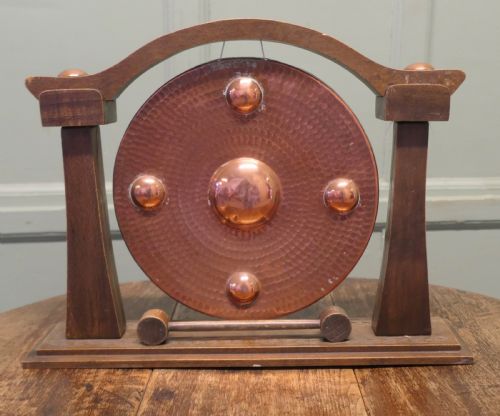
Gongs and bells utilise cast brass, bronze, or copper, sometimes complemented by silver plate, leather, or cord suspension. Animal materials such as cow horn appear frequently as striking elements or resonant horns attached directly to the oak mount.
Oak Dinner Gong Retail Price Guide 2026
Typical asking prices for oak dinner gong among the pieces listed under this phrase on Sellingantiques today, from the lower quarter to the upper quarter. They describe what is for sale here now, not the wider market.
Several examples incorporate cattle horn and horseshoe mounts, proving Victorians liked their supper announcements with a distinct sporting twist.
What varies in quality
Quality rests in the architectural harmony of the oak frame and the purity of the metal cast. Substantial timber mouldings and robust joinery separate ordinary domestic items from pieces intended for prominent display in large halls.
The acoustic resonance of the suspended metal determines the success of the piece as a functioning sound instrument. Metal thickness, proper suspension cordage, and well-balanced strikers ensure a sustained tone rather than a dull thud.
The Oak Dinner Gong Glossary
- Gong
- A resonant metal disc or bowl that produces a sustained tone when struck with a mallet. These are typically suspended within a wooden frame by cord or leather.
- Striker
- The handheld mallet or beater used to sound the gong, often featuring a wooden handle and a padded, leather, or metal head.
- Gothic Revival
- An architectural and decorative style popular during the Victorian period, characterised by pointed arches, trefoils, and heavy carved oak details.
- Arts and Crafts
- A design movement prioritising traditional craftsmanship, visible construction, and simple forms often seen in hand-beaten copper and plain oak frames.
- Bobbin turned
- Timber turned on a lathe to produce a series of rounded, spool-like shapes arranged end to end along the length of a support.
Oak Dinner Gong: Frequently Asked Questions
How were oak dinner gongs used?
Households struck these gongs to signal that dinner was served, drawing family and guests from various rooms to the dining table.
They stood in hallways, antechambers, or verandas, functioning as both practical communication tools and decorative furnishings.
Are the gongs still playable?
Most gongs retain their original acoustic properties and produce a clear, resonant tone when struck with the correct mallet.
The suspension cord and metal condition dictate the quality of the sound produced.
How do I date an oak dinner gong?
Dating relies on stylistic clues within the oak frame, such as Gothic Revival carving, Arts and Crafts beaten metalwork, or bobbin-turned supports.
Victorian and Edwardian examples often exhibit distinct patination and construction methods typical of their decades of manufacture.
Where should I place one at home?
These pieces suit entrance halls, living spaces, or dining rooms where their architectural frames can be mounted securely to a wall or placed on a sturdy table.
Ensure wall-hanging versions are fixed to appropriate structural supports due to the combined weight of the oak and metal.