


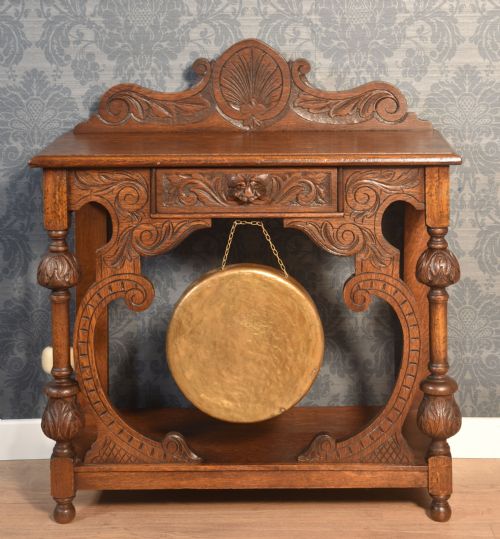
Dark Oak Dinner Gong
A dark oak dinner gong brings resonant Victorian ceremony into a hall, combining timber and beaten metal to summon household and guests.
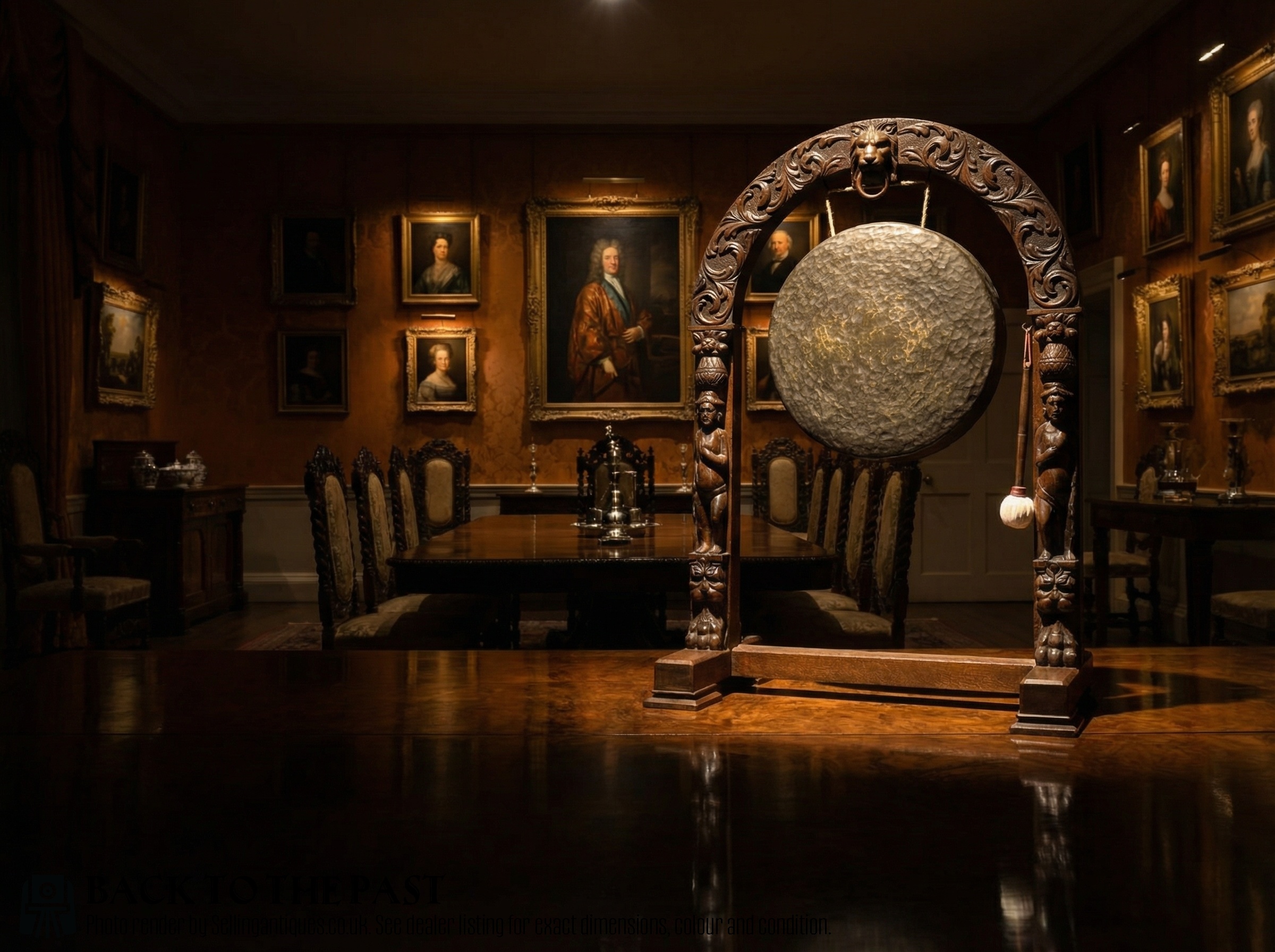
Dark Oak Dinner Gong
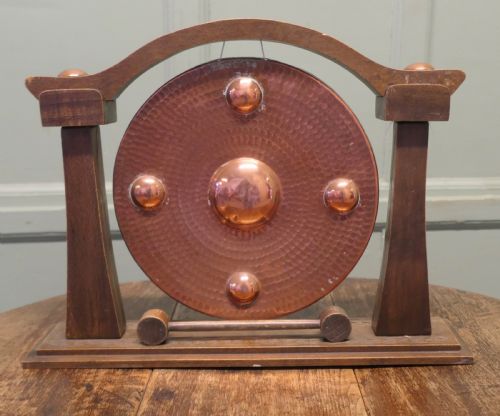
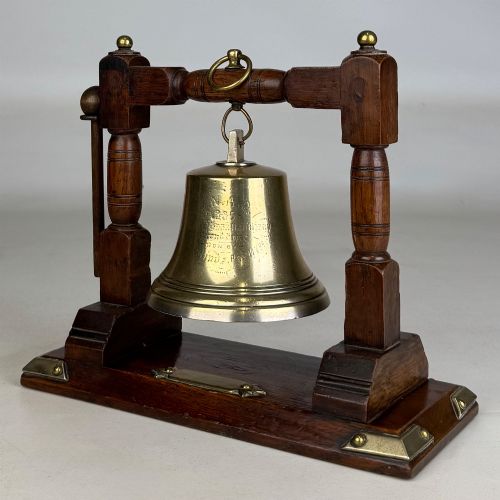
A dark oak dinner gong is a traditional summoning piece found in hallways and dining spaces, combining a suspended metal disc or bell with a substantial wooden frame. You are most likely to encounter Victorian and Edwardian examples featuring robust timber mounts, alongside occasional floor-standing and table variations.
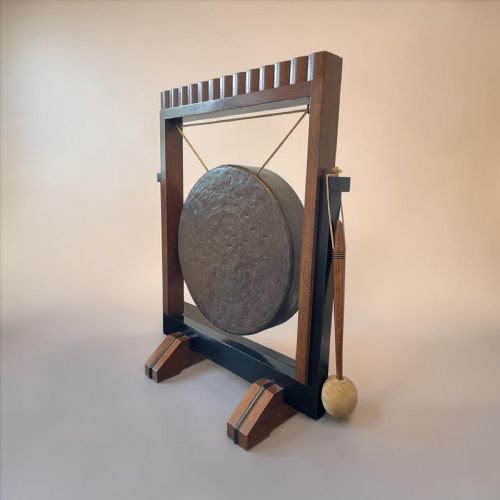
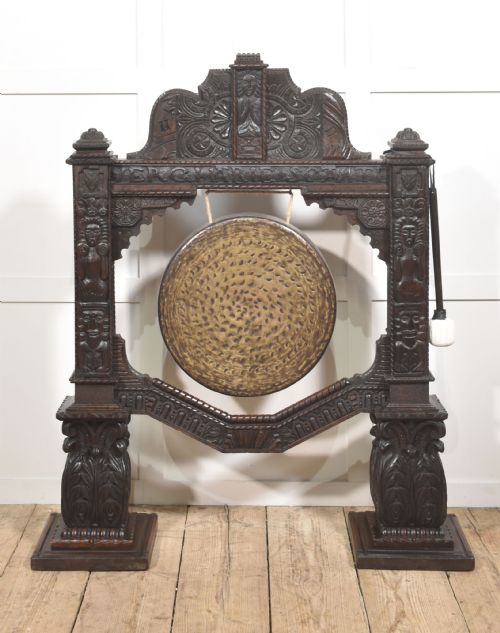
The form spans straightforward Arts and Crafts interpretations and more ornate Gothic Revival designs. Alongside standard tabletop versions, the selection includes monumental pieces and hybrid hall furniture that integrate the gong directly into a table structure.
Origins stretch from the late nineteenth century through the 1930s Art Deco period, capturing decades of domestic ritual. These objects reflect the changing tastes of British interiors, moving from heavy historicism to cleaner modernist lines.
How they were made
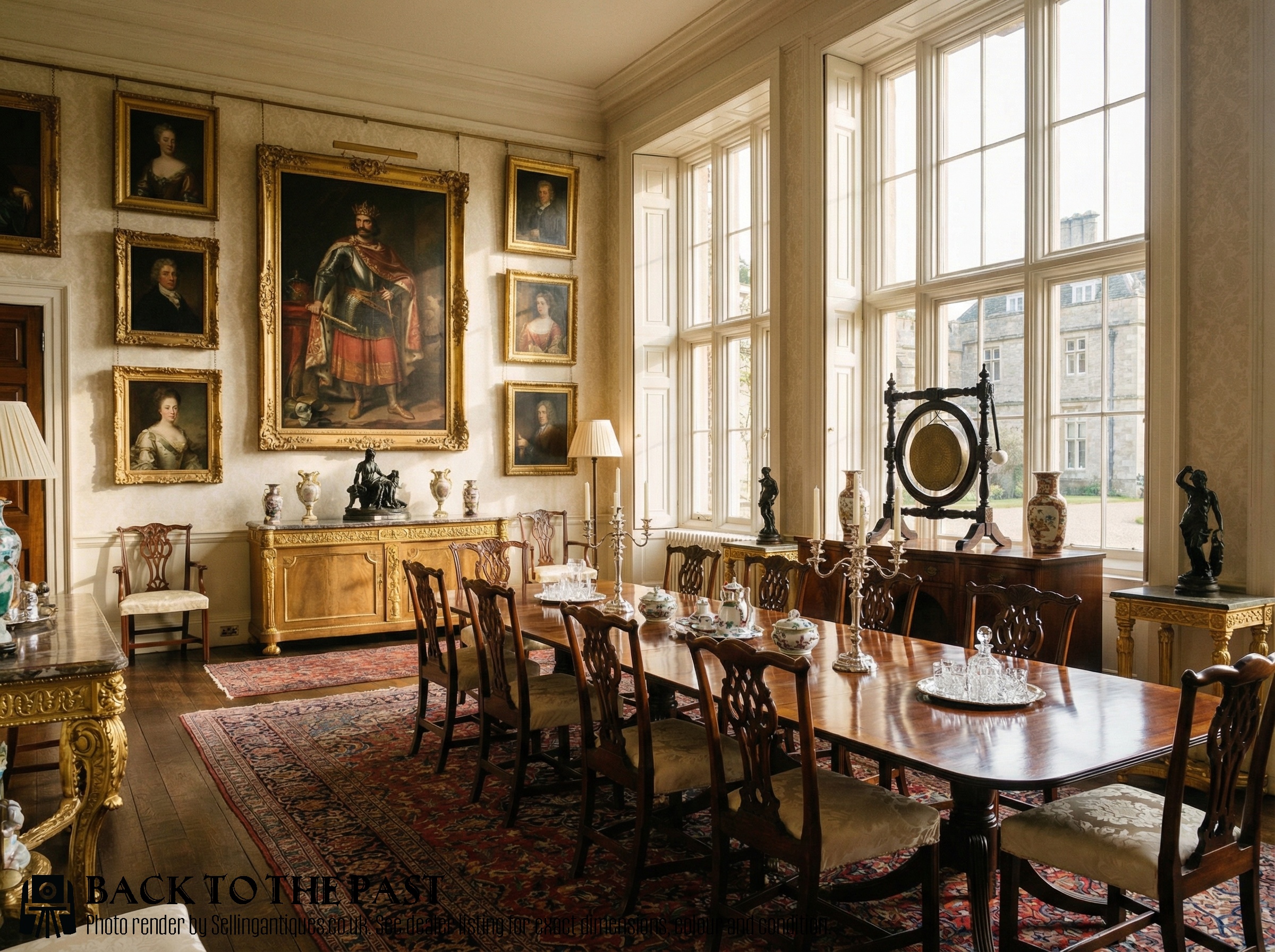
Maker construction relies heavily on seasoned oak, shaped into carved frames, stands, and tables to support the striking apparatus. Metalwork components utilise brass, copper, and bronze, often hammered or cast to produce a resonant tone when struck with a mallet.
Suspension relies on durable organic materials such as leather, cord, and rope to hang the metal gong securely within its wooden aperture. Joinery and carving techniques reflect the prevailing style of the period, from rustic Victorian hand-carving to geometric Arts and Crafts framing.
Listings feature oak combined with brass, copper, and bronze, spanning the Victorian, Edwardian, and Art Deco periods.
What varies in quality
Quality rests in the resonance of the metal and the depth of the oak frame rather than mere surface decoration. Superior pieces display harmonious proportions where the weight of the timber matches the acoustic presence of the brass or copper disc.
Carving execution defines the upper tier of the range, separating mass-produced mounts from individually carved Arts and Crafts or Gothic Revival pieces. The integrity of original suspension cords and leather straps also separates untouched examples from later restorations.
The Dark Oak Dinner Gong Glossary
- Dinner gong
- A percussion instrument mounted in a frame, used historically in large houses to announce meals. They range from small table bells to monumental floor-standing versions.
- Gothic Revival
- An architectural and decorative style drawing on medieval forms, frequently seen in pointed arches and heavy carving on nineteenth-century pieces. This aesthetic gives gongs a solemn, ecclesiastical presence.
- Arts and Crafts
- A design movement prioritising traditional craftsmanship, visible grain, and simple construction over industrial ornamentation. Pieces from this tradition often feature unpretentious oak frames.
Dark Oak Dinner Gong: Frequently Asked Questions
How were dinner gongs used historically?
Servants struck the metal disc at predetermined intervals to signal that dinner was served, allowing guests time to assemble in the dining room.
The deep resonance carried across large Victorian and Edwardian country houses, serving as a functional acoustic timer before modern household clocks.
What periods do these gongs come from?
The listings span the late nineteenth century through the Edwardian era and into the 1930s Art Deco period.
Victorian and Gothic Revival examples tend to be heavily carved, while later twentieth-century pieces adopt simpler geometric lines.
How do I maintain the oak and metal?
Feed the dark oak timber occasionally with appropriate wax to preserve the grain and prevent the wood from drying out in heated rooms.
Polish the brass or copper only if you prefer a bright finish, though many collectors leave the natural aged patina untouched.
Where should I place a dinner gong?
Hallways and entrance spaces provide the traditional setting, where the upright frame complements console tables and welcomes visitors.
Ensure the piece stands on a stable surface or floor so the frame does not rattle against walls when the gong is struck.