
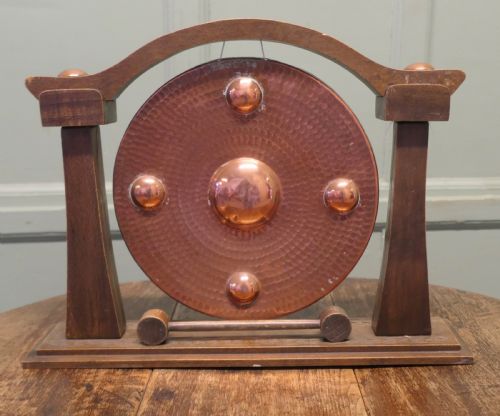
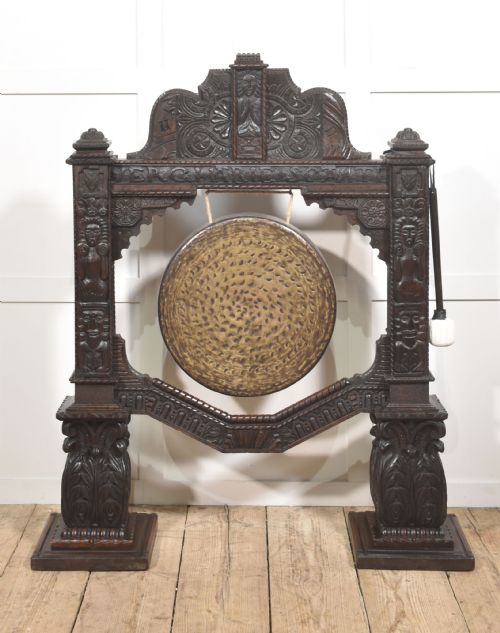


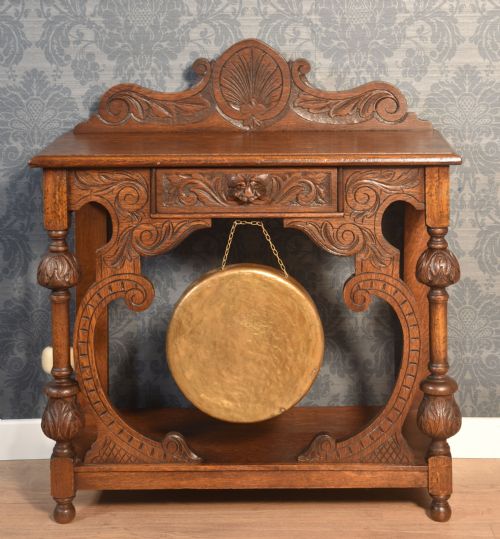
Carved Oak Dinner Gong
These carved oak dinner gongs bring unmistakable period character and a resonant tone to a hallway or dining room.
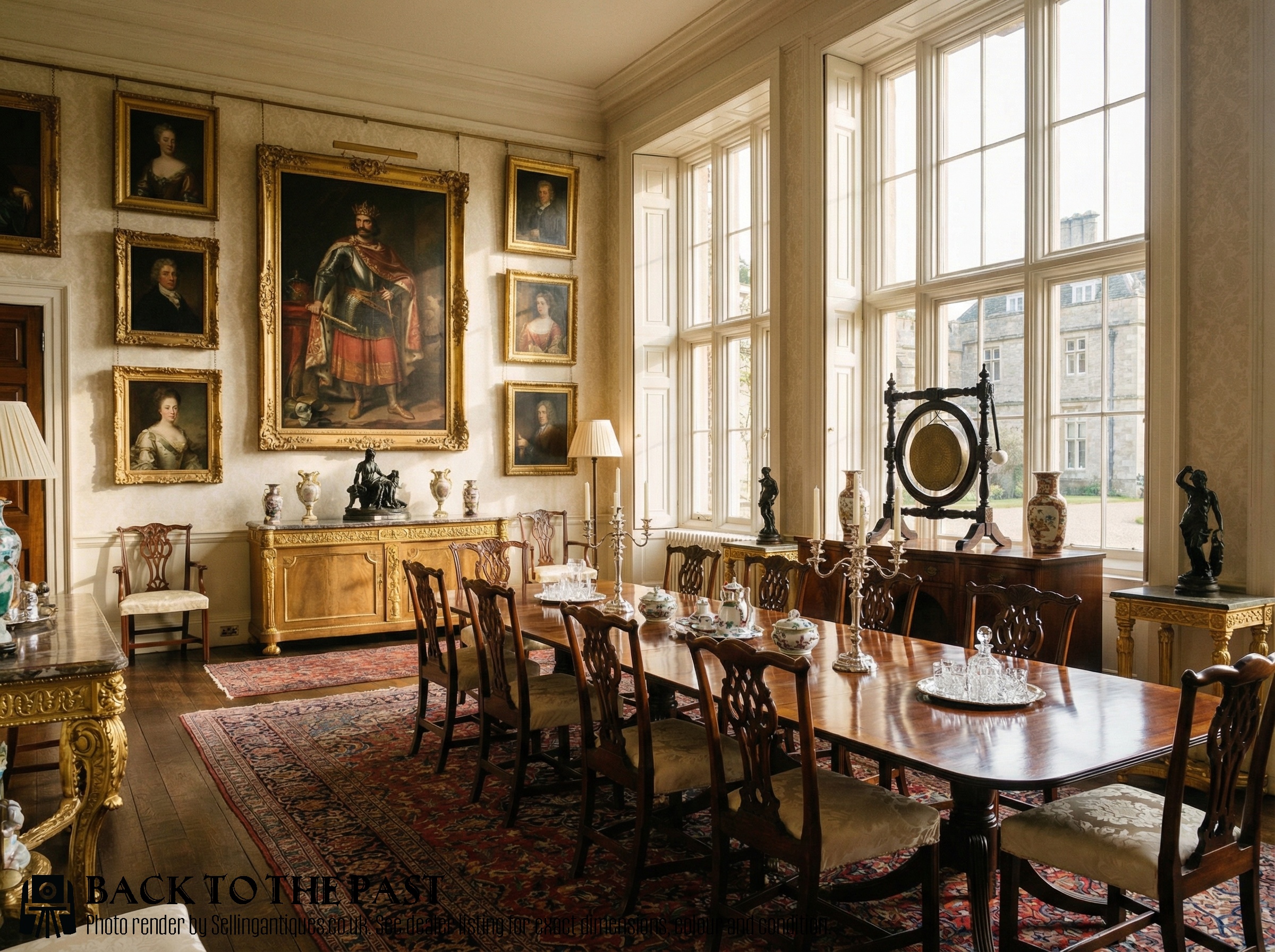
Carved Oak Dinner Gong
A carved oak dinner gong combines a solid timber frame with a suspended metal disc, designed to summon household members to meals with a deep, echoing strike. You will find these pieces largely rooted in the nineteenth century, spanning Victorian, Gothic Revival, and Arts and Crafts aesthetics.
The dominant forms on this page include freestanding table gongs and larger framed designs, occasionally accompanied by associated hall furniture. They rely on substantial timber stands to support the weight of the metal and allow proper vibration.
Originating in an era when domestic signaling was both practical and theatrical, these gongs served grand country houses and suburban villas alike. Today they function as striking decorative focal points that retain their original acoustic purpose.
Materials and construction
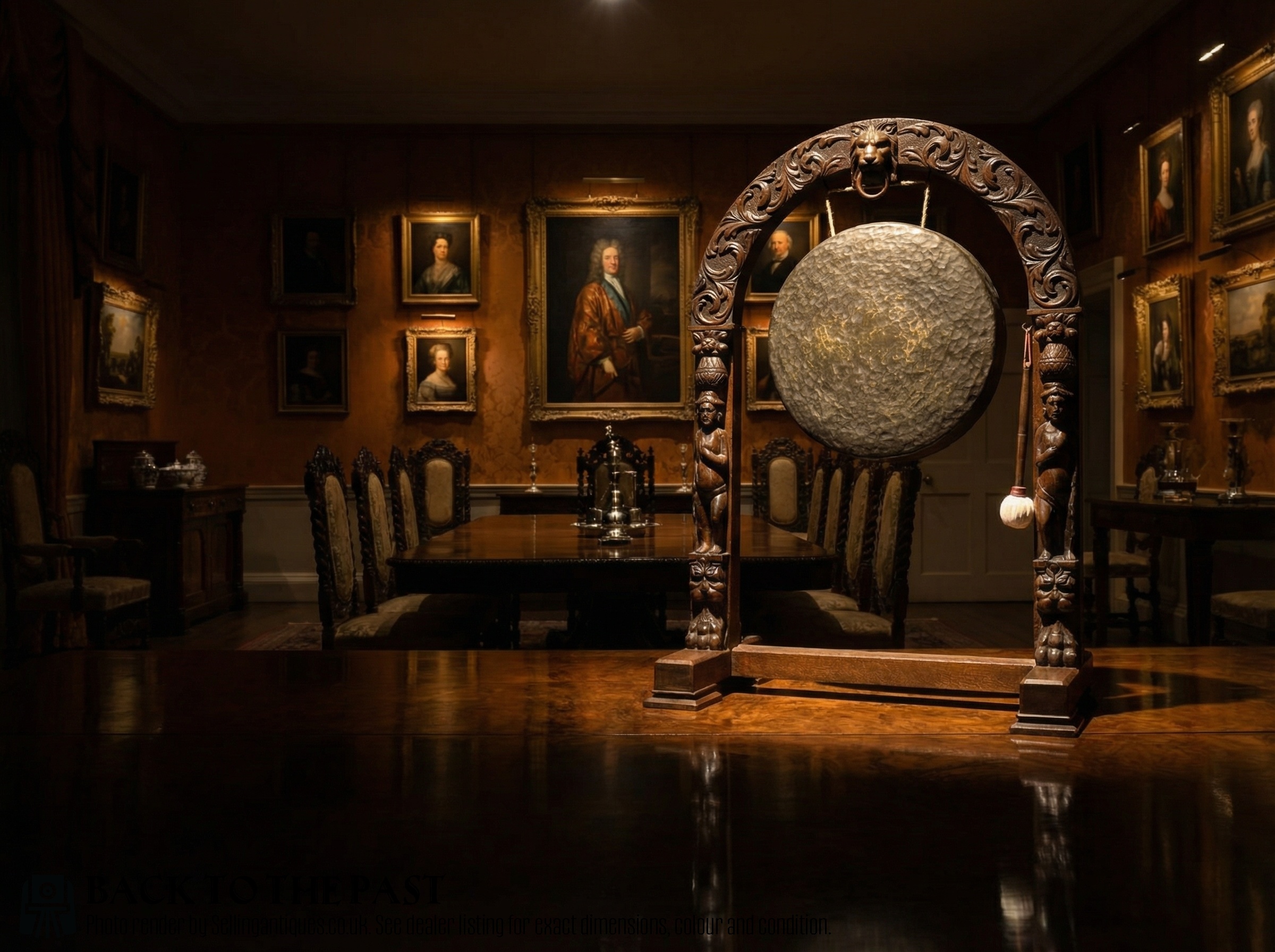
Makers built the structural frames from dense oak, often selecting quarter-sawn timber to expose distinctive medullary rays. Carvers applied deep relief work, geometric patterns, or pointed arches directly into the wood.
Suspension relies on durable cords, leather, or rope threaded through the frame to hold the brass or copper disc securely. This allows the metal to hang freely without dampening the acoustic resonance when struck with a mallet.
Listings combine oak frames with brass, copper, leather, and rope across Victorian, Gothic Revival, and Arts and Crafts styles.
Assessing quality and craftsmanship
The distinction between standard examples and finer pieces lies in the depth and sharpness of the woodcarving. Superior gongs exhibit crisp, hand-chiselled details rather than shallow, mechanical shaping.
Proportion and material pairing also dictate standing quality, where robust oak frames balance the heft of thick brass or copper plates. The retention of original suspension cords and matched striking mallets further elevates an example.
The Carved Oak Dinner Gong Glossary
- Gothic Revival
- A nineteenth-century design movement drawing inspiration from medieval architecture, featuring pointed arches, tracery, and heavy carved details.
- Arts and Crafts
- A design movement prioritising traditional craftsmanship, simple forms, and visible hand-working over mass production.
- Table gong
- A smaller version designed to sit on furniture surfaces rather than stand directly on the floor in a hallway.
- Quarter-sawn oak
- Timber cut radially from the log, producing a stable board with prominent grain flecks often prized in period furniture.
Carved Oak Dinner Gong: Frequently Asked Questions
How do I care for the oak frame?
Dust the carved timber regularly with a dry cloth and apply a traditional beeswax occasionally to nourish the grain. Avoid placing the gong near direct heat sources that might cause the wood to dry out.
Keep the metal disc clean with a soft cloth, taking care not to let cleaning residues stain the surrounding timber framework.
What periods do these gongs date from?
The pieces seen here date primarily from the nineteenth century and the early twentieth century, encompassing the Victorian era and the Arts and Crafts movement.
Stylistic cues such as Gothic tracery or plain oak framing help place an item within these broad historical periods.
How were these gongs originally used?
Households struck the suspended metal disc with a wooden mallet to announce the evening meal or gather family members from distant rooms.
The deep resonant note carried effectively through large Victorian hallways and reception spaces.
Are the hanging cords original?
Original suspension cords, leather straps, or ropes are uncommon due to natural wear and tear over the decades. Many surviving pieces have been re-hung using sympathetic materials to ensure safe support for the metal disc.
Inspect the current hanging method to confirm it securely bears the weight of the brass or copper gong.