


Antique Tabletop Gong
These antique tabletop gongs bring a resonant, decorative chime to a room, forged from brass, bronze, copper and iron.
Antique Tabletop Gong
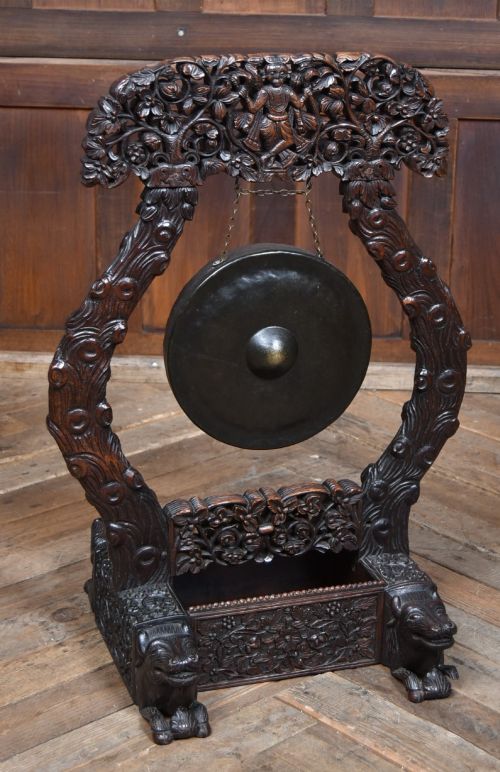
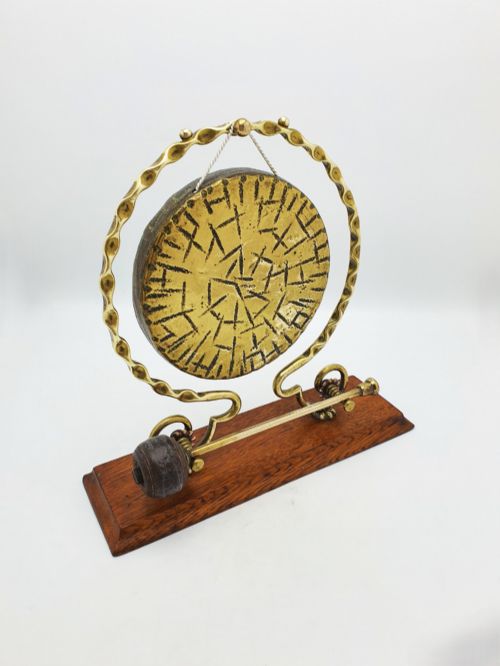
An antique tabletop gong is a compact percussion instrument designed for interior service or display, most frequently encountered in brass, bronze, and silver plate mounted on oak, walnut, bamboo, or carved wooden frames. Buyers seeking an antique tabletop gong will find pieces spanning the Victorian and Edwardian eras, alongside various stylistic movements such as Art Nouveau, Chinoiserie, Japonisme, and Anglo-Indian design. These dinner gongs and table gongs range from simple metal discs to elaborate carved stands incorporating materials like horn and cord.
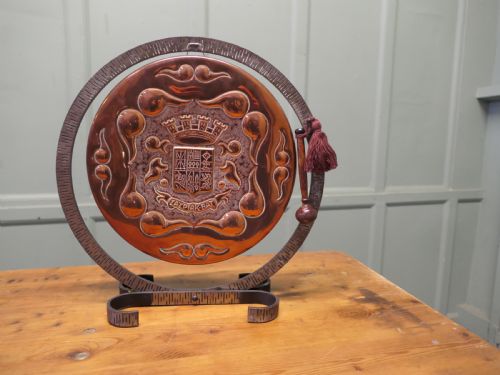
The assortment on this page reflects a diverse international influence, featuring Burmese, Japanese, Chinese, and Basque folk art examples alongside domestic British production. Stands are fashioned from carved hardwood or rustic oak, while the striking elements often include handheld wooden or metal strikers. Whether looking for a brass bell on an Edwardian stand or a wrought iron framed dinner gong from the nineteenth century, collectors appreciate the distinct acoustic character and decorative presence of each piece.
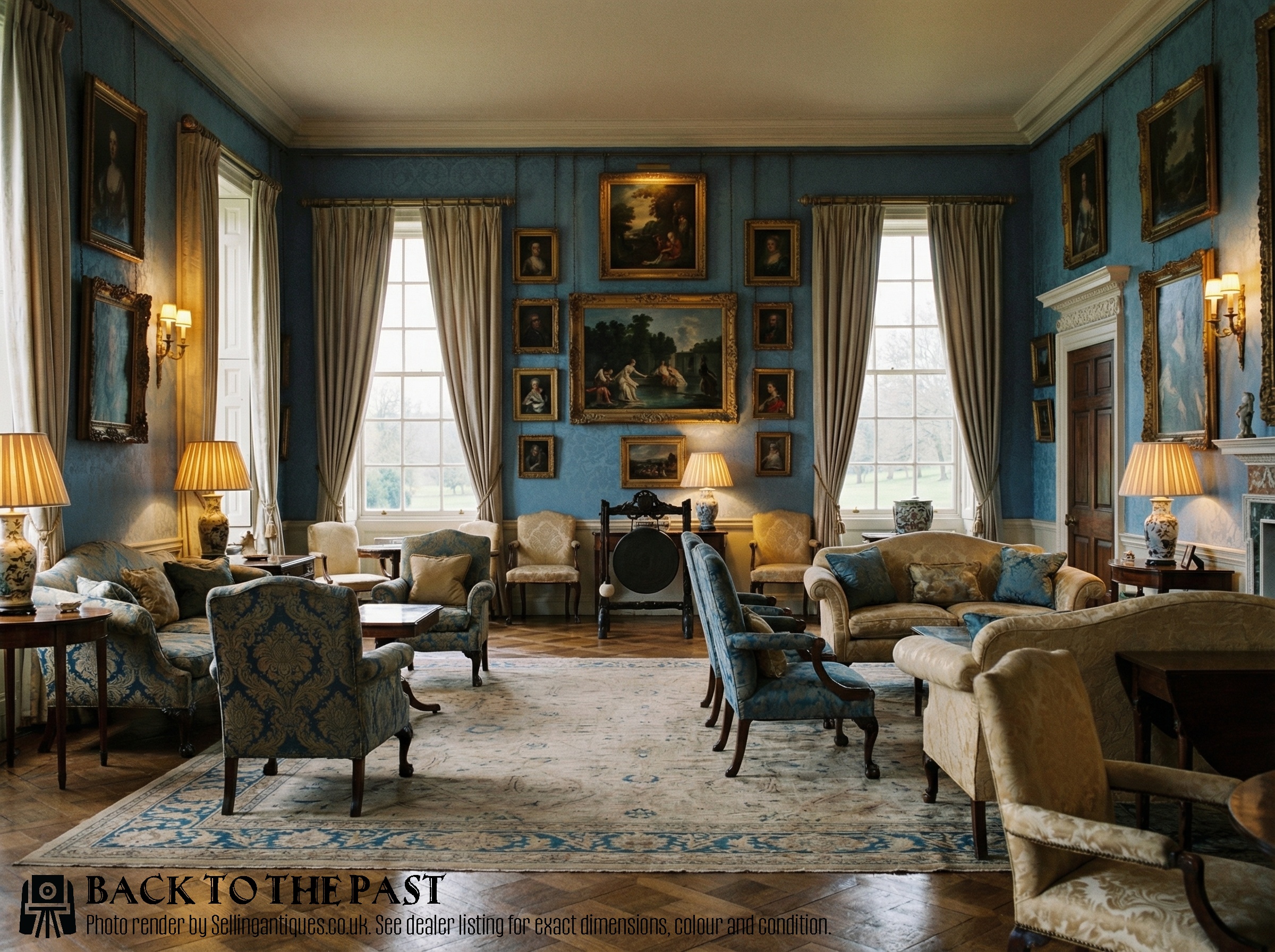
How they were made
The construction of an antique tabletop gong relies on metalworking and cabinet making, combining cast or hand-hammered metals with timber frames. Brass, bronze, and copper components are shaped through casting or beating, producing resonant discs and bells that hang securely from cord or metal hooks.
Supporting frames utilise seasoned hardwoods such as oak and walnut, alongside bamboo, horn, and wrought iron. Artisans carved intricate details into the wooden stands for oriental and aesthetic movement pieces, while Basque folk art examples combine copper and iron with skilled manual hammering.
Regional styles represented include Anglo-Indian, Basque folk art, Chinoiserie, Japonisme, and Art Nouveau alongside standard Victorian and Edwardian designs.
What varies in quality
Quality in these pieces rests upon the harmony between the resonance of the metal gong and the structural integrity of its frame. Superior examples demonstrate careful metallurgy that produces a clear, sustained tone when struck, paired with solid timber construction that shows confident hand-carving or secure joinery.
The refinement of the decorative details, from the intricacy of the carved stands to the quality of the silver plating or hand-hammered finish, distinguishes standard production from finer workmanship. Original matching strikers and well-preserved mounting cords also contribute to the integrity of a piece.
The Antique Tabletop Gong Glossary
- Table Gong
- A small percussion instrument mounted on a stand, designed for placement on a surface rather than hanging from a wall or ceiling. These are often used as dinner gongs to announce meals.
- Dinner Gong
- A percussion piece traditionally used in large households to summon residents and guests to the dining room. They typically feature a metal disc or bell suspended from a decorative wooden or metal frame.
- Japonisme
- A nineteenth-century artistic style reflecting the influence of Japanese art and design on Western decorative arts. Pieces in this style often incorporate motifs and structural elements inspired by Japanese craftsmanship.
- Aesthetic Movement
- A late nineteenth-century movement that emphasised aesthetic value over moral or narrative themes in art and design. Objects from this period frequently display refined craftsmanship and stylised ornamentation.
- Silver Plate
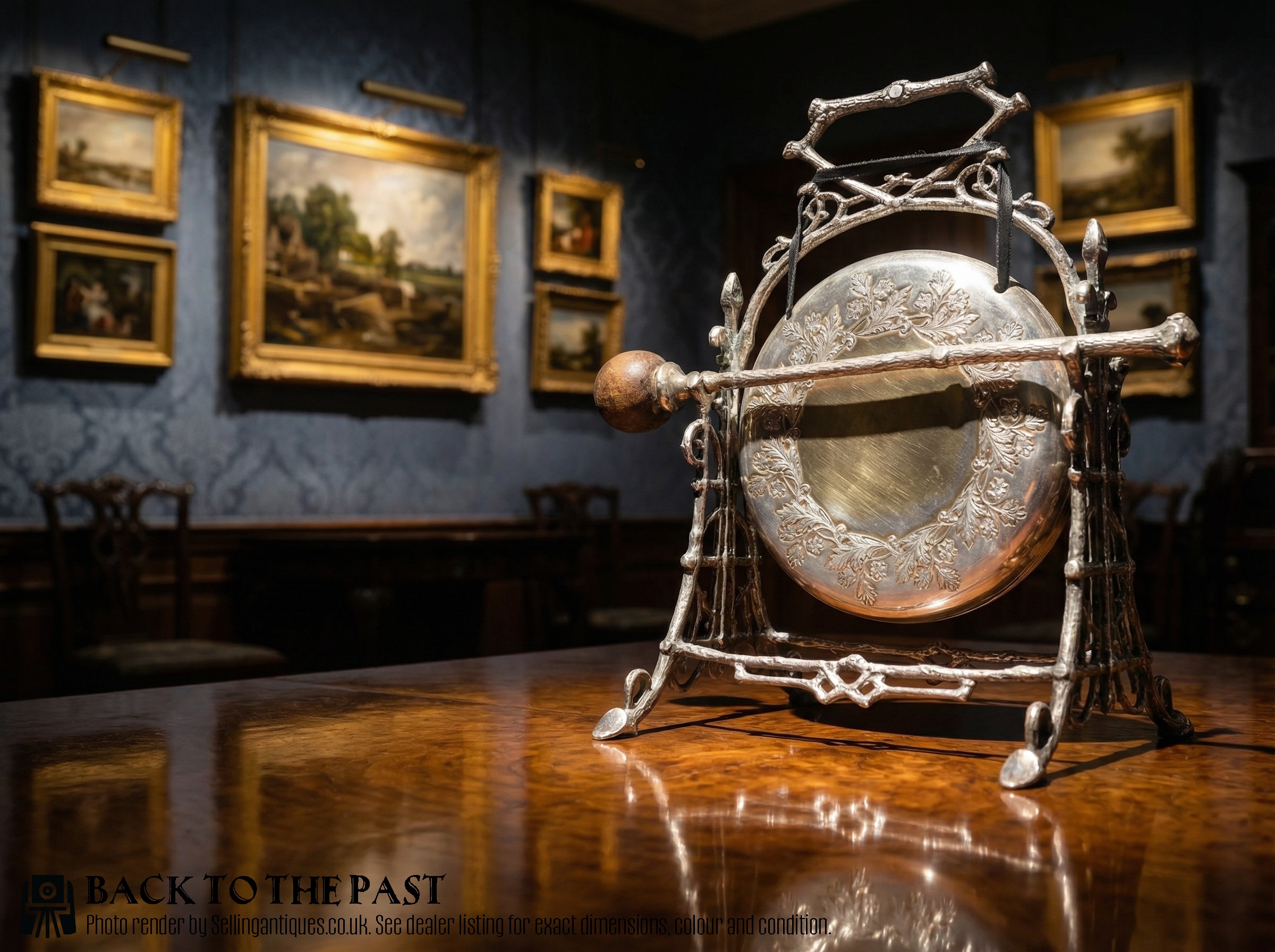
- A thin layer of silver applied to a base metal, such as copper or brass, to give the appearance of solid silver. This finish is commonly found on nineteenth-century table gongs.
Antique Tabletop Gong: Frequently Asked Questions
How were tabletop gongs used?
These gongs served primarily as domestic signals in Victorian and Edwardian households, most commonly used to announce that dinner was served. Servants or family members struck the metal disc with a handheld striker to produce a resonant tone that carried through the rooms.
Beyond dining rooms, they functioned as decorative desk accessories or call bells in large houses. Their distinctive chime provided a practical method for gaining attention before electric bells became commonplace.
What metals are used for the gongs?
The hanging discs and bells are predominantly cast or hammered from brass, bronze, copper, and silver plate. Each metal produces a different acoustic quality, with bronze and brass offering a bright, sustained resonance.
Supporting components incorporate mixed metals, including wrought iron frames and silver-plated mounts. The choice of metal often reflects the stylistic origin, such as Japanese bronze or Basque copper and iron.
How do I date an antique gong?
Dating relies on stylistic clues, manufacturing techniques, and materials associated with specific periods like the Victorian or Edwardian eras. Art Nouveau and Aesthetic Movement designs point towards the late nineteenth and early twentieth centuries.
Mould marks, construction methods for the wooden frames, and the composition of the metal give further chronological indications. Examining the type of silver plating or hand-hammered finish helps narrow down the decade of production.
How do I care for an antique gong?
Maintenance involves dusting the wooden frame regularly with a dry cloth and keeping the metal components free from moisture. Harsh chemical cleaners should be avoided on patinated brass, bronze, or silver-plated surfaces to preserve their historic finish.
If cleaning is necessary for the metal, a gentle polish suitable for antique metals can be used sparingly. Ensuring the suspension cord remains secure will protect the gong from accidental drops.