




Edwardian Carved Gong
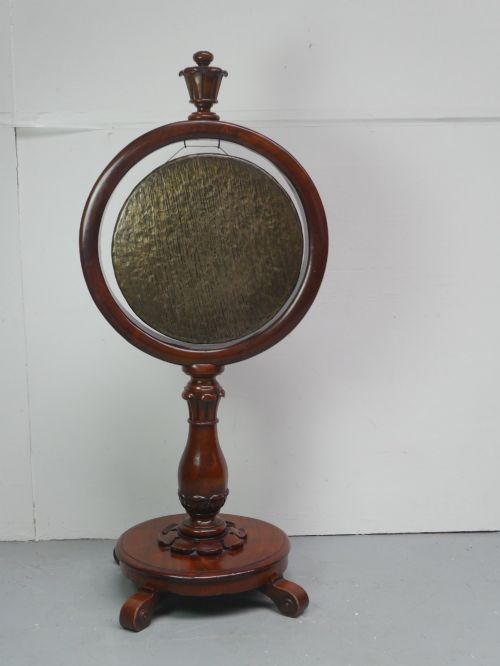
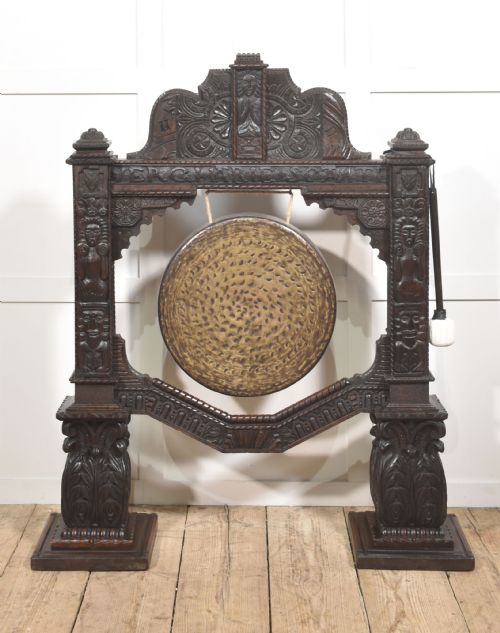
An edwardian carved gong brings deep resonance to a hall, combining robust timber frames with bright metal resonance.
Edwardian Carved Gong
An edwardian carved gong comprises a suspended metal disc or bell struck with a mallet, housed within a decorative wooden frame. These pieces function as striking timekeepers or call instruments for meals within large houses.
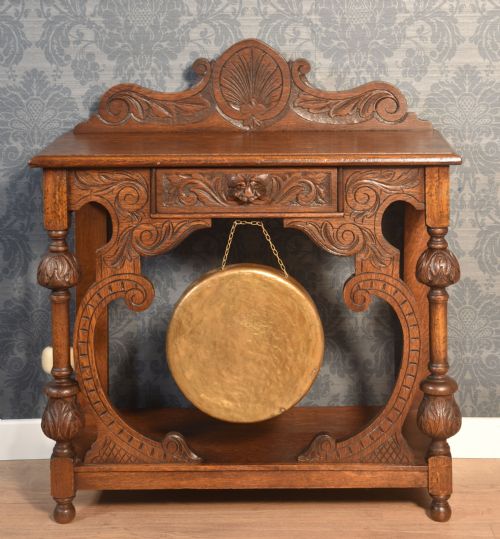
The versions met most frequently on this page combine carved oak frameworks with brass or bronze hanging gongs. They span the late nineteenth century through to the Edwardian period, often taking table or dinner formats.
How they were made
Frames rely upon seasoned oak or mahogany, shaped through traditional carving techniques and jointed securely to support the swinging weight. Decorative styles borrow from Gothic revival, Japonisme, and Chinoiserie motifs.
The gongs themselves utilise cast bronze or brass, suspended by cords or leather straps to allow maximum vibration and sustain when struck.
Listings feature oak and mahogany frames paired with brass or bronze bells, spanning Victorian and Edwardian periods.
What varies in quality
Quality rests primarily in the crispness of the timber carving and the purity of the metal cast. Crisp detailing across Gothic or oriental motifs separates ambitious workshops from standard commercial production.
The acoustic properties of the metal and the structural integrity of the frame determine the enduring utility of each piece. Heavier gauge brass and dense hardwood frames yield a clearer, more resonant tone.
The Edwardian Carved Gong Glossary
- Dinner Gong
- A large striking instrument mounted on a stand, used historically to summon household members to meals. They sit upon tables or floor stands in entrance halls.
- Gothic Revival
- An architectural and decorative style drawing inspiration from medieval design. Pieces often feature pointed arches, trefoils, and heavy carved tracery.
- Japonisme
- The influence of Japanese art on Western design during the late nineteenth century. It introduces asymmetrical compositions and naturalistic motifs to British furnishings.
- Bronze
- An alloy of copper and tin utilised for its superior acoustic resonance in bell-making. It produces a rich, sustained tone when struck with a padded mallet.
Edwardian Carved Gong: Frequently Asked Questions
What is an edwardian carved gong?
It is a decorative musical percussion instrument housed in a carved wooden frame, designed to summon guests to dining rooms.
Such pieces utilise materials like oak, mahogany, brass, and bronze, often carved in Gothic revival or oriental styles.
Where were dinner gongs placed?
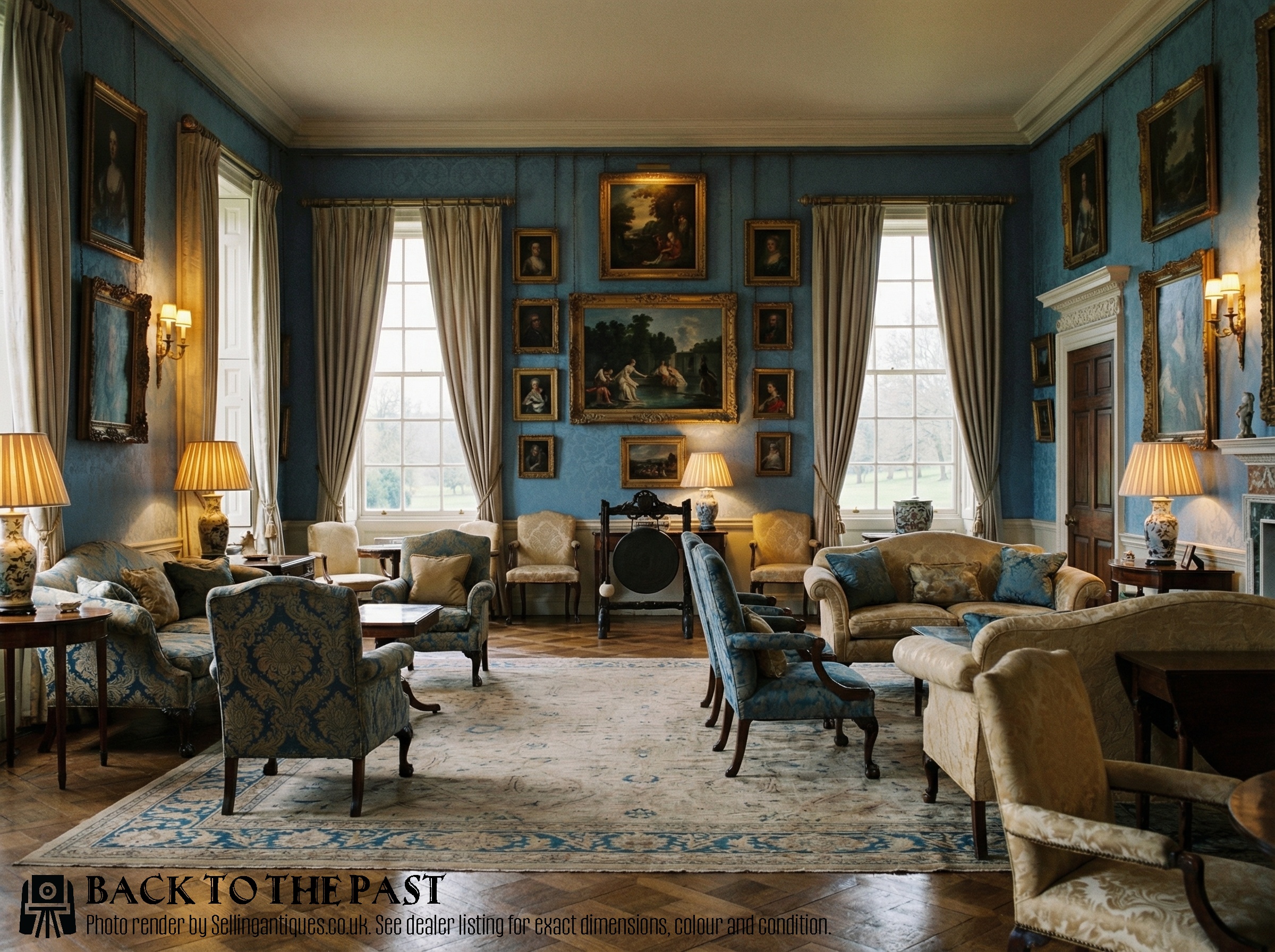
They traditionally stood in large entrance halls or corridors so the sound could carry clearly throughout the country house.
Table versions sat upon sideboards or hall tables, remaining accessible for daily use by the household.
How do you date an edwardian gong?
Dating relies upon stylistic clues within the woodwork, such as specific Gothic revival or Japonisme motifs popular during the late nineteenth and early twentieth centuries.
Materials like brass, oak, and sometimes cattle horn or glass components help align the piece with Victorian and Edwardian manufacturing periods.