

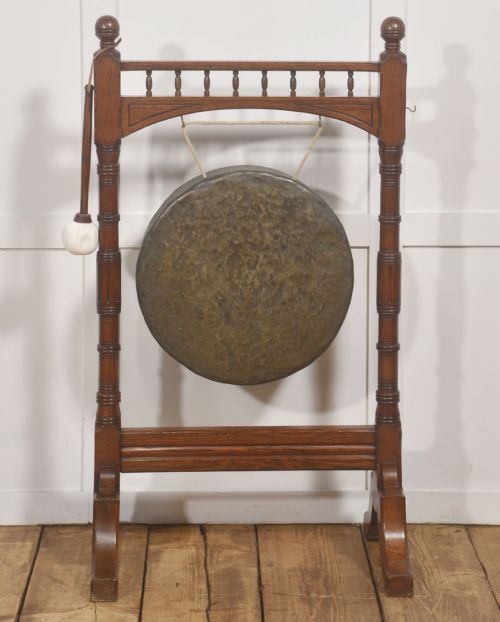
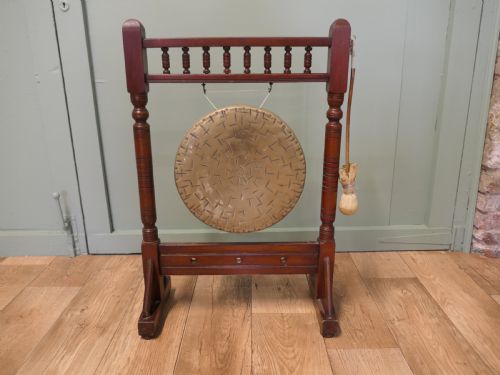
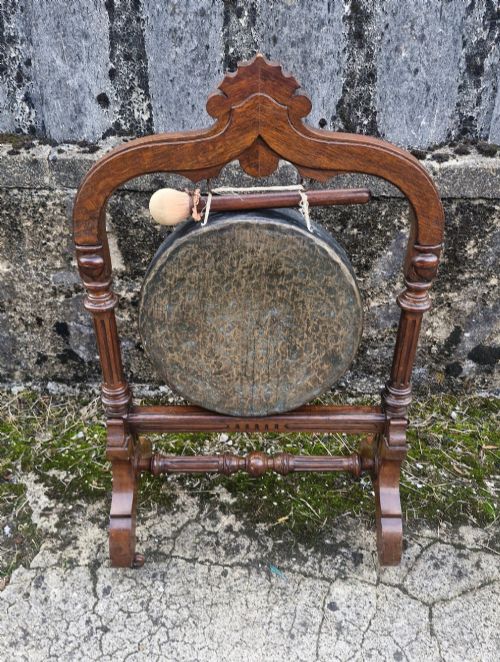


Traditional Brass Gong
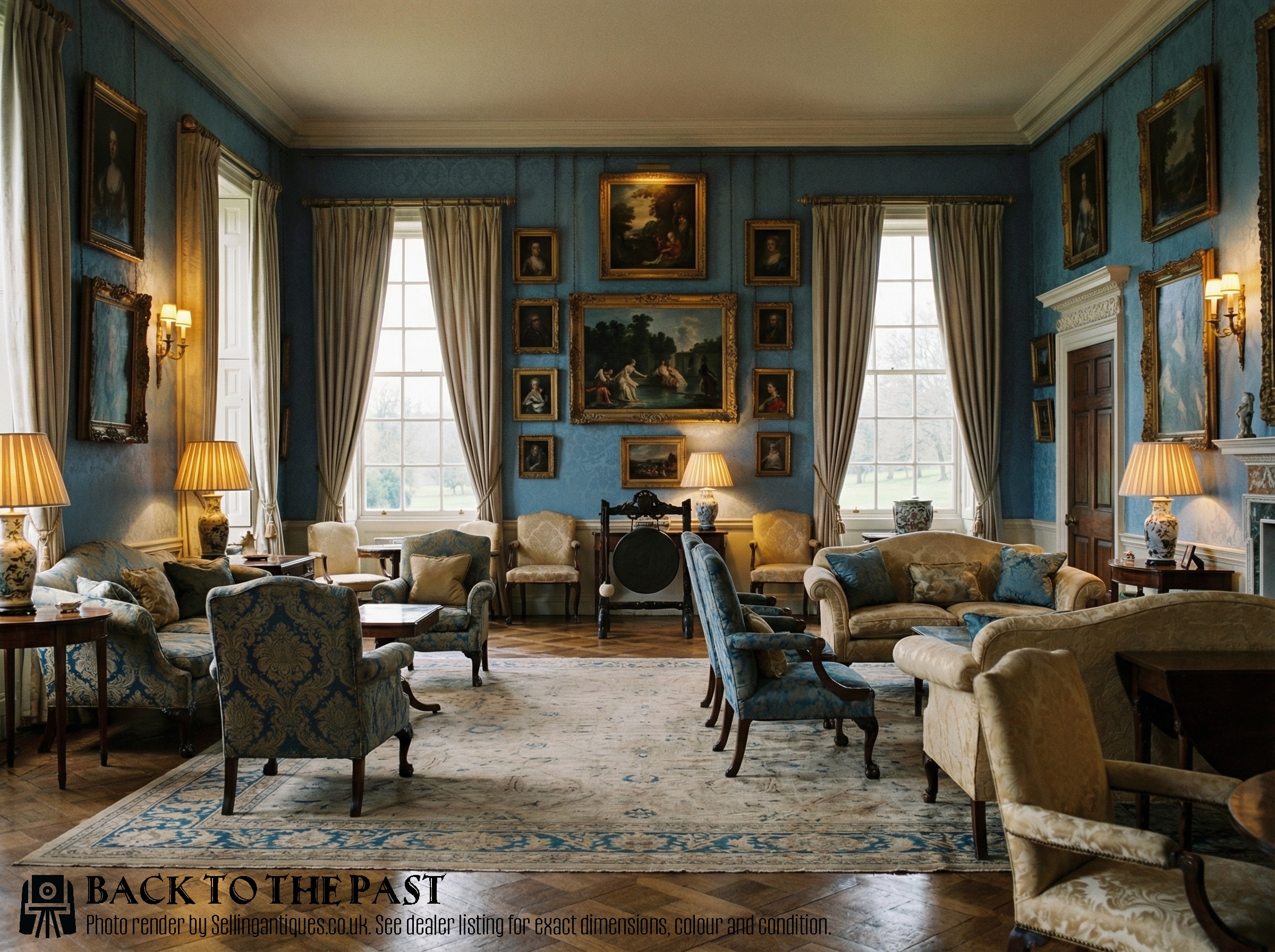
A traditional brass gong brings resonant depth and striking presence to a hall or dining room.
Traditional Brass Gong
A traditional brass gong serves as a commanding focal point, designed originally to summon households to meals. Buyers searching for a traditional brass gong encounter various forms ranging from table gongs to large dinner gongs.
The pieces on this page span several periods, including the Victorian era, the nineteenth century, and the early twentieth century. Examples encompass Scottish country house items, Victorian bamboo designs, and Chinese dragon carved pieces.
Framing structures vary significantly across the selection. Common mountings include carved oak frames, wrought iron stands, bamboo supports, and distinctive combinations of oak and cattle horn.
How they were made
Makers utilised cast bronze and brass for the resonant disc, paired with sturdy structural timbers such as oak and mahogany. Natural cord and textile elements often suspend the heavy metal disc securely within its frame.
Craftsmen applied intricate carving techniques to wooden stands, incorporating Gothic revival motifs, rustic Victorian aesthetics, and Arts and Crafts details. Chinese export workshops contributed heavily carved dragon designs on specialised stands.
Traditional Brass Gong Retail Price Guide 2026
Typical asking prices for traditional brass gong among the pieces listed under this phrase on Sellingantiques today, from the lower quarter to the upper quarter. They describe what is for sale here now, not the wider market.
Some nineteenth-century Scottish households used cattle horn alongside solid oak just to let guests know dinner was serious business.
What varies in quality
Quality rests upon the resonance of the metal disc and the architectural integrity of the supporting frame. Superior examples combine a clear, sustained acoustic tone with robust joinery in materials like oak or bamboo.
The refinement of the carving distinguishes finer pieces from simpler utilitarian items. Executed details on wooden frames and dragon motifs elevate the visual distinction of the entire assembly.
The Traditional Brass Gong Glossary
- Dinner Gong
- A large metal disc suspended in a frame, used historically to announce meals in large country houses.
- Gothic Revival
- An architectural and decorative style drawing inspiration from medieval forms, frequently seen in pointed arches and heavy woodwork.
- Victorian Aesthetic Movement
- A nineteenth-century design approach emphasising visual beauty over narrative subject matter, often incorporating bamboo and oriental motifs.
- Table Gong
- A smaller scaled version of a hanging gong designed to sit upon a surface rather than stand independently on the floor.
Traditional Brass Gong: Frequently Asked Questions
How do you sound a brass gong?
Striking the centre of the metal disc with a padded mallet produces the cleanest and most resonant tone.
Heavier mallets draw out deeper reverberations, whereas lighter beaters create a sharper initial chime.
Where were these gongs placed?
Large dinner gongs stood in entrance halls or corridors to carry sound efficiently throughout the house.
Smaller table gongs sat in dining rooms or parlours for closer gatherings.
How do you care for the frame?
Wooden and bamboo frames benefit from occasional dusting with a dry cloth to preserve the finish.
Avoid excessive moisture to protect the natural cords and textiles used in suspension.
What materials make up the frames?
Frames are constructed predominantly from oak, mahogany, bamboo, and wrought iron.
Some unusual variations incorporate organic elements such as cattle horn alongside carved timber.