




Edwardian Dinner Gong
An edwardian dinner gong brings a resonant acoustic tradition into a domestic hall, combining functional summons with period craftsmanship.
Edwardian Dinner Gong
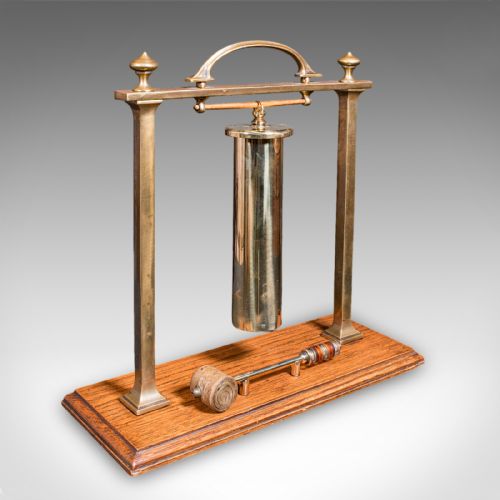
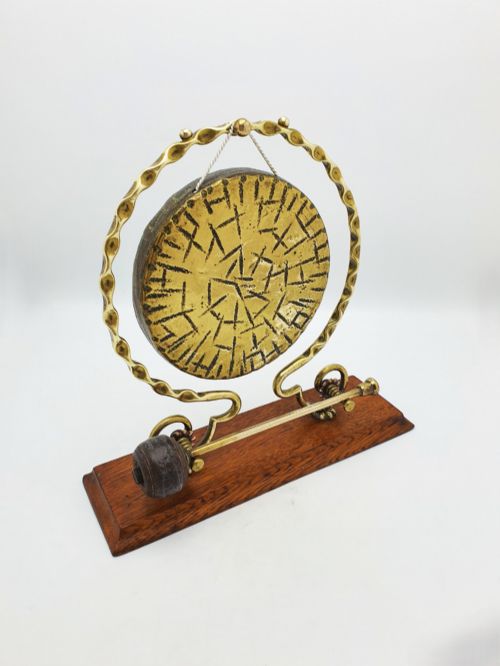
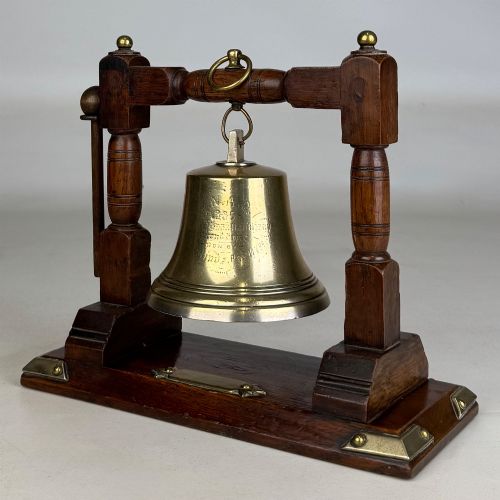
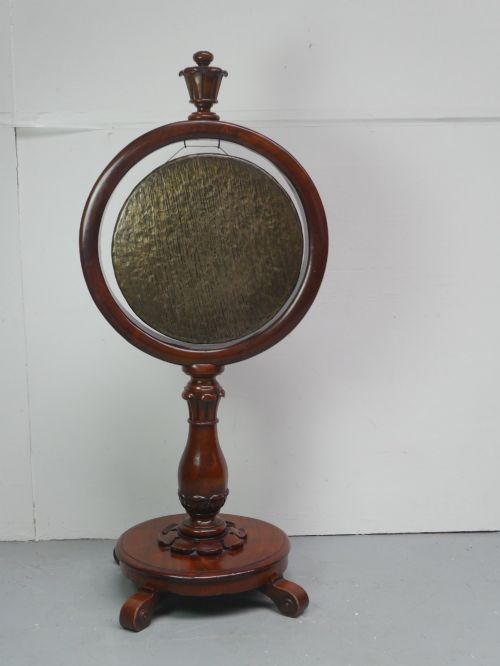
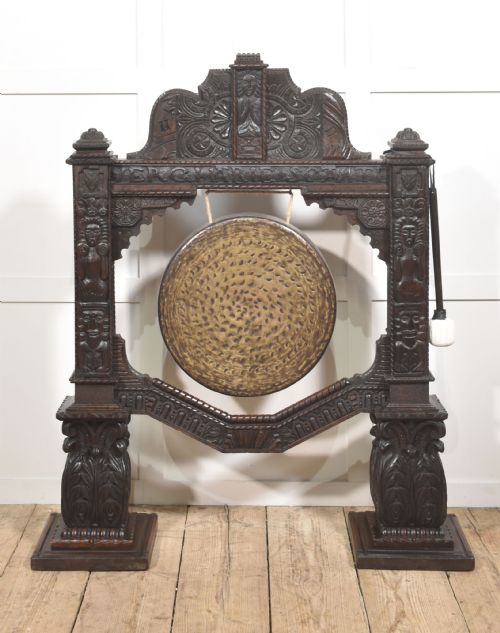
An edwardian dinner gong serves as a striking device once used to summon household residents and guests to meals, typically positioned upon a hall table or mounted to a wall. The pieces appearing here span table gongs, wall-hanging chimes, and freestanding frames designed to hold the resonant metal element.
Most examples combine a sturdy wooden stand with a suspended metal gong and its accompanying striker or mallet. The form adapts from simple table-top brass discs to elaborate architectural frameworks incorporating horns and carved motifs.
While the core of the selection belongs to the Edwardian era, related pieces extend into the late nineteenth century and the early decades of the twentieth century. These variations capture both formal country house utility and decorative domestic appointments.
How They Were Made
Makers constructed the structural frames primarily from oak, mahogany, walnut, and fruitwood, often shaping the timber through turning, carving, or panel joinery. These wooden elements provide the stable uprights and bases required to support the hanging striker apparatus.
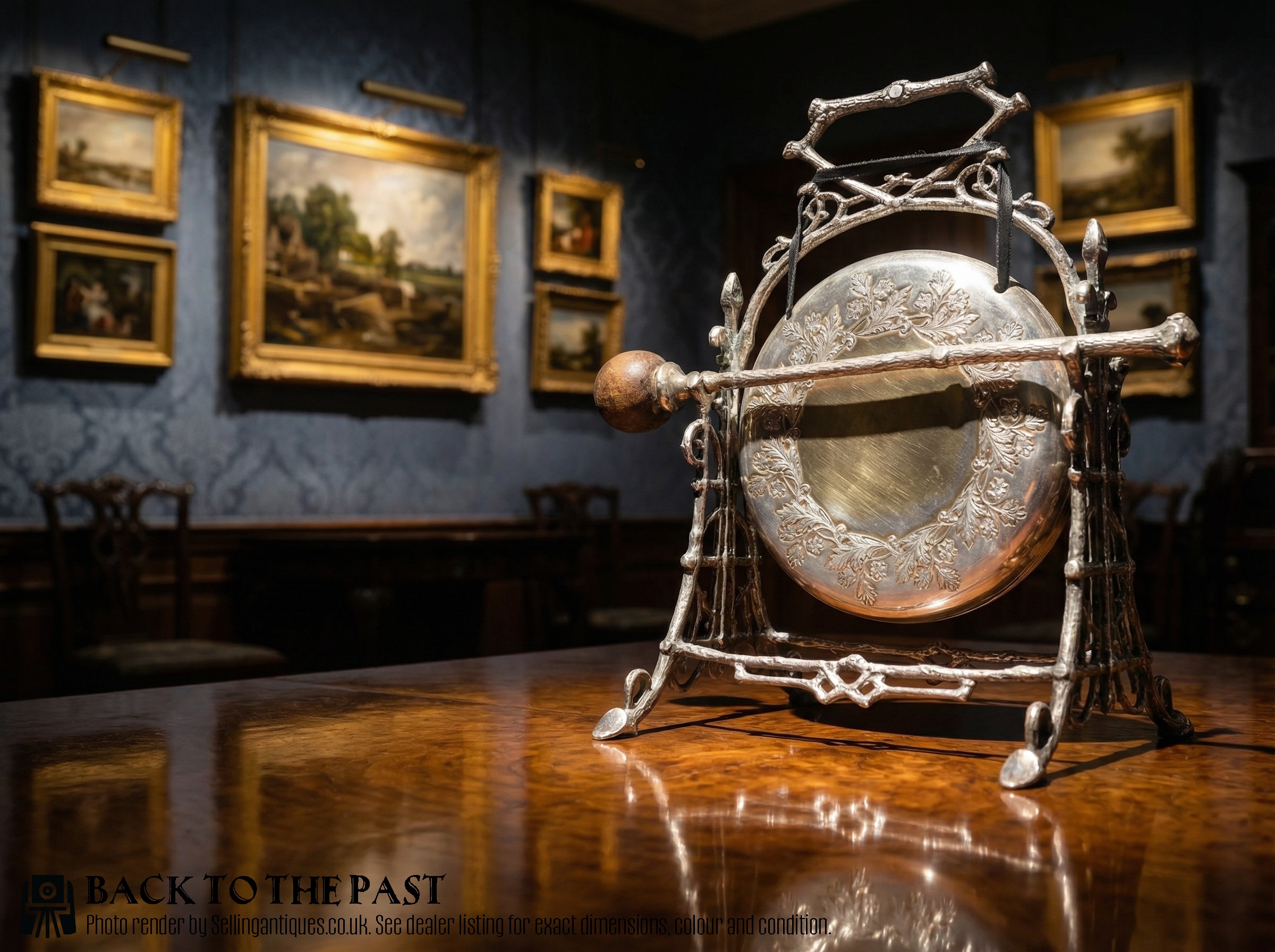
The sound-producing elements rely on cast and hammered metals including brass, bronze, silver plate, and cast iron. Selected pieces incorporate organic materials such as cattle horn and cord to suspend the chime within its frame.
Edwardian Dinner Gong Retail Price Guide 2026
Typical asking prices for edwardian dinner gong among the pieces listed under this phrase on Sellingantiques today, from the lower quarter to the upper quarter. They describe what is for sale here now, not the wider market.
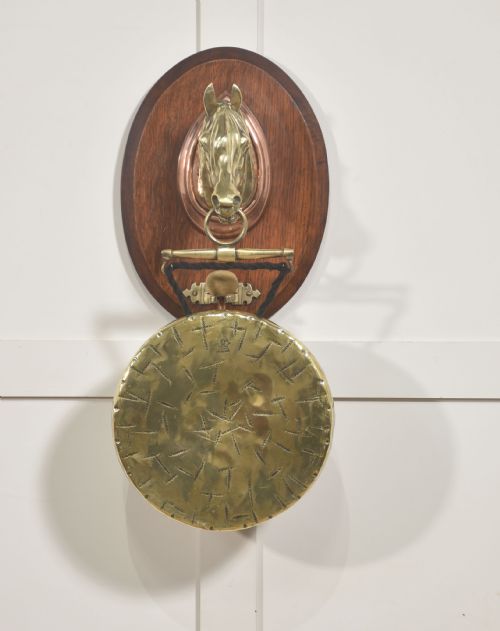
A brass horse head mount keeps watch over the hallway.
What Varies in Quality
The standard of design depends upon the ambition of the framework, ranging from plain domestic table stands to monumental carved wooden structures and specialised mounts. Sculptural additions such as horse heads or horseshoe motifs elevate the decorative interest of the piece.
Acoustic performance and metal selection distinguish the chime itself, with heavier bronze or brass plates producing a deeper tone than smaller iron or plated alternatives. The integration of original strikers and cordage completes the material integrity of the object.
The Edwardian Dinner Gong Glossary
- Dinner Gong
- A resonant metal plate or bowl suspended in a frame and struck with a mallet to signal the serving of a meal. It functions as both a domestic instrument and a decorative furnishing.
- Striker
- A mallet or small hammer used to hit the gong and produce its sound. Original strikers often feature matching wooden handles or leather-covered heads.
- Plinth
- The flat base block upon which a table gong rests. It anchors the vertical supports securely to a hall table or sideboard.
- Gothic Revival
- A design style drawing inspiration from medieval architecture, frequently seen in the pointed arches and heavy carved tracery of certain wooden frames.
- Chinoiserie
- European decorative style reflecting Chinese artistic traditions, applied to select stands and ceremonial gongs.
Edwardian Dinner Gong: Frequently Asked Questions
How were dinner gongs used?
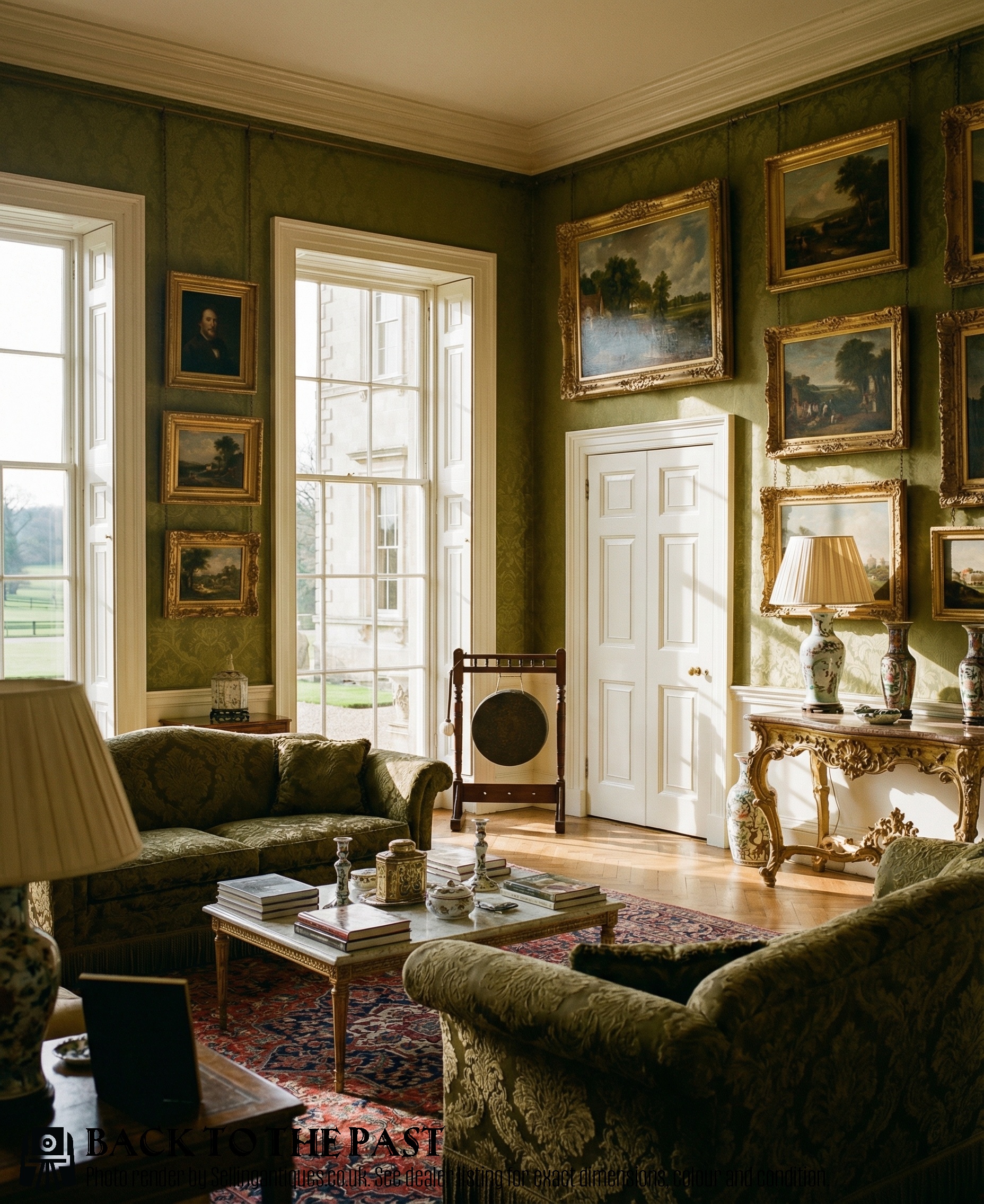
These gongs were placed in hallways or reception rooms to announce the evening meal to household members and guests.
A designated striker was kept nearby so that a servant or host could sound a clear, resonant note across the rooms.
Where should I place a dinner gong?
Tabletop versions sit comfortably on large sideboards, entrance tables, or desks where their frames remain stable.
Wall-hanging variants require secure fixings into structural plaster or studwork to support the weight of the timber and metal chime.
How do I identify an Edwardian piece?
Edwardian examples typically exhibit specific timber treatments, brass fittings, and construction methods characteristic of the period around nineteen hundred to nineteen ten.
Comparison with nineteenth-century or later twentieth-century styles reveals shifts in decorative motifs such as Arts and Crafts simplicity or Gothic Revival detailing.
What metals are used for the chimes?
The sound-producing plates and bowls are predominantly cast in brass, bronze, or silver plate.
Some unusual variations incorporate iron or specialised alloy compositions depending on the geographic origin and intended acoustic resonance.