


Antique Table Gong
An antique table gong brings the resonant chime of the nineteenth and early twentieth centuries into a room, serving as both a summons to dinner and a decorative statement.

Antique Table Gong
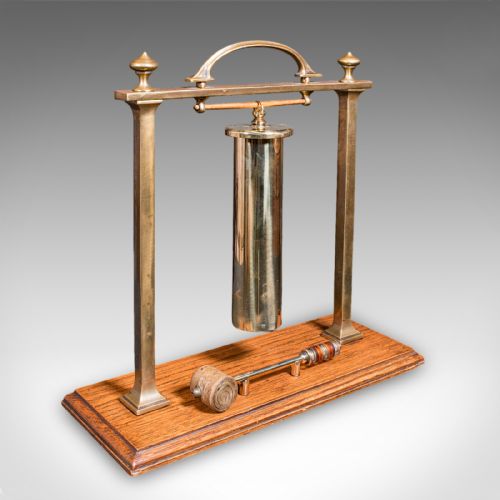
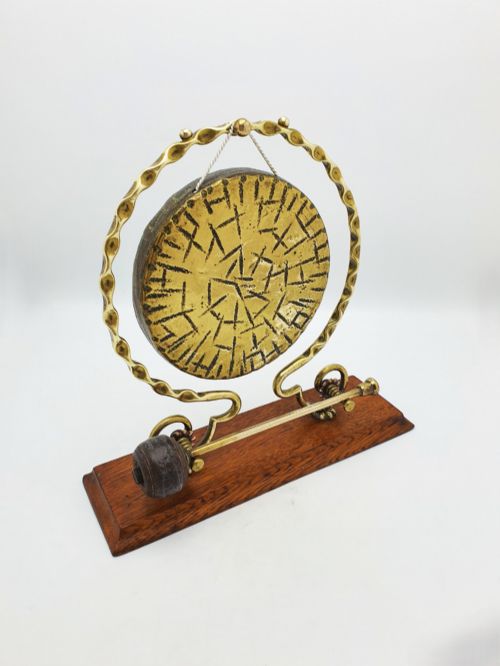
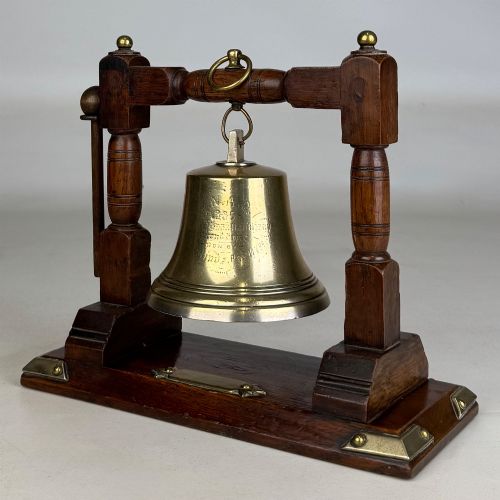
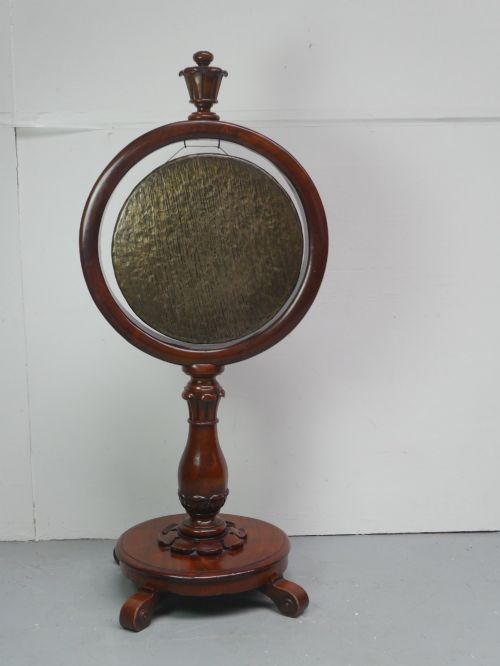
An antique table gong is a domestic percussion instrument designed to summon household members or guests, most commonly appearing in forms dating from the Victorian and Edwardian eras. These pieces sit upon furniture surfaces, combining a suspended metal disc, bell, or cow horn with a dedicated wooden, bamboo, or metal stand and a handheld striker.
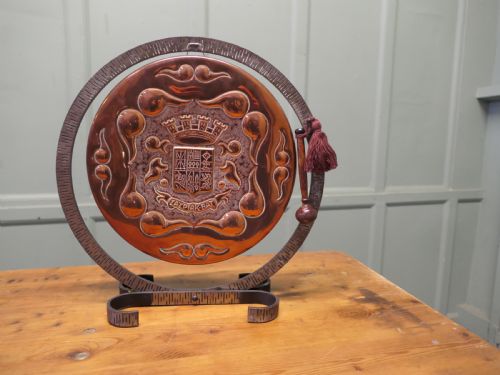
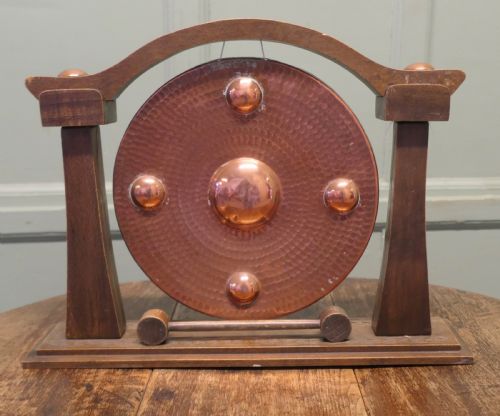
The selection ranges from simple oak and brass table gongs to elaborate examples incorporating Chinese export designs, Japanese bronze, Arts and Crafts copper, and Black Forest carvings. Alongside traditional dinner gongs, the listings include specialised forms such as silver-plated stirrup and crop designs, bamboo frames, and novelty equestrian stands.
Materials and Construction
Metalworking and cabinetmaking define the construction of these pieces, utilising brass, bronze, copper, and silver plate for the striking elements alongside oak, walnut, mango wood, and bamboo for the frames. Metal gongs are cast, hammered, or plated, while stands feature carved wood, naturalistic horn, and woven cord details.
Makers paired resonant metals with sturdy wooden bases to project sound effectively across a room. The integration of organic materials like cattle horn and bamboo reflects the diverse stylistic influences, from Japanese and Chinese export motifs to European folk art traditions.
Antique Table Gong Retail Price Guide 2026
Typical asking prices for table gong among the pieces listed under this phrase on Sellingantiques today, from the lower quarter to the upper quarter. They describe what is for sale here now, not the wider market.
One determined Victorian household substituted a polished cow horn and silver plate for traditional metal to summon diners.
Distinctions in Execution
Quality rests in the resonance of the metal and the precision of the joinery within the stand, separating mass-produced items from finely hand-hammered or cast pieces. Superior examples feature cleanly struck or cast bells that sustain a clear tone when hit with the striker.
The artistry of the supporting frame dictates the overall merit of the object, distinguishing standard oak plinths from deeply carved figural stands, such as Black Forest monkeys or intricate oriental dragons. The retention of the original matching striker and the stability of the hanging cord further separate standard items from superior survivals.
Winterhalder and Hofmeier·WMF
The Antique Table Gong Glossary
- Striker
- The small handheld mallet or hammer used to hit the gong or bell. It is typically tipped with wood, metal, or bone and designed to match the scale of the instrument.
- Plinth
- The heavy base, often made of oak or walnut, that supports the upright frame of a table gong. This provides stability when the instrument is struck.
- Silver Plate
- A thin layer of silver applied to a base metal, commonly utilised on nineteenth-century frames and gongs for a reflective finish. It appears frequently in Aesthetic and Arts and Crafts styles.
- Japonisme
- The influence of Japanese art and design on European decorative objects, prevalent in late nineteenth-century pieces. This aesthetic informs several of the bronze and brass gongs seen in the listings.
- Black Forest Carving
- Detailed wooden sculpture originating from the European mountain region, known for naturalistic animal subjects. Monkeys and other carved figures occasionally form the structural supports for these gongs.
Antique Table Gong: Frequently Asked Questions
How do I date an antique table gong?
Dating relies upon stylistic markers such as Arts and Crafts hand-hammering, Art Nouveau floral motifs, or Edwardian oak turning. Materials like silver plate and bamboo also point toward specific decades in the nineteenth and twentieth centuries.
Construction methods further help narrow the period, as machine-screw fixings typically indicate later manufacturing dates compared to earlier pinned or dovetailed joints.
What were antique table gongs used for?
These instruments served a practical domestic purpose in large households, functioning as a signal for afternoon tea or evening dinner. They were placed on hall tables or dining sideboards to call family members from other rooms.
Over time, their role shifted from a utilitarian summons to a decorative interior accessory that showcased exotic materials and craftsmanship.
How do I care for a brass table gong?
Maintaining the metal involves dusting regularly with a soft cloth to prevent particulate accumulation on the brass, bronze, or copper surfaces. Avoid harsh chemical polishes that strip away historical patination.
Wooden frames and bamboo stands benefit from occasional treatment with appropriate furniture wax to keep the material nourished and stable.
Are all table gongs made of brass?
While brass is the most common metal found in these pieces, the category also encompasses bronze, copper, silver plate, and cast iron. Cow horn and temple bells frequently substitute for standard metal discs.
The supporting structures introduce further variety, utilising oak, walnut, mango wood, bamboo, and cord rather than metal alone.