




Brass Call Gong
A brass call gong summons household or guests with a resonant chime, offering a tactile piece of domestic history for your hall or dining room.
Brass Call Gong
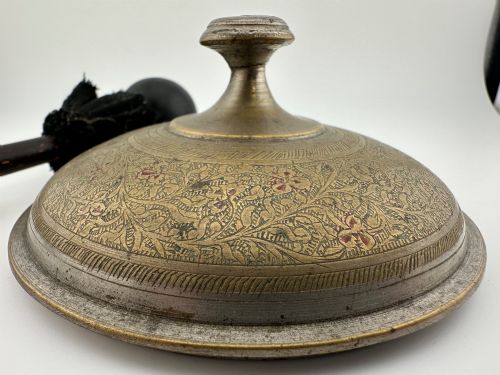
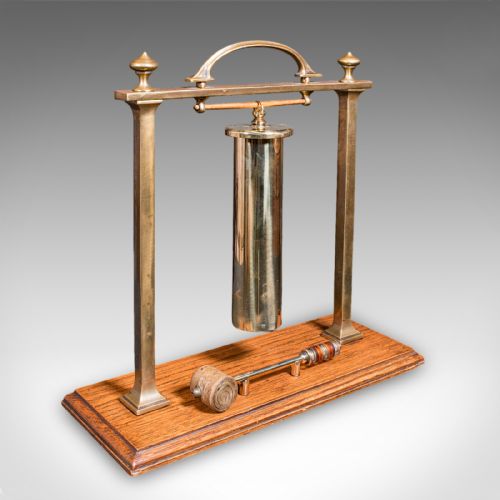
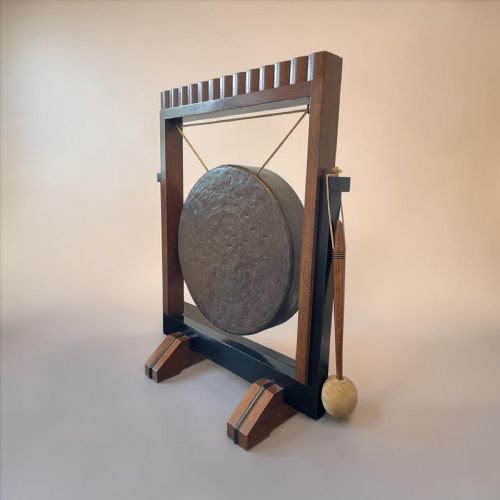
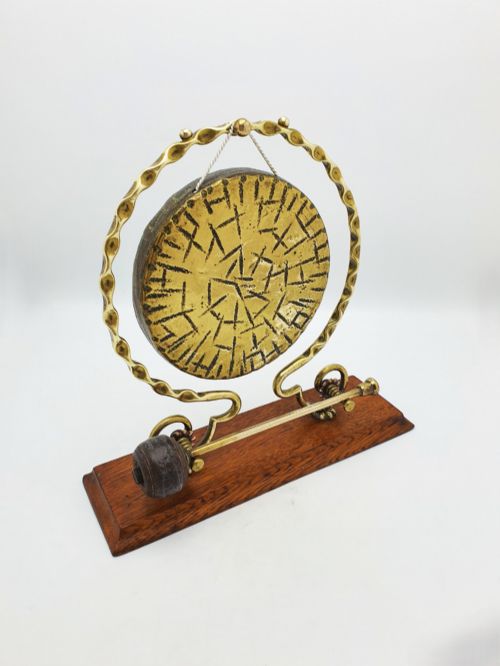
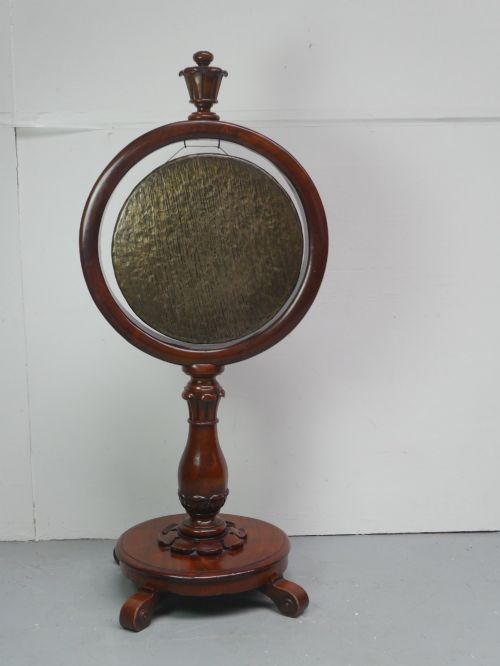
When you search for a brass call gong, you encounter striking instruments designed to announce meals or gather company in the home. These pieces appear across several distinct forms, including wall-hanging mounts, tabletop models, and floor-standing arrangements.
The versions you meet most frequently on this page combine cast metal with wooden frames, spanning styles from the Victorian era through the Edwardian period and into Art Deco designs. Many incorporate complementary materials that frame the central sound-producing element.
Originating in domestic rituals of the nineteenth and twentieth centuries, these items range from simple tabletop gongs to elaborate pieces featuring animal mounts or architectural timber frames. Each configuration reflects the interior tastes of its specific decade of production.
Materials and construction
Makers shaped the sound-producing elements from brass, bronze, and copper, casting or hammering the metal to achieve a clear, sustaining tone. These metal discs, bowls, or bells are paired with handheld strikers designed to elicit the primary chime.
Supporting structures rely heavily on dense timbers such as oak and mahogany, often shaped into arched frames, wall plaques, or sturdy table bases. Alternative mounts utilise wrought iron, textile cords, and organic elements including cattle horn.
Decoration draws on distinct design movements, incorporating the geometric lines of Art Deco, the organic curves of Art Nouveau, or the heavy detailing of Victorian Gothic Revival. Craftspeople joined metal and wood securely to withstand the repeated impact of the striker.
Brass Call Gong Retail Price Guide 2026
Typical asking prices for brass call gong among the pieces listed under this phrase on Sellingantiques today, from the lower quarter to the upper quarter. They describe what is for sale here now, not the wider market.
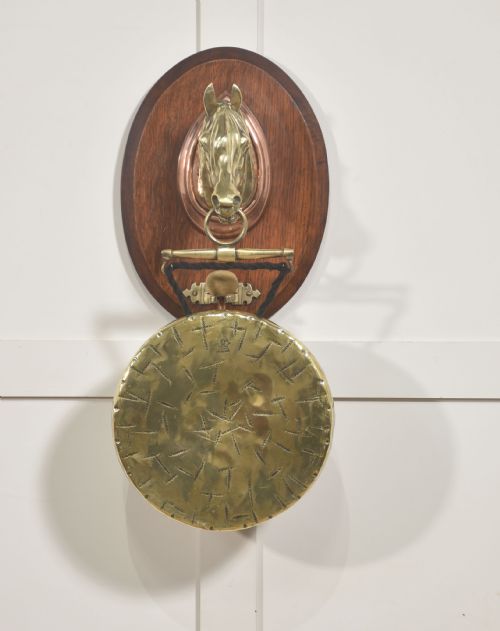
Several pieces incorporate unexpected natural elements into their frames, including genuine cattle horn and carved wooden horse heads.
Distinguishing better examples
Quality in these instruments rests upon the purity and resonance of the metal casting, which determines the depth and duration of the chime. Thicker bronze and brass alloys produce a richer acoustic profile than lighter, pressed sheet alternatives.
The joinery and selection of the supporting frame reveal the standard of manufacture, with seasoned oak or mahogany providing superior structural integrity compared to softwoods. Well-turned wooden bases and tightly knotted suspension cords demonstrate attentive assembly.
The integration of decorative motifs, whether cast iron scrollwork, carved wooden horse heads, or applied bronze figures, separates standard utilitarian items from more ambitious decorative commissions.
The Brass Call Gong Glossary
- Dinner gong
- A hanging or mounted metallic disc struck with a mallet to announce meals. This form dominates the domestic examples found in nineteenth and twentieth century homes.
- Striker
- The handheld mallet or hammer used to hit the gong. These often feature a matching wooden handle and a padded or weighted head.
- Table gong
- A compact version designed to sit upon a sideboard or table rather than hang from a wall or floor frame. They offer a more immediate presence in smaller rooms.
- Wall-hanging
- An arrangement where the frame fixes directly to a vertical surface, suspending the resonant metal clear of the wall. This mounting style saves floor space while projecting sound effectively.
- Bronze
- An alloy of copper and tin prized for its acoustic properties and durability. It yields a distinct, complex tone when struck.
Brass Call Gong: Frequently Asked Questions
How do I clean a brass call gong?
Dust the wooden frame with a dry cloth and remove grime from the metal using a soft cloth without abrasive cleaners.
Avoid chemical polishes that strip historical patination from the brass or bronze surfaces, preserving the appearance achieved over decades.
Where were these gongs used?
Households placed these instruments in hallways, dining rooms, and verandas to summon family members or guests from other parts of large properties.
They served as a functional communication tool before electric bells became standard in domestic architecture.
How do I date an oak and brass gong?
Examine the style of the wooden frame and the fixing hardware, noting whether the piece reflects Victorian Gothic revival or later Art Deco geometry.
Materials such as wrought iron framing or specific mounting brackets often align with the manufacturing trends of the nineteenth or early twentieth century.
What is the difference between a table gong and a floor gong?
Table gongs feature compact bases designed for sideboards, whereas floor-standing versions incorporate tall wooden or metal frames that rest directly on the ground.
Floor models generally project a deeper, louder tone due to their larger overall size and heavier hanging discs.