

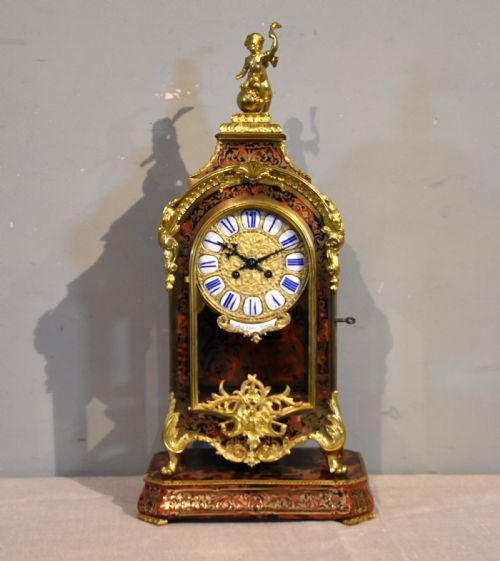


Decorative Table Chime
These decorative table chimes bring striking bell forms and resonant tones to interiors across Victorian and Edwardian periods.
Decorative Table Chime
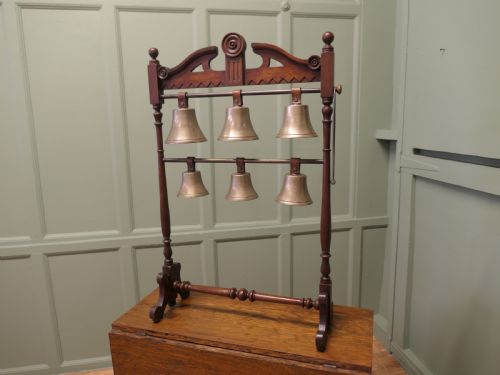
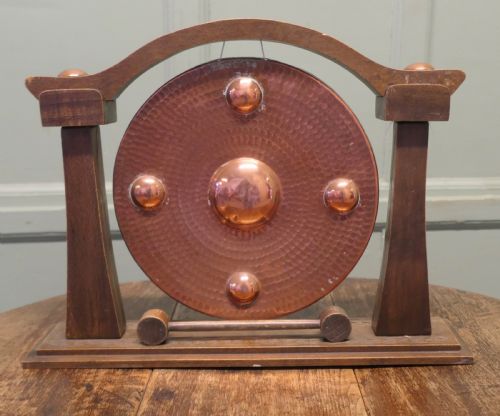
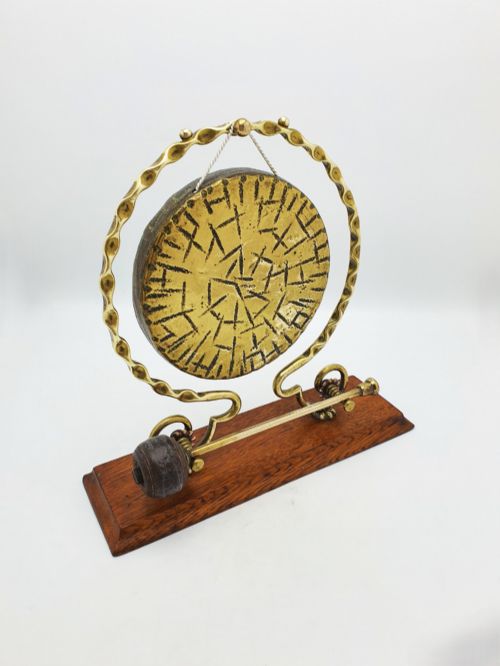
A decorative table chime sits upon a desk, sideboard or mantelpiece to provide a pleasant note using suspended metal bells, gongs or glass vessels. These pieces range from compact brass tabletop gongs to larger wooden racks holding multiple tuned musical brass bells.
The materials span oak, walnut, bamboo and mango wood bases alongside cast iron, copper, or silver plated metalwork. Many examples date from the Victorian and Edwardian eras, drawing upon Arts and Crafts, Art Nouveau and Louis XV Revival aesthetics.
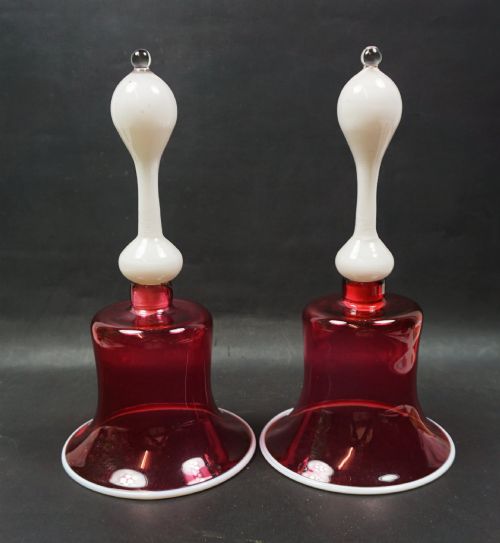
Collectors encounter diverse formats including handheld strikers paired with mounted gongs, cranberry glass bells with contrasting handles, and bracket clocks featuring integrated chimes. Each variant serves both a domestic timing or summoning purpose and a display function.
Materials and construction methods
Carpenters shaped sturdy woods such as oak, mahogany, walnut and bamboo to form stable mounting bases and racks that support suspended gongs or bells. Artisans secured metal components using precise joinery to ensure optimal acoustic resonance when struck.
Foundries cast brass, copper, bronze and iron into graceful Art Nouveau frames and dinner gong mounts, sometimes applying silver plating or ormolu finishes for decorative lustre. Glassworkers blew cranberry glass to form delicate bell bodies fitted with white glass handles.
Decorative Table Chime Retail Price Guide 2026
Typical asking prices for decorative table chime among the pieces listed under this phrase on Sellingantiques today, from the lower quarter to the upper quarter. They describe what is for sale here now, not the wider market.
Materials span brass, copper, ormolu, silver plate, cast iron and cranberry glass across multiple periods.
Assessing quality in table chimes
The refinement of the casting and the purity of the metal alloy determine how clearly a bell or gong sustains its note. Superior examples display crisp chasing on bronze or copper frames and tightly fitted joints in wooden stands.
Handcrafted details such as carved wood ornamentation, clean silver plating and unblemished cranberry glass elevate a piece. The presence of matching original strikers and well-balanced frames indicates higher standard workshop production.
Winterhalder and Hofmeier
The Decorative Table Chime Glossary
- Dinner Gong
- A suspended metal disc or bell struck with a mallet to announce meals or summon residents in a home. These frequently feature ornate wooden or metal mounting frames.
- Ormolu
- Finely ground high-carat gold applied in a mercury amalgam to bronze objects. This technique creates a rich golden surface finish seen on decorative French metalwork.
- Cranberry Glass
- Transparent glass coloured with gold chloride during production to achieve a distinct pinkish-red hue. It appears often in Victorian bell designs.
- Bracket Clock
- A portable domestic clock originally designed to sit on a wall bracket or table. Many incorporate complex striking mechanisms and gongs.
Decorative Table Chime: Frequently Asked Questions
How do I date a table chime?
Examining the materials, mounting style and aesthetic movement provides clues to the period of manufacture. Victorian and Edwardian examples often display characteristic oak bases, bamboo frames or Art Nouveau cast iron work.
Changes in metal finishing and glass colours also help narrow down the decade of production. Comparing construction techniques with known dated pieces confirms the era.
Were these used in every room?
Dinner gongs and table chimes were typically placed in hallways, dining rooms or studies to signal meal times or summon household staff. Smaller tabletop versions served as desk accessories or mantel ornaments.
Their placement depended on the size of the home and the need for an audible signal across different floors. The decorative frames ensured they looked suitable in formal reception spaces.
How should I clean brass gongs?
Dusting gently with a dry microfiber cloth maintains the surface without removing historical patination. Harsh chemical polishes should be avoided on antique metalwork to preserve the original finish.
Wooden bases benefit from occasional waxing appropriate to the specific timber grain. Care must be taken around mounted glass handles to prevent accidental breakage.
What is the difference between a chime and a gong?
A chime typically refers to tuned bells or rods that produce a musical sequence of notes when struck. A gong usually consists of a single suspended metal disc yielding a deep resonant tone.
Both formats were adapted for domestic tabletop use during the nineteenth and early twentieth centuries. The distinction lies primarily in the acoustic output and the number of sounding elements.