



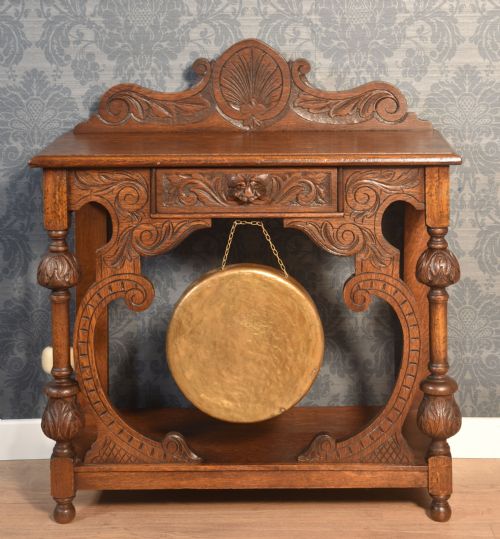


Oak Table Gong
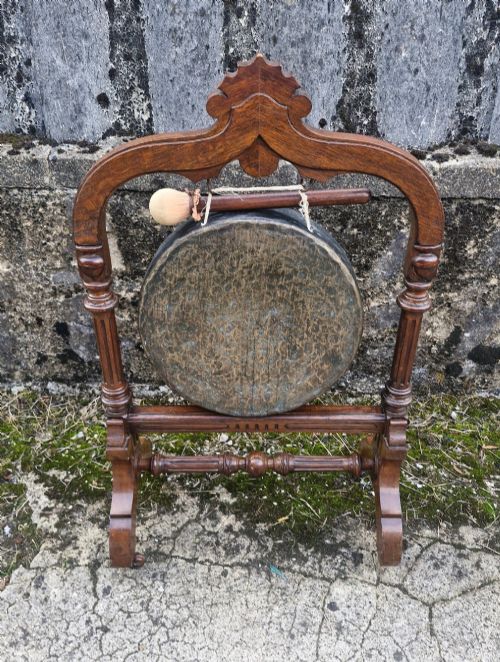
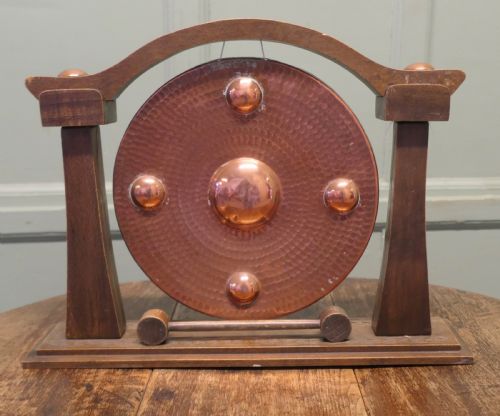
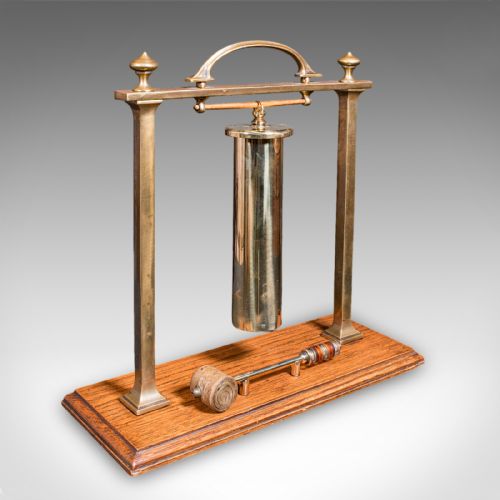
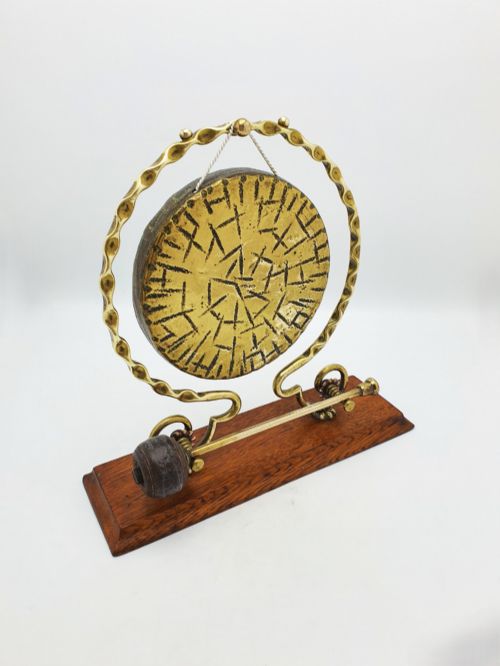
An oak table gong brings a resonant chime to the room, combining sturdy timber frames with gleaming metal plates and strikers.
Oak Table Gong
When you search for an oak table gong, you find a collection of domestic signal instruments designed to summon household members or guests to meals. These pieces typically combine a wooden base or frame with a suspended metal gong, bell, or horn, often accompanied by a matching striker.
The most common examples on this page date from the Victorian and Edwardian periods, stretching into the early decades of the twentieth century. Forms range from simple tabletop stands to substantial carved oak frames paired with brass, silver plate, or cattle horn.
Materials and construction
Maker construction relies heavily on solid oak for the structural stands, plinths, and frames, sometimes enhanced by deep carving in Arts and Crafts or Gothic Revival styles. Cord suspends the sounding elements, allowing free vibration when struck.
Metal components utilise brass, copper, and silver plate for the gongs, bells, and strikers. Certain distinctive variants incorporate polished cattle horn mounted directly onto the wooden bases.
Oak Table Gong Retail Price Guide 2026
Typical asking prices for oak table gong among the pieces listed under this phrase on Sellingantiques today, from the lower quarter to the upper quarter. They describe what is for sale here now, not the wider market.
Listings feature periods spanning from the nineteenth century through the nineteen-twenties, incorporating brass, horn, and silver plate.
Markers of quality
Quality rests in the weight of the metal and the resonance of the tone produced when struck. Solid brass and thick silver plate maintain a clear, sustained ring compared to lighter alloys.
Carpentry and carving distinguish the better pieces from plain workshop items. Pierced woodwork, deliberate chamfering, and balanced proportions on the oak stand indicate careful cabinet work.
The Oak Table Gong Glossary
- Plinth
- A heavy block of oak serving as the base to support the suspended gong and striker. It provides stability on a hall table or sideboard.
- Striker
- The handheld mallet or hammer used to hit the gong. These often feature matching wooden handles and metal heads.
- Silver Plate
- A thin layer of silver applied over a base metal to give a bright finish. It appears frequently on the horns and bells of Edwardian examples.
- Arts and Crafts
- A design movement favouring handcrafting and honest materials. Pieces in this style display simplified structural forms and restrained carved decoration.
Oak Table Gong: Frequently Asked Questions
What is an oak table gong?
An oak table gong is a decorative and functional household bell assembly featuring a wooden frame or plinth that supports a metal plate, bowl, or horn.
Historically used to announce dinner or tea time, these pieces sat on sideboards in dining rooms or entrance halls.
How do you date an oak table gong?
Dating relies on stylistic clues found in the woodwork and metal finishes. Victorian and Edwardian pieces often incorporate Gothic Revival motifs or Arts and Crafts carving.
Later examples from the nineteen-twenties tend toward simpler geometric stands and straightforward brass fittings.
What materials are used in these gongs?
The structural frames use solid oak, sometimes carved with foliage or geometric patterns. Sounding elements consist of brass, copper, or silver-plated metal.
Unusual variants also incorporate polished cattle horn suspended by sturdy cord from the wooden uprights.
Where were table gongs placed?
These items stood on hall tables or dining room sideboards where they remained easily accessible for servants or hosts. Their decorative wooden bases matched the surrounding interior furniture of the period.
The handheld striker usually rested in clips or beside the base ready for immediate use.