


Antique Call Bell
An antique call bell brings tactile domestic summons to a desk, hall or dining room with crisp metal chime.
Antique Call Bell
An antique call bell serves as a functional instrument for summoning service in domestic, commercial and institutional settings, spanning desk models, hand-held versions and larger mounted gongs. Buyers exploring this selection encounter pieces designed for the country house, the Victorian shop counter and the Edwardian tea table.
The assortment on this page ranges from simple nineteenth-century brass hand bells to elaborate desk designs incorporating silver, bronze and cast iron. Early examples draw on Georgian and Victorian styles, while later pieces extend into Edwardian and twentieth-century forms.
Distinguishing quality in period ringers
Quality rests in the acoustic resonance of the metal and the precision of the mechanical action, whether a simple plunger or a pivoted striker. Heavier castings in solid brass or bronze produce a cleaner tone than lighter alternatives.
The refinement of the base and ornamentation marks the difference between standard utility pieces and high-end items. Superior examples display crisp chasing, well-fitted wooden mounts and intact silver hallmarks rather than generic mass-produced assembly.
The Antique Call Bell Glossary
- Counter bell
- A stationary desktop ringer fitted with a plunger or push-button mechanism, historically utilised in shops, hotels and large residences to summon assistance.
- Dinner gong
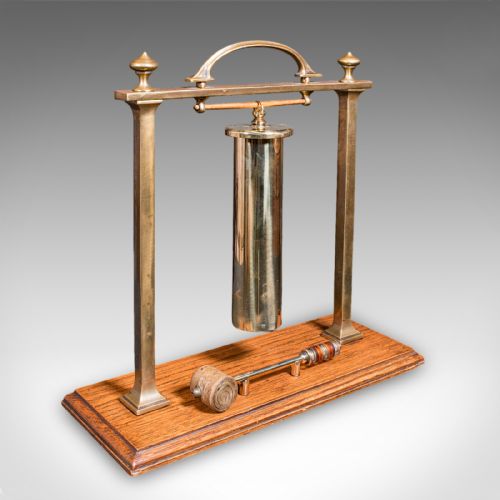
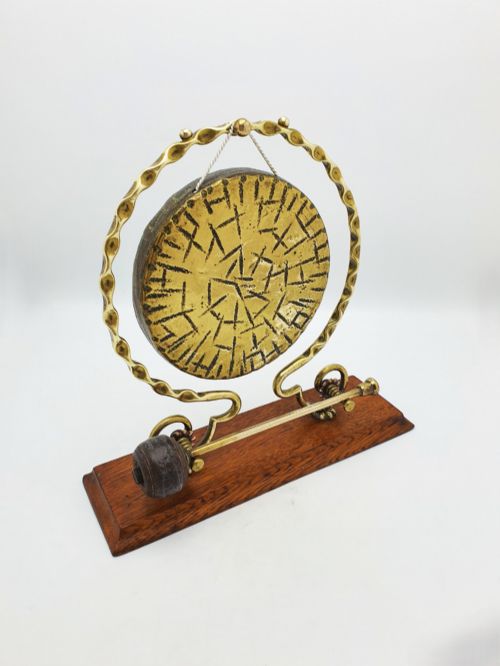
- A suspended metal chime or bowl struck with a handheld mallet, used to announce meals in country houses.
- Hand bell
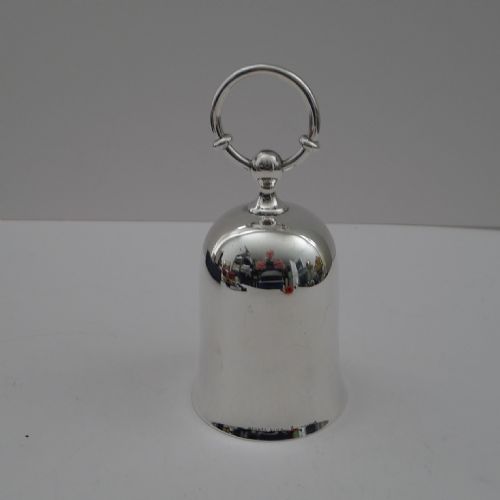
- A portable ringer featuring a handle formed from wood, bone, horn or metal, shaken manually to create sound.
- Mechanical bell
- A device incorporating internal spring-loaded or lever-operated mechanisms that activate the strike without a direct handheld shake.
Antique Call Bell: Frequently Asked Questions
How do I date an antique call bell?
Dating relies on stylistic markers, manufacturing techniques and metal composition characteristic of specific periods like the Victorian or Edwardian eras.
Assay marks on silver examples or patent stamps on mechanical desk models provide precise chronological reference points.
What is the difference between a desk bell and a counter bell?
Desk bells generally served in domestic library or office environments, while counter bells were built robustly for commercial and hotel reception use.
Counter variants frequently feature heavier cast iron or brass bases to withstand frequent public interaction.
Are these bells still fully operational?
Many surviving examples retain functional internal mechanisms, plungers and strikers that produce a clear, resonant tone when activated.
Careful inspection of the internal hammer or spring ensures the piece functions as intended rather than serving solely as a decorative object.
How should I clean a brass call bell?
Maintenance typically involves dusting with a soft cloth to preserve any existing historic patina accumulated over decades of use.
Harsh metal polishes should be avoided unless necessary, as they can wear away fine cast details and surface character.