
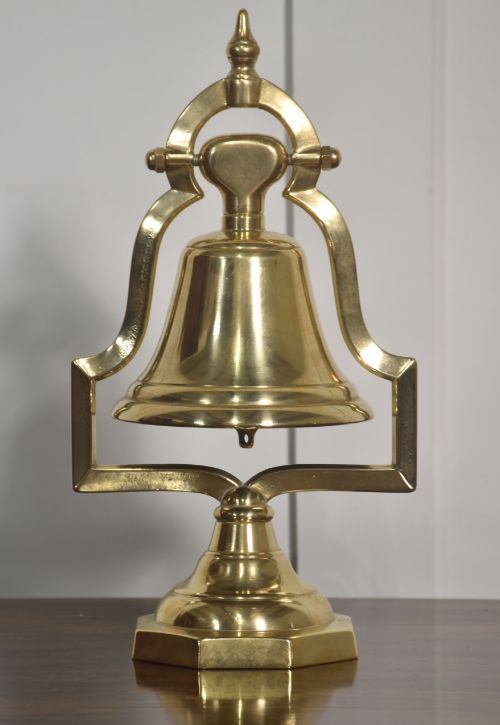
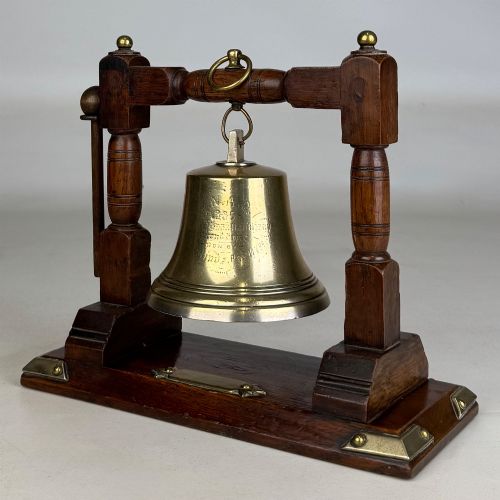


Brass Counter Bell
A brass counter bell is a practical signal for attention that brings period weight and ring to a desk, shop, or hallway.
Brass Counter Bell
A brass counter bell is a functional signal piece designed for shops, hotels, and country houses. When exploring the brass counter bell category, buyers commonly encounter desk and reception models dating from the Victorian and Edwardian periods.
The selection ranges from simple polished metal domes to pieces mounted on oak stands or ebonised wood bases. Form follows function, with spring-loaded plunges, levers, and rotating mechanisms built to summon service in busy public spaces.
How They Were Made
These pieces rely on cast brass and sheet brass, frequently paired with secondary materials such as oak, cast iron, and glass. Foundational elements often include wooden plinths or bronze components that add stability to the striking mechanism.
Makers utilised casting and polishing techniques to shape the domes and bases. Internal steel springs and clappers generate the characteristic sharp tone when the plunger or lever is depressed.
Brass Counter Bell Retail Price Guide 2026
Typical asking prices for brass counter bell among the pieces listed under this phrase on Sellingantiques today, from the lower quarter to the upper quarter. They describe what is for sale here now, not the wider market.
Materials recorded across the archive include cast brass, oak, ebonised wood, bronze, and silver plate.
What Varies in Quality
Quality rests in the resonance of the metal and the precision of the internal spring mechanism. Superior examples produce a clear, sustained tone rather than a dull thud.
Weight and casting crispness distinguish standard production from finer work. Heavier gauge brass and well-fitted wooden bases indicate sturdiness and better original manufacture.
William Tonks·Palethorpes
The Brass Counter Bell Glossary
- Counter bell
- A bell designed to sit on a retail shop counter or hotel reception desk for summoning assistance. These objects rely on a top plunger or side lever to strike the interior dome.
- Beehive bell
- A bell shaped with stepped concentric rings resembling a traditional skep hive. This specific Victorian silhouette appears frequently in nineteenth-century metalwork.
- Ebonised wood
- Timber treated with a dark stain or finish to imitate ebony. It provides a heavy, contrasting base for bright metal domes.
- Table gong
- A small hanging metal disc struck with a mallet rather than a push plunger. They serve a similar signalling purpose in domestic or institutional settings.
Brass Counter Bell: Frequently Asked Questions
How do these bells work?
Most models operate with an internal spring mechanism connected to a plunger or lever on top. Pushing the button drives a clapper against the inner wall of the metal dome.
Simpler hand-held variants rely on a suspended internal clapper swung by the user. Desk versions remain stationary on their bases during use.
Where were they originally used?
These items populated Victorian and Edwardian shop counters, hotel reception desks, and railway ticket offices. Staff relied on them to hear customers arriving in commercial spaces.
Country houses also utilised them in hallways or service areas to summon domestic servants from room to room.
How do I date a piece?
Dating relies on style markers, registration dates stamped into the metal, and the composition of the base. Victorian examples often feature heavy cast brass domes and turned oak plinths.
Later Edwardian and twentieth-century versions display lighter construction or different plating methods. Patent dates or maker inscriptions occasionally provide exact years.
Can I polish the brass?
Polishing depends on personal preference regarding patina and age appearance. Many collectors prefer to leave existing dark oxidation undisturbed to show historical depth.
Gentle cleaning with a non-abrasive cloth removes surface dust without stripping the character built up over decades.