


Brass Desk Bell
When you search for a brass desk bell, you uncover tactile mechanisms built for counting houses, railway stations, and writing desks.
Brass Desk Bell
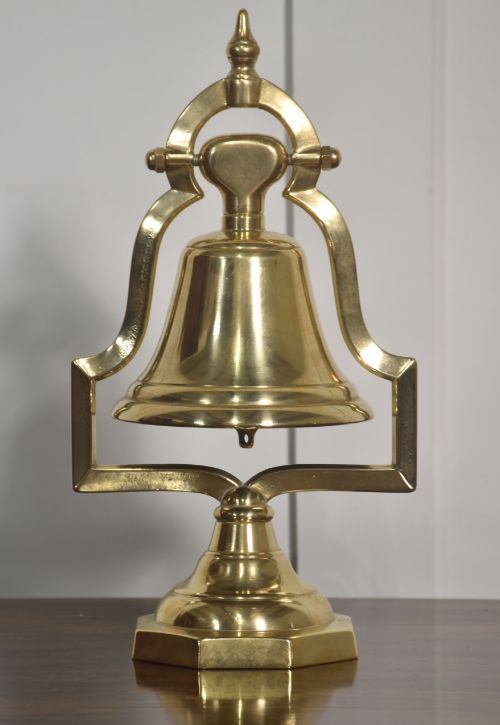
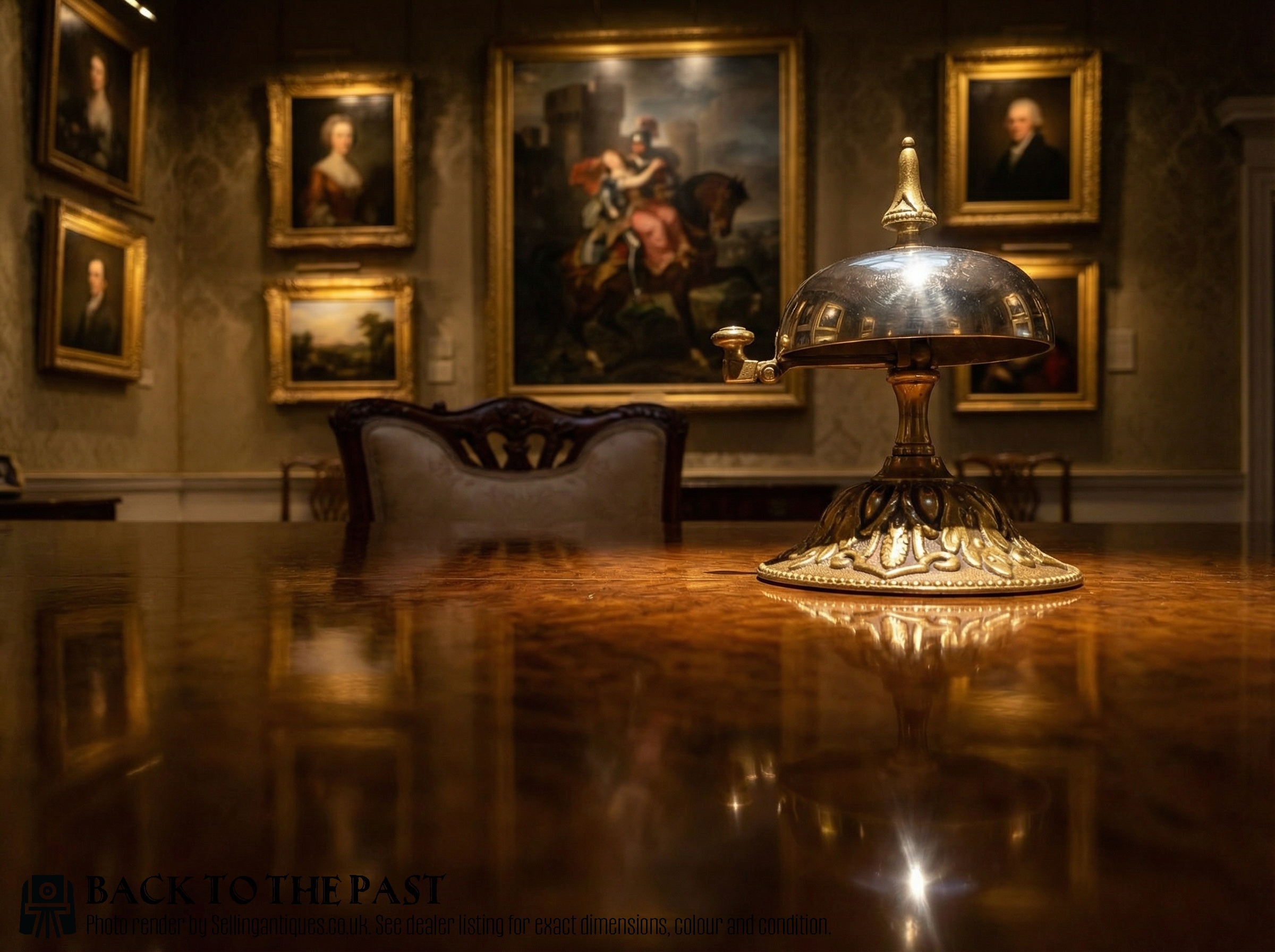
A brass desk bell is a functional signal device designed for domestic study, hotel reception, or retail counter use. These items appear primarily in Victorian and Edwardian configurations, often paired with oak bases or cast in figural novelty shapes.
The selection ranges from simple polished desk indicators and counter top courtesy bells to elaborate mechanical assemblies featuring animals, cherubs, or integrated inkstands. Most surviving examples date from the late nineteenth century through to the early decades of the twentieth century, reflecting an era of commercial expansion and heavy administrative use.
How they were made
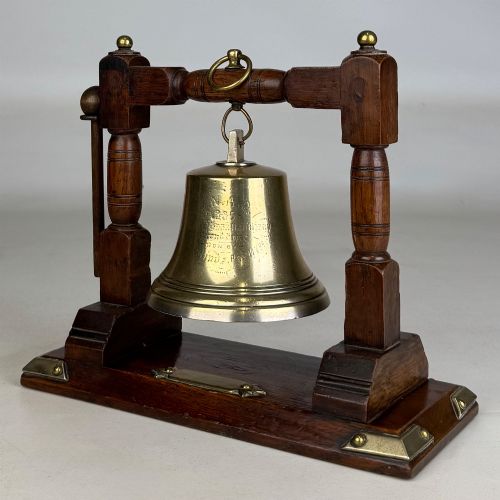
Makers utilised cast brass and polished bronze to form the resonant domes and structural housings, frequently mounting them onto turned hardwood plinths made of oak or walnut. Some variants incorporate structural elements of glass, steel, and enamel.
Internal spring-loaded plungers, strikers, and lever mechanisms dictate the acoustic quality and the tactile feedback of each press. Novelty forms often required intricate mould work to render animals, equestrian scenes, or architectural columns with clear sculptural definition.
Brass Desk Bell Retail Price Guide 2026
Typical asking prices for brass desk bell among the pieces listed under this phrase on Sellingantiques today, from the lower quarter to the upper quarter. They describe what is for sale here now, not the wider market.
Listings demonstrate a heavy concentration of brass and oak materials originating from the Victorian and Edwardian eras.
What varies in quality
The distinction between standard utility items and superior pieces lies in the crispness of the casting and the resonance of the metal. Fine examples exhibit deeply detailed figural work, heavy gauge metal plates, and smooth mechanical action upon pressing the plunger.
Subtle differences in the proportions of the wooden base, the quality of the timber grain, and the integrity of the original polish separate mass-produced commercial items from finer workshop pieces.
Grey of Edinburgh·Dwerrihouse And Bell·Mathias Bauerle·E White Of Manchester·John Taylor Of London·Henry Marc
The Brass Desk Bell Glossary
- Counter bell
- A spring-loaded signaling device mounted on a base, designed for placement on a shop counter or reception desk to summon service.
- Plunger
- The vertical pin or button depressed by hand to activate the internal hammer and strike the bell dome.
- Novelty bell
- A decorative desk bell cast into the shape of an animal, human figure, or object, popular during the late Victorian period.
- Gong
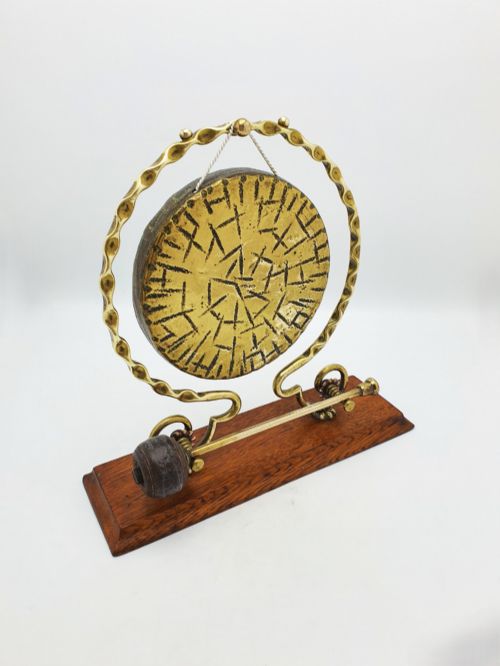
- A suspended metal disc or bowl struck with a handheld mallet rather than an internal mechanical hammer.
- Carriage clock
- A small, spring-driven timekeeper enclosed in a brass and glass case, often featuring a bell-striking train.
Brass Desk Bell: Frequently Asked Questions
How do you operate a brass desk bell?
Most desk bells function via a vertical spring mechanism where pressing the top plunger drives an internal clapper against the inner wall of the fixed brass dome.
Some larger counter pieces rely on a rotating lever or a freestanding hammer mounted on a matching wooden base.
Where were these bells used originally?
These items populated Victorian and Edwardian commercial counters, hotel reception desks, railway booking offices, and private domestic studies.
They served as an immediate auditory signal to summon attendants, staff, or clerks from adjacent rooms.
How do I date a brass desk bell?
Dating relies on stylistic clues, mounting materials, and the presence of registration marks or maker signatures. Late nineteenth-century pieces often feature heavier cast brass bases and distinct Victorian design motifs.
Edwardian and later examples frequently utilise simpler turned oak plinths and lighter internal spring assemblies.
Are all these bells mechanical?
The majority of standard desk and counter bells operate through a direct plunger-and-spring mechanism contained entirely within the unit.
Alternative forms include table gongs struck with a separate mallet and complex carriage clocks featuring independent bell-striking movements.