
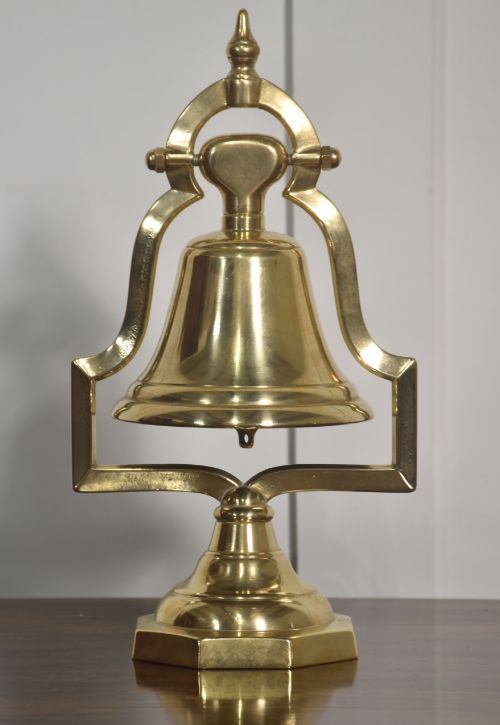


Polished Brass Bell
A polished brass bell brings bright metalwork and a sharp, clean ring into any room, making it both a practical call tool and a striking desk or table ornament.
Understanding the polished brass bell
A polished brass bell is a functional object designed for signalling, spanning domestic, maritime, and commercial use. These pieces include table bells, hand bells, counter bells, hanging bells, and ship's bells.
The versions most commonly met on this page range from Victorian pieces and items dated to the nineteenth century up to examples from 1900 and 1920. They take various forms, from simple hand-held instruments to mechanical counter designs.
Many examples combine the bright metal with other elements, such as ebonised wood stands or polished steel fittings. Some specimens have specific maritime origins, including bells made for steam ships.
Materials and construction
These bells are constructed primarily from brass, often augmented with cast bronze or polished steel components. Selected examples incorporate ebonised wood for handles, bases, or stands, creating a strong contrast with the bright metal.
Makers utilised casting techniques to shape the body and dome of the bell, followed by extensive polishing to achieve a reflective surface finish. Mechanical versions integrated internal springs and levers for striking action.
Retail Price Guide 2026
Typical UK retail prices for polished brass bell, calculated from the Sellingantiques database of over a million retail prices indexed since 2003. This retail price guide relies exclusively on Sellingantiques data; no external sources or auction records are used, so the figures do not describe the wider market.
Listings for this phrase include both brass and ebonised wood materials, spanning Victorian styles, nineteenth-century craftsmanship, and 1920 maritime pieces.
Assessing quality
Quality in a polished brass bell rests in the crispness of the casting and the clarity and resonance of its tone. Finer examples display precise detailing and substantial weight in the metal, rather than thin sheet construction.
The integration of secondary materials defines the better pieces. A heavy ebonised wood base or a complex mechanical desk mechanism elevates an ordinary bell into a superior object of craftsmanship.
The Polished Brass Bell Glossary
- Counter bell
- A stationary bell placed upon a shop desk or service counter, designed to be rung by depressing a plunger or striking a top button. These were widely used in Victorian and Edwardian commerce.
- Hand bell
- A portable bell featuring a handle, intended to be lifted and shaken to summon staff or signal meals. The handle is frequently turned from wood or cast as part of the main metal structure.
- Ship's bell
- A maritime bell cast to endure sea conditions, often hung aboard a vessel to mark time or sound alarms. Named pieces carry specific historical associations with individual steam ships.
- Ebonised wood
- Timber treated with a dark stain or finish to imitate ebony, commonly used for the handles or bases of nineteenth-century desk bells. This material provides a dense, dark contrast to polished brass.
Frequently Asked Questions
How do I clean a polished brass bell?
Maintain the bright surface using a soft cloth and a gentle metal polish formulated for brass. Avoid abrasive pads that can scratch the reflective finish and dull the underlying metal.
Take care around ebonised wood or steel components to prevent cleaning residues from damaging contrasting materials. Regular light dusting is often sufficient for daily maintenance.
What is the difference between a counter bell and a table bell?
Counter bells generally feature a spring-loaded plunger or button mechanism on a fixed base, allowing users to ring them without lifting the body. They sat upon shop counters and desks for service.
Table bells are usually hand bells or mounted on a static stand, designed to be lifted by a handle or tilted to sound. They served primarily in domestic settings for summoning household staff.
How can I date a brass bell?
Examine the overall form, mounting style, and manufacturing techniques to establish an era. Victorian and nineteenth-century examples often display distinct casting marks and heavier proportions compared to later pieces.
Associated materials like ebonised wood or specific mechanical patents offer further chronological clues. Inscribed names, such as those from steam ships, can also help anchor the date of manufacture.
Where were these bells used historically?
These bells served diverse roles across domestic, commercial, and maritime environments. Ships used them for signaling and timekeeping, while hotels and shops relied on counter models for customer service.
In homes, hand bells and table bells managed domestic staff communication. Their utility made them ubiquitous fixtures in daily life throughout the nineteenth and early twentieth centuries.