


Nautical Desk Ornament
A nautical desk ornament brings the weight of the sea and the precision of the shipyard directly onto a wooden tabletop.
Nautical Desk Ornament
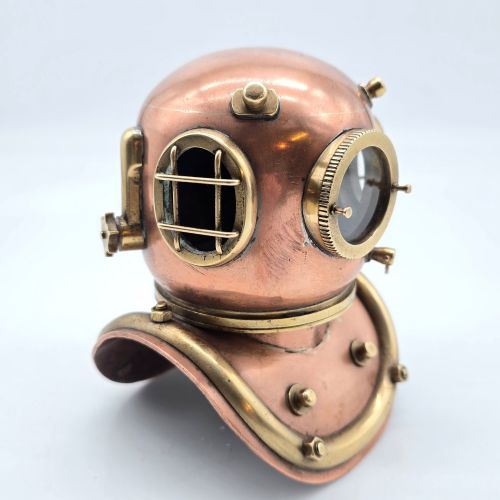
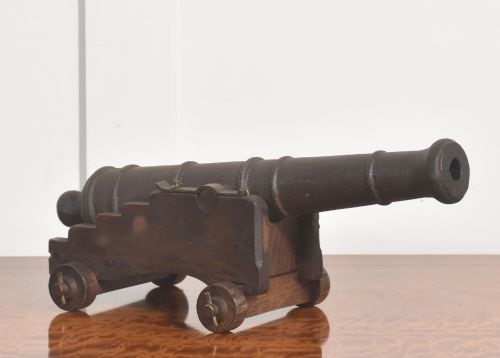
A nautical desk ornament takes many forms, ranging from heavy signal cannons on wooden carriages to miniature divers helmets and detailed ship models. Buyers searching for a nautical desk ornament usually encounter small bronze or brass cannons, lead or iron anchors, and carved wooden sailing boats dating from the nineteenth and early twentieth centuries.
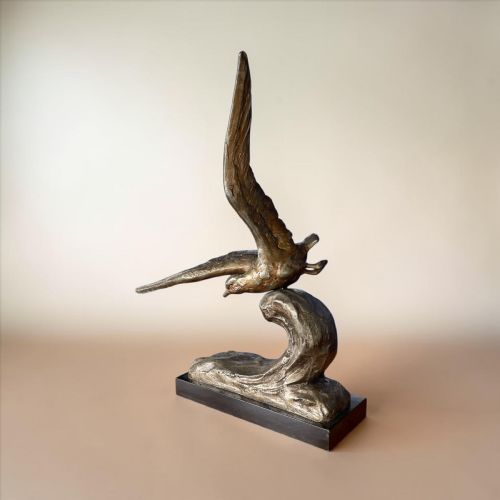
The objects served varied functions in maritime life, functioning as desk accessories, miniature scale models, or commemorative bells from steamships like the Piako. Victorian and Edwardian examples dominate the selection, alongside Art Deco pieces such as an albatross sculpture.
Most items reflect commercial maritime heritage or naval engineering through models of patented anchors like the Byers stockless or Porter's design. These pieces combine utilitarian function with the intricate craftsmanship valued in maritime display objects.
Materials and construction methods
Makers shaped these pieces primarily from cast bronze, brass, and cast iron, often mounting metal models onto wooden carriages or undercarriages made from oak and mahogany. Heavy metals provided the necessary weight for desk accessories like signal cannons and paperweights.
Artisans combined metal casting with hand finishing, polishing bronze surfaces and carving wooden hulls for sailing boats and model ships. Glass and marble also appear among the materials, providing contrasting textures for desk ornaments and decorative sculptures.
The listings span from the nineteenth century through the Art Deco era, featuring materials such as brass, bronze, cast iron, oak, and marble.
Markers of quality
Quality rests on the fidelity of the scale model and the precision of the metal casting, particularly in engineering miniatures like divers helmets and patent anchors. Finer examples display crisp detail in moving parts, clean casting seams, and expert polishing of bronze or brass.
The choice of secondary materials marks the tier of the piece, with solid mahogany undercarriages and heavy cast bronze sitting above lighter, simpler constructions. Maker involvement also elevates certain objects, such as engineer-made miniatures that show superior mechanical accuracy.
The Nautical Desk Ornament Glossary
- Signal cannon
- A small ordnance piece fired to salute, signal time, or communicate between vessels. These desk models replicate the heavy artillery used on maritime decks.
- Byers stockless anchor
- A patented anchor design featuring a pivoting head without the traditional crossbar. Scale models of this type reflect late nineteenth and early twentieth-century marine engineering.
- Porter's patent anchor
- An influential nineteenth-century anchor design with moveable flukes intended to prevent fouling. Miniature versions served as desk ornaments and executive paperweights.
- Divers helmet
- A heavy copper and brass headpiece used in standard diving dress. Miniature engineer-made models reproduce the riveted construction and viewports of the full-sized equipment.
- Oak carriage
- The wooden mounting block that supports a ship or signal cannon. Finer versions utilise seasoned oak or mahogany with fitted metal hardware.
Nautical Desk Ornament: Frequently Asked Questions
What is a nautical desk ornament?
A nautical desk ornament is a small decorative or functional object related to maritime history, such as a miniature cannon, ship model, or anchor.
These pieces were produced during the nineteenth and early twentieth centuries for offices, studies, and maritime enthusiasts.
How were signal cannons used?
Signal cannons served to fire blank charges for salutes, yacht races, or signalling across water.
On a desk, they functioned primarily as heavy decorative objects or paperweights reflecting maritime traditions.
How do I date a brass cannon?
Dating relies on the style of the metal casting, the design of the wooden carriage, and any associated maker marks or patents.
Nineteenth-century examples often feature heavy cast bronze or iron on oak mountings, while later pieces adopt Art Deco or Edwardian stylistic traits.
Are these models historically accurate?
Many pieces are precise scale models of actual marine hardware, such as patented anchors and specific steamship bells.
Engineer-made miniatures were built with careful attention to mechanical detail, reflecting real nineteenth-century nautical technology.
What woods are used for the carriages?
Carriages and undercarriages are commonly constructed from durable hardwoods like oak and mahogany.
These timbers provided a stable, heavy base to support bronze and cast iron model cannons.