


Miniature Brass Cannon
A miniature brass cannon brings heavy military history to a desk or shelf, offering tactile scaled-down metalwork from past centuries.
Miniature Brass Cannon
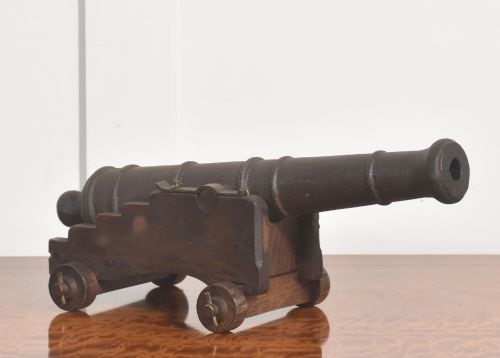
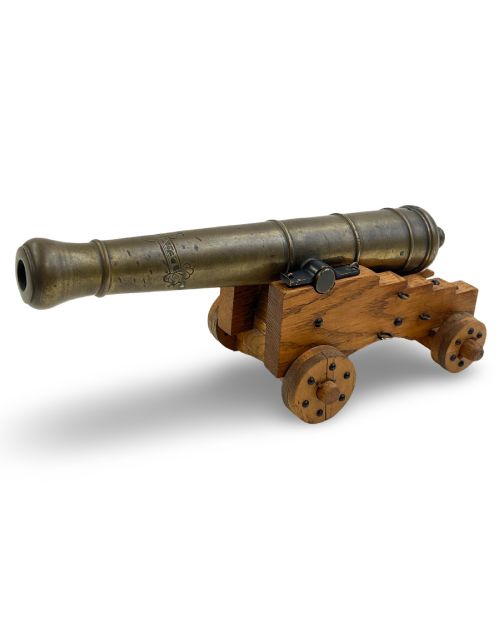
A miniature brass cannon represents scaled artillery pieces built for display, signaling, or desk ornamentation across several historical eras. These small arms frequently appear as model field guns, signal cannons, or desk ornaments mounted on wooden carriages.
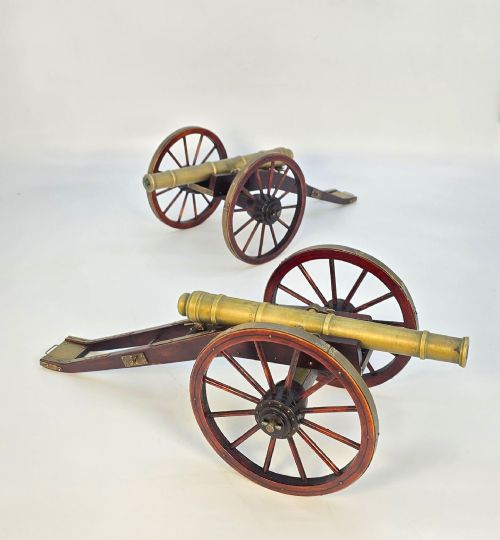
The pieces on this page span the eighteenth, nineteenth, and early twentieth centuries, reflecting styles from Victorian maritime pieces to French military models. Buyers encounter everything from simple brass signal cannons to elaborate bronze barrels resting on oak or mahogany undercarriages.
Origins stretch from English workshops to French foundries, producing items intended for practical signaling or gentlemanly study. Collectors find single display pieces alongside matched pairs designed for symmetrical placement.
What varies in quality
Quality rests upon the crispness of the metal casting and the fidelity of the scaled proportions relative to full-size ordnance. Finer specimens display sharp lettering, precise barrel rings, and clean relief inscriptions.
The joinery and timber selection of the carriage distinguish standard utility pieces from superior models. Dense hardwoods with tight grain and robust metal undercarriages indicate careful construction by skilled makers.
Miniature Brass Cannon Retail Price Guide 2026
Typical asking prices for miniature brass cannon among the pieces listed under this phrase on Sellingantiques today, from the lower quarter to the upper quarter. They describe what is for sale here now, not the wider market.
Some tiny barrels bear martial inscriptions to celebrate historical treaties, while others sit quietly on mahogany blocks ready to start a yacht race.
The Miniature Brass Cannon Glossary
- Signal cannon
- A small ordnance piece designed primarily to create a loud report for alarms, yacht racing starts, or celebrations rather than combat. These items typically feature stout barrels capable of handling small gunpowder charges.
- Gribeauval field gun
- A standardised artillery system developed in France during the eighteenth century that influenced military model design. Pieces following this style exhibit distinct barrel contours and carriage proportions.
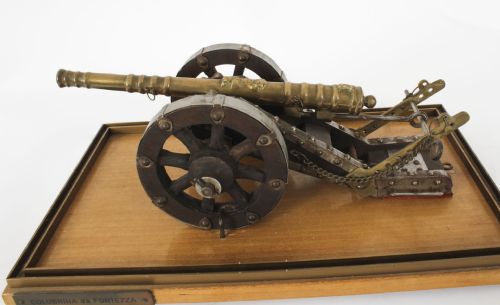
- Colubrina da Fortezza
- A historical term describing a type of fortress culverin, represented in scaled models through elongated barrels. These pieces emulate the range and design of early fortifications.
- Undercarriage
- The wooden or metal mounting structure that supports the cannon barrel and wheels. These assemblies range from simple blocks to complex stepped bracket carriages.
Miniature Brass Cannon: Frequently Asked Questions
Were these miniature cannons actually fired?
Many signal cannons were built with operational bores intended to discharge small charges of powder for noise or starting races.
Other examples functioned strictly as static desk ornaments or decorative models without any functional ignition capability.
How do I identify the period of a miniature cannon?
Dating relies on stylistic clues in the barrel design, carriage construction, and any commemorative inscriptions or stamps found on the metal.
Victorian and eighteenth-century pieces display distinct carriage joinery and metal patination that separate them from twentieth-century reproductions.
What woods were used for the carriages?
Makers frequently selected dense domestic hardwoods like oak and mahogany to provide sturdy support for heavy bronze or iron barrels.
These timbers were chosen for their stability and ability to hold small iron fittings without splitting under tension.
How should I clean polished brass or bronze?
Maintenance typically involves dusting with a soft cloth to preserve the existing surface patination built up over decades of handling.
Abrasive metal polishes should be avoided unless necessary, as they can strip away historic finish and age.