


Antique Signal Cannon
These antique signal cannons are robust maritime pieces designed to make a loud report, offering serious collectors a tangible piece of naval history.
What They Are
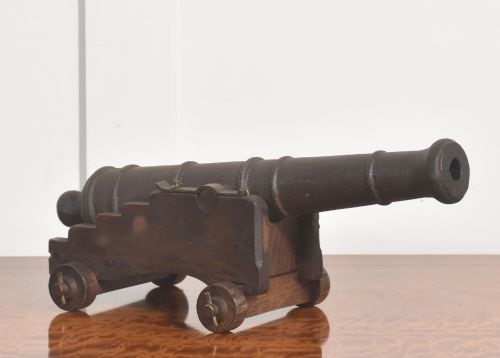
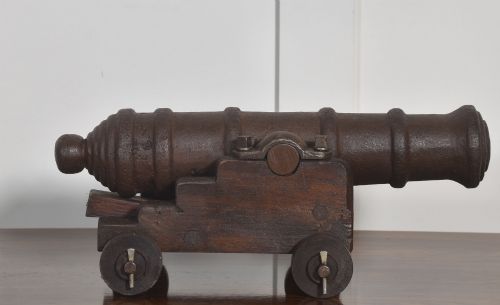
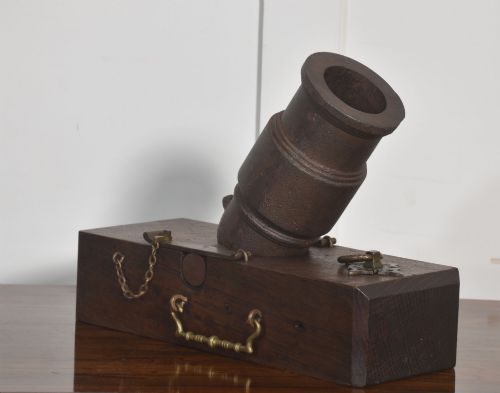
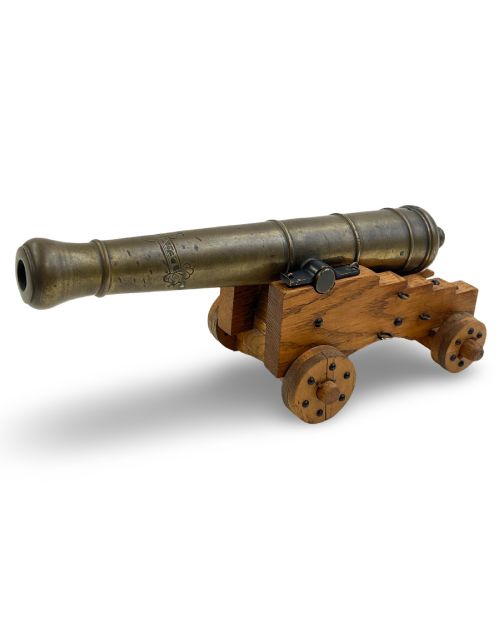
When you search for antique signal cannon, you are looking at functional ordnance models and scaled pieces built for maritime and ceremonial use. The selection includes desktop scale models and robust cast examples mounted on wooden carriages.
You are most likely to meet 19th-century brass and cast-iron versions on this page. These range from heavy deck pieces to small desk ornaments produced in later decades like 1910.
How They Were Made
Maker workshops constructed these cannons using durable metals such as brass, bronze, cast iron, and polished steel for the barrels and ordnance bodies. These metallic elements provide the substantial weight required for firing or display.
Carriages and bases were typically fashioned from seasoned timbers like oak and various dense woods. Metal and wood components were fitted together to create stable mounts capable of absorbing the shock of a blank charge.
Retail Price Guide 2026
Typical UK retail prices for signal cannon, calculated from the Sellingantiques database of over a million retail prices indexed since 2003. This retail price guide relies exclusively on Sellingantiques data; no external sources or auction records are used, so the figures do not describe the wider market.
Some models sit quietly on mahogany desks today, far removed from the deafening maritime salutes of their working past.
What Varies in Quality
Quality rests in the precision of the metal casting and the integrity of the materials. Fine examples display crisp detailing on the barrel and well-turned trunnions, whereas lesser pieces show rough casting marks and crude finishing.
The sophistication of the carriage construction defines the upper tier of the range. Solid joined oak with fitted hardware elevates a piece far above simple wooden blocks.
The Antique Signal Cannon Glossary
- Signal cannon
- A small ordnance piece used historically to fire blank charges for signaling, saluting, or marking time at sea and ashore.
- Carriage
- The wooden or metal mounting frame that supports the cannon barrel.
- Trunnions
- Cylindrical projections on either side of the barrel used to mount it to the carriage.
- Militaria
- Collectable artefacts and items relating to military history, warfare, and armed forces.
Frequently Asked Questions
What is an antique signal cannon?
These are small historical ordnance pieces designed to produce a loud report using gunpowder or blank charges.
They served practical functions at sea and on land before becoming decorative or collectable items.
How were signal cannons used?
Maritime crews used them for signaling other vessels, communicating through fog, or sounding alarms.
They were also employed ashore for ceremonial salutes and marking the beginning or end of the working day.
Are these cannons still capable of firing?
Many surviving examples retain their metal barrels and touchholes, but functionality depends entirely on structural integrity.
Expert inspection by a specialist is essential before any attempt to load or fire an antique piece.
How do I date a signal cannon?
Dating relies on identifying the metal composition, casting methods, and the style of the wooden carriage.
Nineteenth-century examples often feature heavier cast iron or brass forms compared to later 20th-century models.