


Maritime Desk Ornament
A maritime desk ornament brings the weight of the sea and the precision of the Age of Sail directly to your study or desk.
Maritime Desk Ornament
A maritime desk ornament encompasses small-scale models, functional instruments and decorative objects that evoke naval history and seafaring. When you search for a maritime desk ornament, you encounter pieces designed to sit upon writing tables, mantelpieces and cabinets.
The objects on this page span the nineteenth century into the nineteen-thirties, taking forms such as signal cannons, anchor models, model ships, and ship logs. Most pieces you meet here originate from the Victorian period through to the art deco era, reflecting maritime industrial progress.
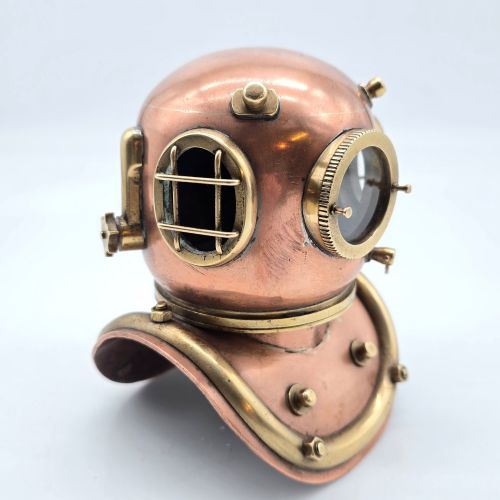
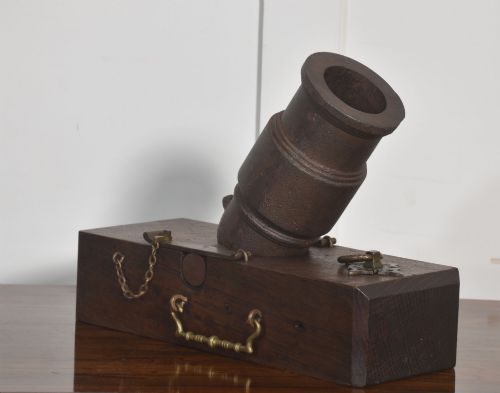
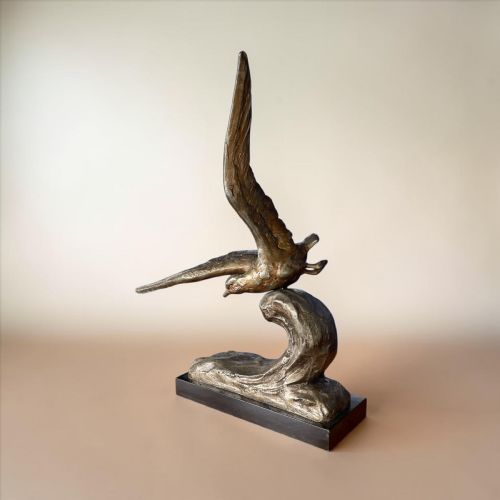
Forms vary from miniature copper and brass divers' helmets and bronze albatross sculptures to oak-mounted cast-iron signal mortars and ships' bells. Each object serves as a tangible reminder of maritime commerce, exploration and naval engineering.
How they were made
Makers utilised metals such as brass, bronze, cast iron and copper, often casting them into detailed models of cannons, anchors, and bird studies. These metal components were combined with wooden carriages or plinths made of oak and black marble.
Techniques range from sand casting for heavy iron signal mortars and brass cannons to hand carving for wooden sailing boat models and clipper ships. Instrument makers also produced precision brass ship logs designed to record mileage at sea before adapting them for desk use.
Materials across these listings include brass, bronze, cast iron, copper, oak, marble, and glass, shaped into nineteenth and twentieth-century forms.
What varies in quality
Quality rests in the precision of the casting and the fidelity of the scale model to its full-size nautical counterpart. Engineer-made miniatures and signed commemoratives demonstrate a higher standard of workshop execution than generic decorative items.
Materials also dictate distinction, where heavy bronze and polished brass mounted on solid black marble or seasoned oak indicate superior manufacture compared to lighter, purely decorative cast elements.
The Maritime Desk Ornament Glossary
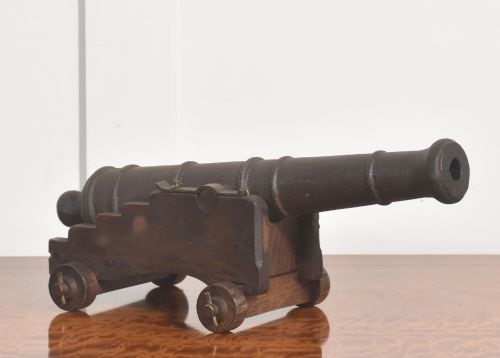
- Signal cannon
- A small ordnance piece used historically aboard ship for saluting, signalling, or marking historical events. These are frequently found mounted on wooden carriages.
- Divers helmet
- A heavy protective headpiece worn by deep-sea divers in the nineteenth century, often scaled down as an engineer-made miniature desk piece.
- Ships log
- A mechanical instrument trailed behind a vessel to measure speed and distance, sometimes repurposed as a heavy brass desk ornament.
- Stockless anchor
- An anchor design without traditional fluked stocks, reproduced in miniature as a desk model to represent maritime engineering.
Maritime Desk Ornament: Frequently Asked Questions
What is a maritime desk ornament?
A maritime desk ornament is a small-scale model, instrument, or sculpture connected to nautical history, designed to sit on a flat surface.
These pieces include miniature signal cannons, anchor models, ships' bells, and bronze bird sculptures created during the nineteenth and early twentieth centuries.
How were signal cannons used?
Signal cannons were small ordnance pieces utilised at sea or ashore to fire blank charges for communication, salutes, or commemorations.
On a desk, smaller brass and cast-iron versions served as decorative or commemorative items marking significant historical events.
How do I date a brass desk model?
Dating relies on stylistic clues, manufacturing methods, and materials consistent with periods like the Victorian era or art deco style.
Documentation, inscriptions, or hallmarks regarding specific ships or historical events also help establish the decade of origin.
Are these models historically accurate?
Many scale models and instruments are precise representations of actual maritime equipment, such as Byers and Porter's patent anchors.
Engineer-made miniatures and inventor models were built to reflect the exact mechanical details of their full-size nautical counterparts.