


Brass Signal Cannon
These brass signal cannons are robust maritime pieces designed to produce a loud report, offering both decorative presence and historical utility.
Brass Signal Cannon
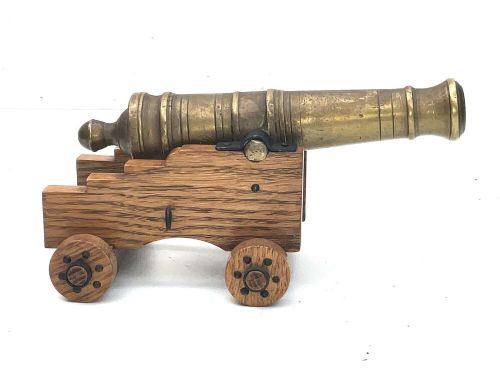
A brass signal cannon is a heavy ordnance model designed for discharging gunpowder to create a sharp report rather than firing a solid projectile at a target. When you search for brass signal cannon, you are looking at items that served functional roles in maritime communication, estate starting pistols, or substantial desk ornaments during the eighteenth, nineteenth, and early twentieth centuries.
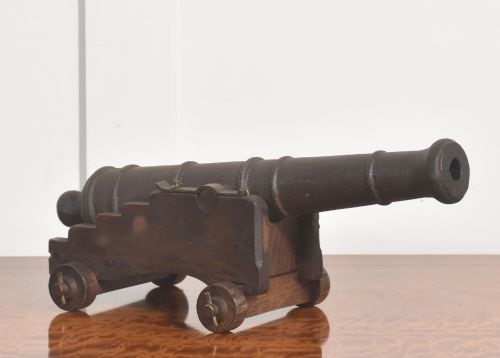
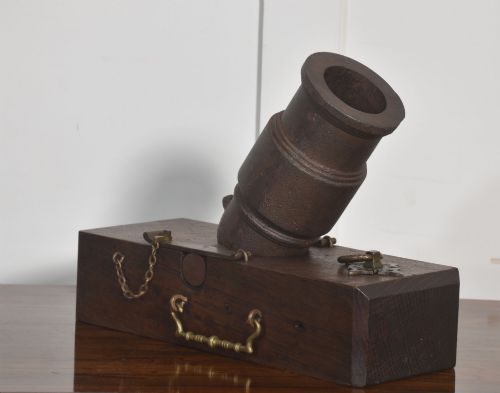
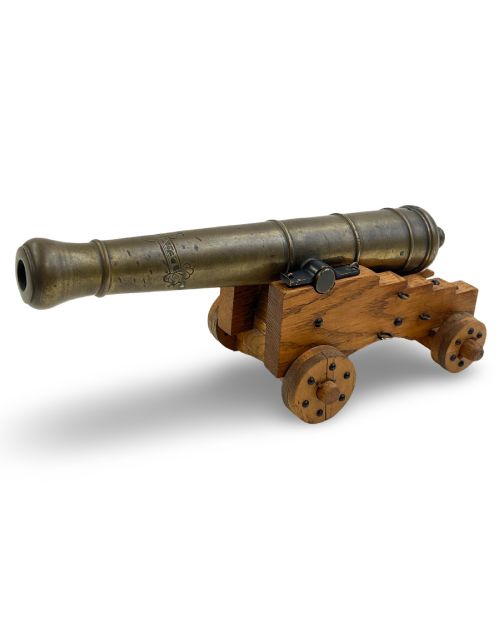
The versions you are most likely to meet on this page span the Victorian era, the nineteenth century, and occasional Edwardian pieces, taking the form of desk top models, signal mortars, and model field cannons. They appear mounted on timber carriages made from oak or mahogany, sometimes paired with cast iron elements or built entirely from polished bronze and steel.
Origin and style variations include English and French maritime designs, with specific examples carrying inscriptions or commemorations such as the end of the Crimean War. They range from small, hand-made desk pairs to very large ornamental pieces meant for prominent display.
Materials and construction methods
The barrels are cast from copper-alloy metals including brass and bronze, alongside cast iron and polished steel, providing the structural mass needed to contain a gunpowder charge safely. These metal components are paired with wooden carriages fashioned from durable hardwoods like oak and mahogany to absorb recoil.
Makers utilised casting techniques for the metal barrels and carriages, finishing the surfaces through polishing or painting. Secondary materials like iron provide wheels, fittings, and straps that secure the barrel to its wooden undercarriage.
Listings feature pieces spanning the eighteenth century through to nineteen ten, incorporating brass, bronze, cast iron, oak, and mahogany.
Markers of quality and execution
The distinction between standard commercial pieces and superior items lies in the crispness of the metal casting and the precision of the mechanical details. Better examples display carefully finished surfaces, well-fitted wooden carriages, and substantial weight in the metal components rather than rough casting marks.
Original provenance and inscriptions elevate certain pieces, particularly those marked to commemorate specific historical events or produced as matched pairs on fitted undercarriages. The integration of mixed materials, such as polished bronze barrels mounted on robust mahogany or cast iron carriages, indicates higher manufacturing effort.
The Brass Signal Cannon Glossary
- Signal cannon
- A small ordnance piece utilised to make a loud noise for maritime communication, starting races, or celebratory firing.
- Carriage
- The supporting wooden or iron frame upon which the cannon barrel rests and is secured.
- Signal mortar
- A short, wide-bore variation of the signal cannon designed to project sound upward.
- Undercarriage
- The base mounting beneath the cannon barrel, often constructed from polished mahogany or oak.
- Militaria
- Antiques and collectibles relating to military history, weapons, and ordnance.
Brass Signal Cannon: Frequently Asked Questions
What was a brass signal cannon used for?
These cannons served practical roles in maritime settings for signalling ships, warning of hazards, or marking time with a loud report.
They were also utilised on land for estate celebrations, starting yacht races, or as impressive desk ornaments in offices and libraries.
How do I date a brass signal cannon?
Dating relies on stylistic clues from the carriage design, the metal alloy used, and any specific inscriptions or historical commemorations marked on the barrel.
Nineteenth-century examples often feature cast iron and oak combinations, while Edwardian and later pieces may incorporate polished steel or specific Victorian maritime motifs.
Are these cannons safe to fire?
Most antique signal cannons are sold primarily as decorative objects, desk ornaments, or maritime collectibles rather than functioning ordnance.
Anyone considering firing an antique piece must have it inspected by a qualified professional to ensure the metal and carriage remain structurally sound.