
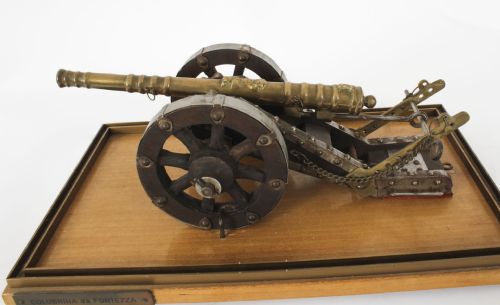


Brass Desk Cannon
Solid brass desk cannon models offer a tangible piece of maritime and military history, prized on this page for their craftsmanship and decorative presence.
Brass Desk Cannon
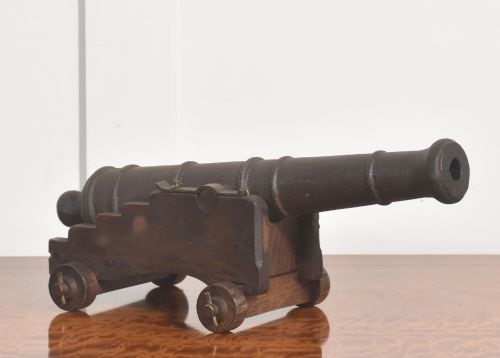
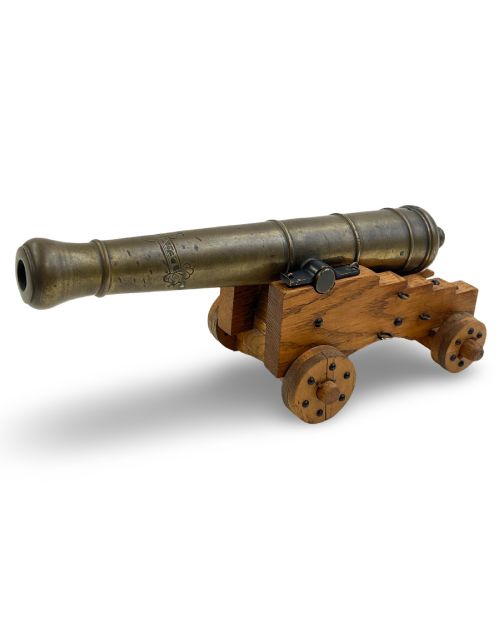
A brass desk cannon represents a scale model or signal piece designed for display, typically mounted on a wooden or cast iron carriage. Collectors encountering this phrase will find items originating from the eighteenth, nineteenth, and early twentieth centuries, spanning Victorian, Regency, and French maritime styles.
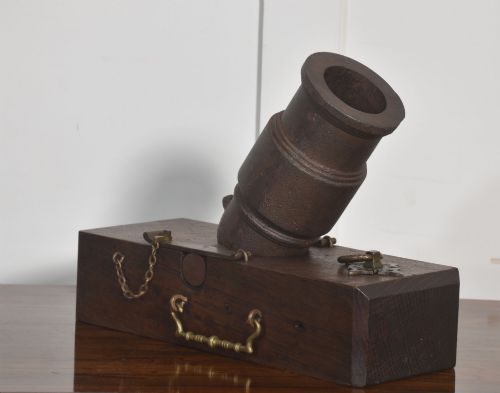
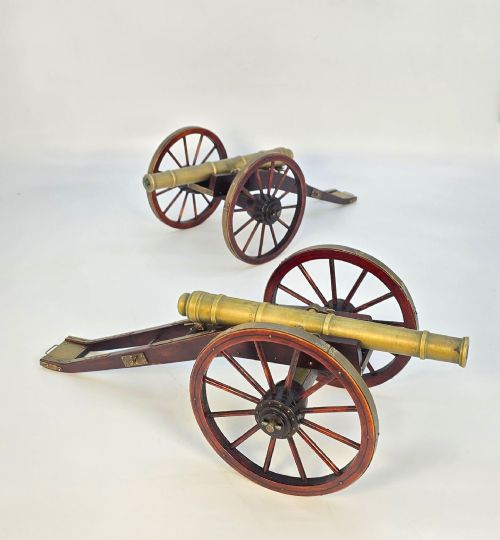
Militaria and maritime antiques form the primary categories for these items, with some examples produced as commemorative pieces or detailed replicas of field guns such as the Gribeauval system. Variations include single pieces and matched pairs, ranging from small ornamental models to heavy signalling cannons.
Materials and construction methods
Makers cast barrels primarily in brass, bronze, and iron, utilising metal-working techniques that produced both smooth finished surfaces and patinated textures. Polished finishes appear alongside aged patinas, reflecting different periods of manufacture and subsequent care.
Carriages combine metals with hardwoods like oak and mahogany, often featuring iron fittings, stepped wheels, and retaining pins to mimic full-sized artillery. Hand-built and hand-made examples demonstrate individual craftsmanship in the fitting of metal barrels to wooden stocks.
Some nineteenth-century models were built heavy enough to double as formidable paperweights when the paperwork got too heavy.
Assessing quality in desk cannons
Superior examples exhibit precise casting in the metal barrel, showing crisp detailing on mouldings, touch holes, and inscriptions without the blurring common in mass-produced items. The fidelity of the scale model to historical artillery designs dictates the upper tier of the range.
Carriage construction reveals significant distinctions in quality, where tight joinery, dense hardwood selection, and well-proportioned iron hardware distinguish superior workshop production from simpler decorative items. The weight and solidity of the materials used throughout the assembly anchor the piece firmly in its period.
The Brass Desk Cannon Glossary
- Signal cannon
- A small artillery piece designed to produce a loud report for alarms, yacht races, or celebrations rather than project a solid shot. These items frequently double as heavy desk ornaments.
- Gribeauval system
- A standardised artillery system introduced in France during the eighteenth century that revolutionized field gun design. Models replicating this style feature specific technical proportions on the carriage and barrel.
- Carriage
- The mounting structure that supports the cannon barrel, typically constructed from wood or cast iron with integrated wheels. In desk pieces, this provides a stable display base.
- Militaria
- Antiques and collectibles relating to warfare, military history, and armed forces equipment. Desk cannons sit firmly within this collecting category alongside medals and edged weapons.
- Colubrina da Fortezza
- A historical form of fortress culverin artillery represented in scale model form by period makers. These pieces replicate longer-barrelled historical ordnance.
Brass Desk Cannon: Frequently Asked Questions
What were brass desk cannons used for?
These pieces served primarily as decorative ornaments for offices and studies, reflecting a maritime or military interest. Some smaller examples functioned practically as signal cannons for firing blank charges on special occasions.
Over time, their role shifted entirely to display and collection, prized for their association with naval history and nineteenth-century interior aesthetics.
How do I date a brass desk cannon?
Dating relies on examining the alloy composition, the casting quality of the barrel, and the style of the carriage woodwork. Period specific designs, such as Regency or Victorian maritime styles, offer key chronological markers.
Inscriptions, commemorative markings, and construction methods also help narrow the manufacturing era between the eighteenth and early twentieth centuries.
Are these cannons safe to fire?
Most antique desk cannons are sold strictly as decorative objects or model displays rather than functioning firearms. Testing or firing historical metalwork can risk structural failure due to age and material fatigue.
Collectors should consult a professional before attempting to discharge any antique signal cannon found on the market.
What is the difference between brass and bronze models?
Bronze contains a higher copper and tin content, often yielding a warmer, deeper patina over centuries of exposure. Brass is an alloy of copper and zinc, typically presenting a brighter golden hue when polished.
Both metals were used historically depending on the workshop, the intended finish, and the specific period of the model's creation.