


Antique Model Cannon
These antique model cannon are solid scale artillery pieces and signal pieces cast in bronze, brass, and iron.
Antique Model Cannon
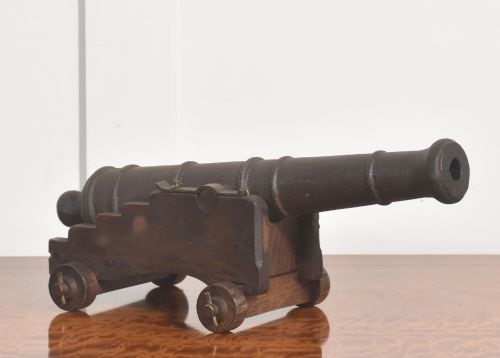
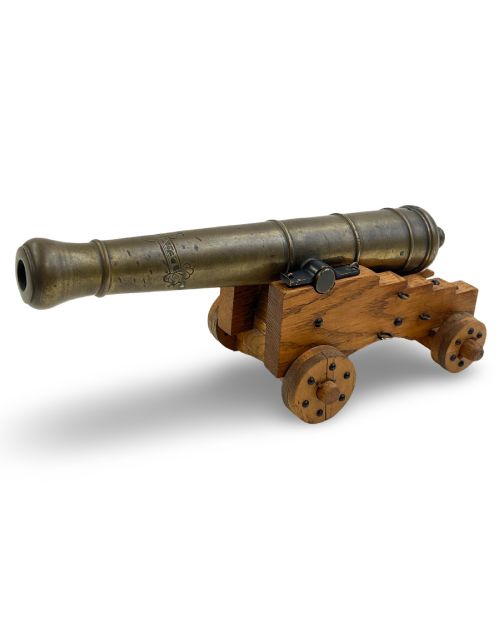
An antique model cannon is a scaled reproduction or functional signal piece cast in metal and mounted on a wooden or iron carriage. These pieces range from small desk ornaments to larger maritime signal cannons designed to produce an audible report.
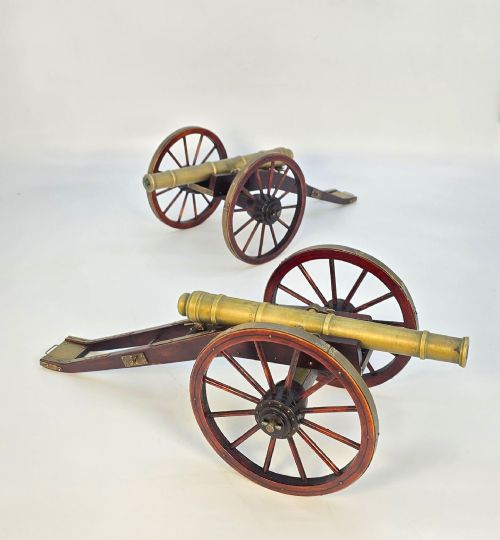
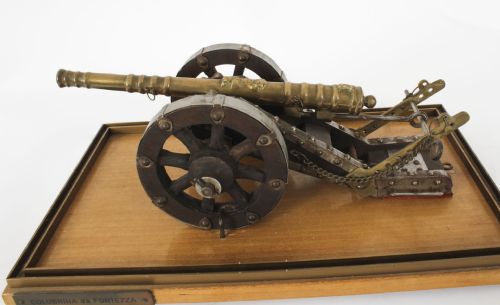
The selections encountered here span the eighteenth, nineteenth, and early twentieth centuries, including specific regional patterns such as French maritime designs, Gribeauval field gun models, and English Victorian ornamental pieces. Many take the form of muzzle-loaded field guns or fortress pieces resting on oak or mahogany undercarriages.
Buyers seeking these works will find both decorative display models and functional signal cannons that reflect naval and military history. The assortment balances nineteenth-century production with earlier stylistic revivals.
How they were made
The barrels are cast from metals such as bronze, brass, cast iron, and polished steel, often shaped through traditional foundry methods to capture authentic ordnance details. These metal castings provide the weight and durability expected of functional signal pieces and desk models.
Carriages and undercarriages utilise hardwoods including oak and mahogany, joined to metal components with pins and straps. Many pieces combine a bronze or iron barrel with a stepped wooden step-stock carriage to replicate full-sized artillery mountings.
Listings feature pieces spanning the 18th Century to the 1930s, utilising bronze, cast iron, oak, and mahogany.
What varies in quality
Quality rests in the fidelity of the casting and the precision of the metalwork on the barrel. Finer examples display crisp inscribed markings, such as named vessels or pattern types, alongside carefully finished bore structures.
The integrity of the carriage construction distinguishes standard decorative items from superior hand-built models. Dense hardwoods fitted neatly to heavy bronze or iron barrels indicate careful manufacture by makers attentive to historical proportions.
The Antique Model Cannon Glossary
- Signal cannon
- A small cannon designed primarily to produce a loud report rather than fire a projectile. These pieces were often used for maritime signaling, yacht racing, or estate celebrations.
- Gribeauval system
- A standardised system of artillery developed by Jean-Baptiste Gribeauval in France during the eighteenth century. Models replicating this design feature specific field gun proportions and carriage details.
- Carriage
- The mounting structure that supports the cannon barrel. In these listings, carriages are constructed from cast iron or hardwoods such as oak and mahogany.
- Colubrina
- An early type of long-barreled cannon derived from the culverin. Models representing this style feature elongated barrels designed for high-velocity ordnance forms.
- Trunnion
- The cylindrical projections on either side of a cannon barrel used to mount the piece to its carriage. On better models, trunnions are cast as an integral part of the barrel.
Antique Model Cannon: Frequently Asked Questions
Were these cannons actually fired?
Many examples categorized as signal cannons were built to discharge a blank powder charge to create a loud report for maritime or ceremonial use. Desk ornaments and purely decorative models, however, typically feature solid or un-drilled bores intended solely for display.
Buyers should examine the touchhole and bore construction carefully before attempting any operation, as numerous period pieces prioritized visual fidelity over functional capability.
How do I identify the period of a model cannon?
Dating relies on combining the metallurgical characteristics of the barrel with the style of the carriage and any inscribed markings. Nineteenth-century pieces often incorporate Victorian brass work or cast iron elements, while eighteenth-century styles reappear in later commemorative and revival castings.
Material choices such as polished steel, heavy bronze, and specific woods like mahogany help narrow down the manufacturing window between the late seventeen-hundreds and the early nineteen-hundreds.
What is the difference between a desk cannon and a field gun model?
Desk cannons are typically designed for stationary placement on tables or mantels, often mounted on compact undercarriages suited for indoor display. Field gun models replicate larger mobile artillery pieces, complete with wheeled carriages and limber structures derived from military ordnance.
Scale proportions also vary, with desk pieces generally focusing on polished metal aesthetics and field models emphasising tactical carriage details.
How should I clean bronze and brass barrels?
Maintenance generally involves removing surface dust with a dry, soft cloth to preserve the historic patina built up over generations. Avoid harsh chemical polishes that strip away age-appropriate oxidation and alter the surface colour of the metal.
Unfinished iron and steel components benefit from a light application of protective oil to prevent active corrosion in damp environments.