
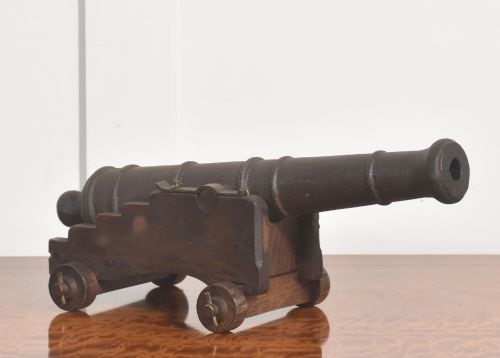
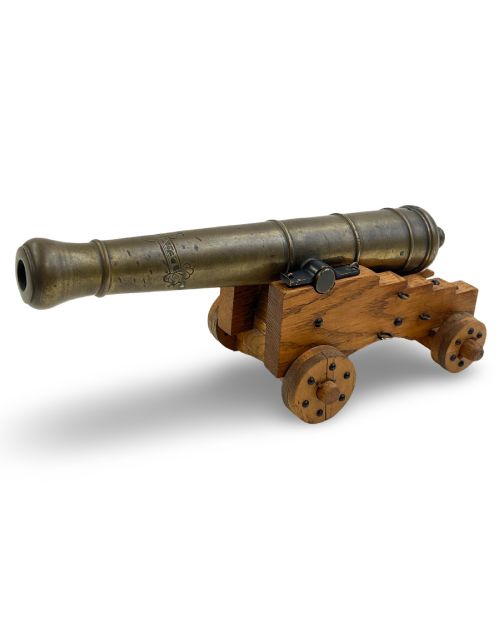


Signal Cannon Model
A signal cannon model brings the audible history of maritime tradition directly to the desk, offering a tangible piece of naval heritage for the collector.
Signal Cannon Model
When you search for a signal cannon model, you are looking at small-scale ordnance produced primarily for maritime communication, domestic display, or ceremonial use. These pieces bridge the gap between functional artillery and decorative desk ornaments, reflecting the maritime interests of past centuries.
You are most likely to meet examples from the nineteenth century on this page, alongside eighteenth-century works and early twentieth-century interpretations. The forms range from simple desk top models to elaborate brass and bronze barrels mounted on oak or mahogany carriages.
Materials and Construction
These pieces rely heavily on cast metals for their barrels, utilising bronze, brass, cast iron, and polished steel to achieve weight and presence. Metal casting allows for inscriptions and decorative detailing upon the barrel surface.
The barrels sit upon fitted wooden carriages fashioned from oak, mahogany, or general wood, sometimes combined with iron or cast iron components. Hand-made construction ensures each carriage matches the proportions of the specific metal barrel it supports.
Listings on this site span the eighteenth century, the Victorian era, and the early twentieth century, featuring materials from cast iron and bronze to mahogany.
Assessing Quality and Execution
Quality rests in the fidelity of the casting and the precision of the carriage woodwork. Better examples display crisp detailing on the metal barrel and robust, well-proportioned wooden undercarriages that echo full-scale maritime artillery.
The finish of the metal also dictates the standing of the piece. Finely rendered ornamental cannons show careful polishing and accurate mounting, whereas simpler decorative items prioritize rustic cast iron presence over intricate scale accuracy.
The Signal Cannon Model Glossary
- Signal cannon
- A small piece of ordnance traditionally used to fire blank charges for signaling, saluting, or time-keeping at sea and ashore. In domestic settings, they survive as decorative desk ornaments.
- Carriage
- The mounting or support structure that holds the cannon barrel. These are typically built from hardwoods such as oak or mahogany, or constructed from cast iron.
- Desk ornament
- A small-scale decorative object intended for placement on a desk or table. Many nineteenth-century signal cannons served this exact domestic function.
Signal Cannon Model: Frequently Asked Questions
What is a signal cannon model?
A signal cannon model is a small-scale replica of a maritime or field cannon, constructed for decorative display or ceremonial salutes. They capture the aesthetic of full-size naval artillery in a size suited for interior spaces.
Most examples feature metal barrels of brass, bronze, or cast iron mounted on wooden carriages made from oak or mahogany.
How were signal cannons used?
Historical signal cannons were employed aboard vessels and along shores to communicate messages, mark the time of day, or fire salutes during ceremonies. Their loud reports could carry across distances where visual signals failed.
Over time, smaller versions transitioned into desk ornaments and decorative items for maritime enthusiasts.
How do I date an antique cannon model?
Dating relies on examining the materials, casting techniques, and style of the carriage and barrel. Eighteenth-century models often feature specific bronze patination and distinct French or English maritime characteristics, while Victorian pieces incorporate polished brass and cast iron.
Comparing the construction methods of the wood and metal helps place the object within the nineteenth or early twentieth century.
Where should I display a desk cannon?
These pieces suit studies, libraries, or offices where their maritime history can be appreciated up close. Placing them on a sturdy desk or mantelpiece allows the details of the metal barrel and wooden carriage to stand out.
Ensure the surface is stable, as heavy bronze and cast iron models carry substantial weight for their size.