



Antique Militaria Display
These antique militaria display pieces hold hard history in steel and brass, giving a study room tangible weight.
Antique Militaria Display
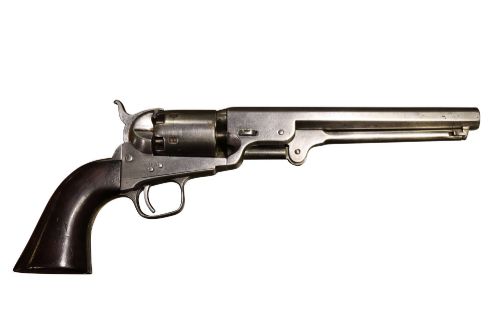
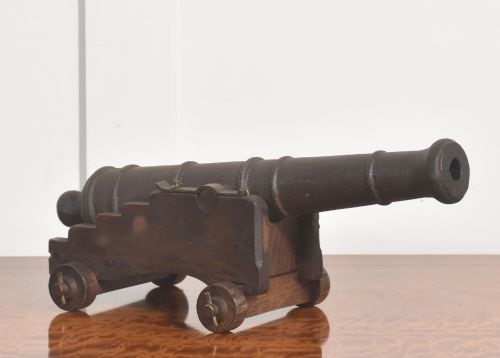
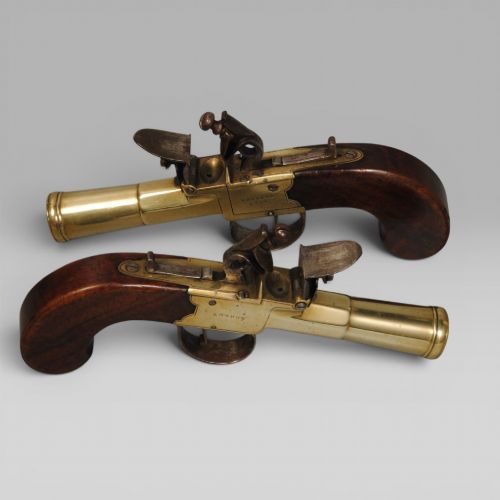
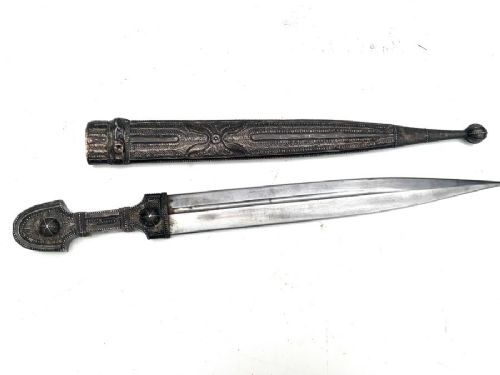
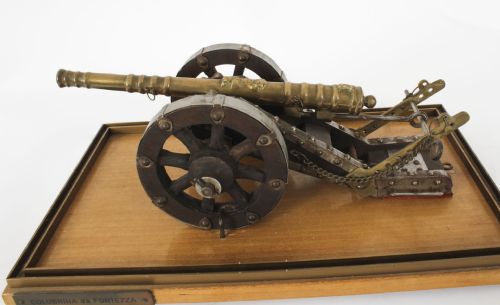
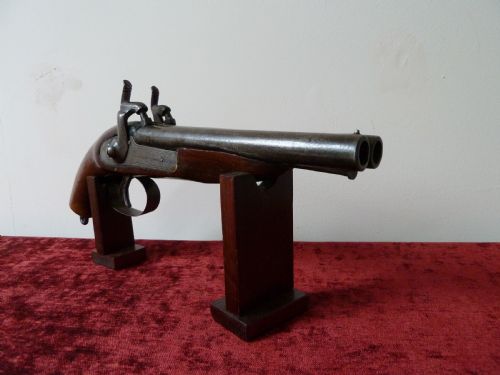
An antique militaria display brings together arms, headwear and field equipment from the eighteenth and nineteenth centuries. You will encounter boxlock blunderbuss pistols, Caucasian kindjal daggers, Victorian bicorn hats, percussion cavalry pistols, Ottoman miquelet belt pistols and signalling cannons.
The objects span Georgian, Victorian, Ottoman and nineteenth-century military traditions. Walnut stocks, embossed brass cladding and beaver felt define the physical presence of these pieces.
How they were made
Makers shaped these items using forged steel, cast iron and turned brass alongside carved walnut and other woods. Silver and niello embellishments appear on edged weapons and belt pistols.
Makers fashioned headwear from stiffened beaver felt with silk linings and metal insignia. Matchlock, miquelet and percussion mechanisms required precise hand-fitting of internal springs and triggers.
Antique Militaria Display Retail Price Guide 2026
Typical asking prices for militaria display among the pieces listed under this phrase on Sellingantiques today, from the lower quarter to the upper quarter. They describe what is for sale here now, not the wider market.
One listed pistol answers to the pirate moniker, carrying an Ottoman brass-clad pedigree straight into the nineteenth century.
What varies in quality
Quality rests in the crispness of engraving on lockplates and brass mounts, and the integrity of wood stocks. Maker signatures, such as Hawkes & Co. or Manton, distinguish standard military issue from distinguished London work.
Survival of original finish on steel barrels and retention of form in felt headwear separate robust examples from those that have suffered harsh service or poor storage.
Hawkes & Co·Manton
The Antique Militaria Display Glossary
- Boxlock
- A firearm design where the lock mechanism is integral with the breech rather than mounted on a separate sideplate. This layout appeared frequently on eighteenth-century blunderbuss pistols.
- Miquelet
- A form of flintlock mechanism common in Ottoman and Mediterranean lands. It uses an external mainspring and a combined steel and pan cover.
- Kindjal
- A double-edged Caucasian dagger featuring a straight, wide blade and a grip that flares slightly at pommel and bolster. These often feature niello-inlaid hilts and scabbards.
- Bicorn
- A historical form of cocked hat folded up at the sides, worn by officers during the Victorian period. Hawkes & Co. made notable examples of these formal hats.
- Niello
- A black metallic alloy of sulphur, silver, lead and copper used to fill engraved designs on metalwork. It provides a sharp contrast against silver mounts.
Antique Militaria Display: Frequently Asked Questions
How do I display a blunderbuss pistol?
Mount the piece securely on a wooden backboard using non-corrosive brass brackets that support the weight at balance points.
Keep the display away from direct sunlight and damp air to protect the walnut stock and steel barrel.
What is a miquelet pistol?
A miquelet pistol is a firearm utilising a specific Mediterranean and Ottoman lock mechanism with an external mainspring.
These locks are recognizable by their rugged construction and distinctive toe on the frizzen.
How do I care for felt headwear?
Keep bicorn hats in stable temperature conditions away from dust and light to prevent the beaver felt from drying and cracking.
Support the interior structure gently so the felt retains its original cocked shape without strain.
What period are these pieces from?
The available pieces originate from the eighteenth and nineteenth centuries, spanning Georgian and Victorian eras.
Exact dates range from the late eighteenth century through the mid-nineteenth century, including the Crimean War period.