



Antique Flintlock Pistol
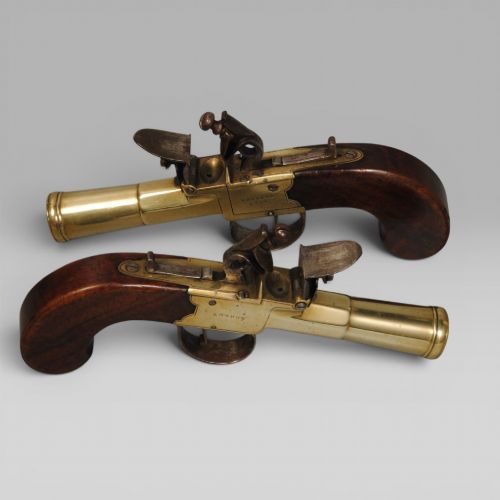
An antique flintlock pistol brings centuries of mechanical history and martial craft to your collection, offering tactile links to the Georgian and Napoleonic eras.
Antique Flintlock Pistol
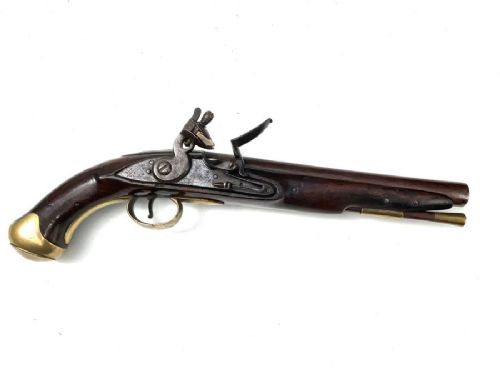
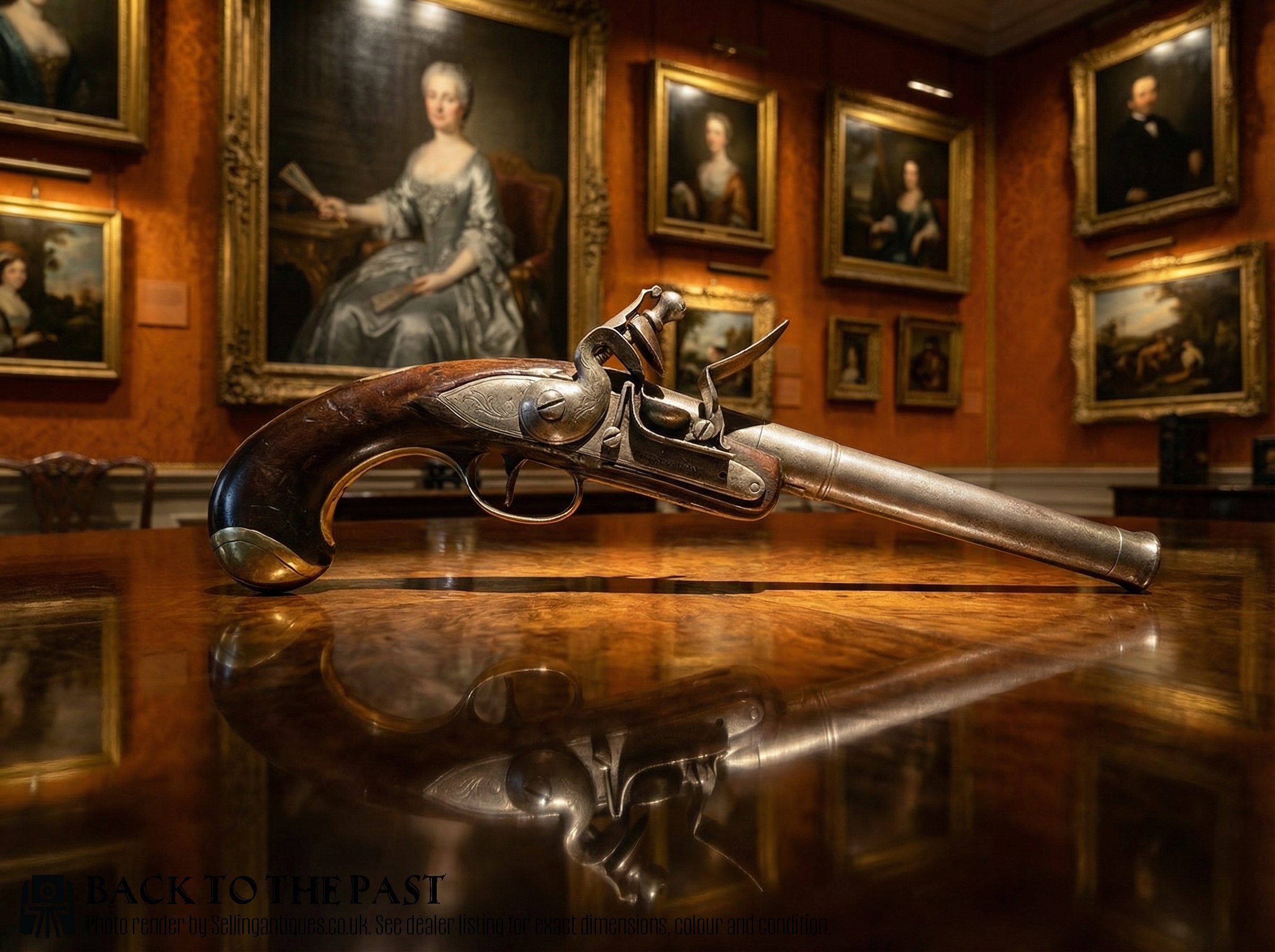
When searching for an antique flintlock pistol, a buyer encounters everything from military service arms to civilian pocket pieces and ornate continental holster models. The selection spans the seventeenth, eighteenth, and nineteenth centuries, reflecting domestic defence, military regulation, and high-status duelling.
British London makers such as Harrison, Twigg, and Mortimer appear frequently, alongside regional English, Scottish Highland scroll-butt examples, and continental Ottoman or French pieces. Pocket-sized Queen Anne turn-off cannon barrel designs and heavy cavalry dragoon arms dominate the forms seen on this page.
How they were made
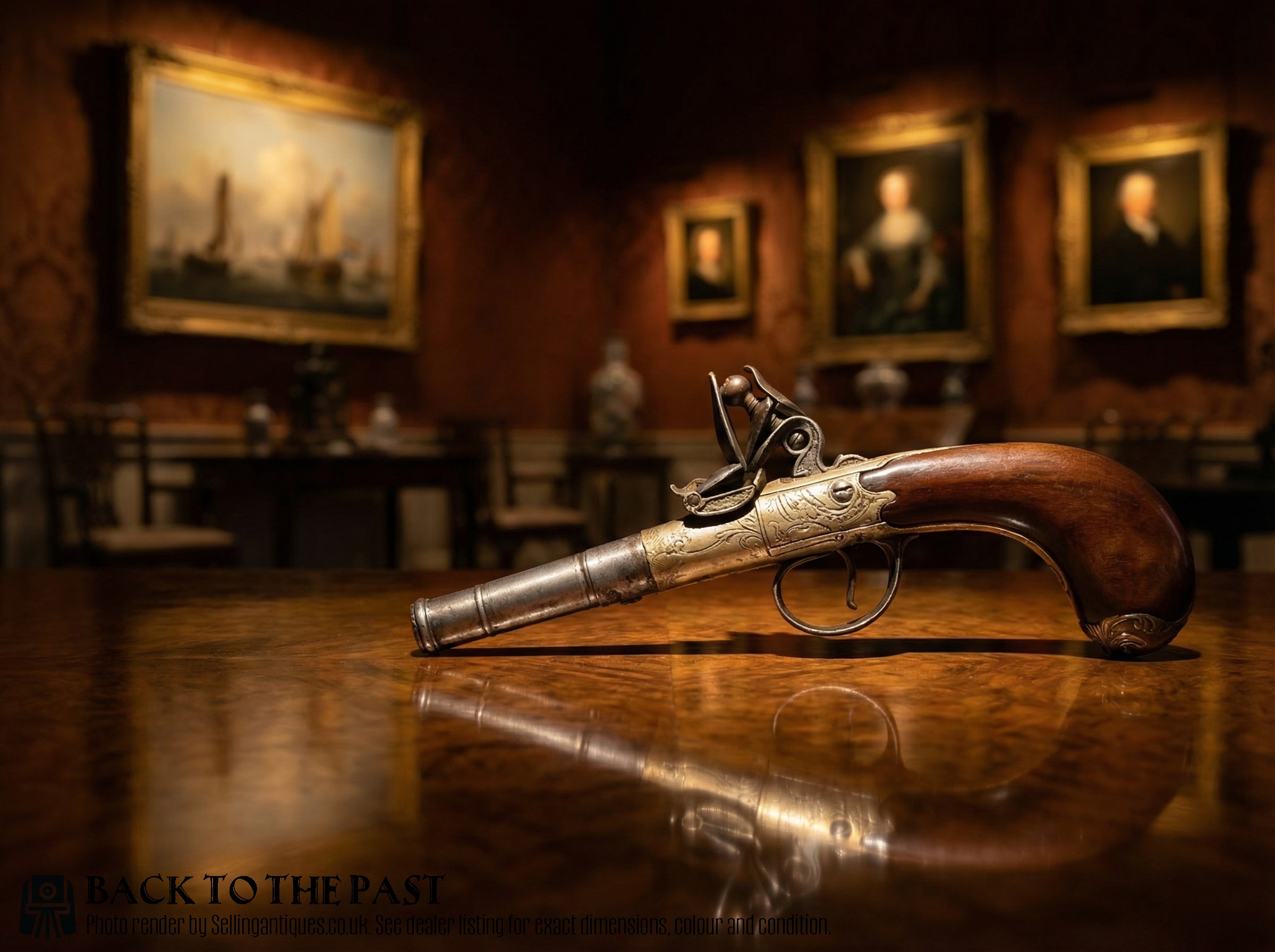
Gunsmiths forged barrels from steel and iron, frequently pairing them with stocks carved from walnut and other dense hardwoods. Brass, silver wire, and mother-of-pearl embellishments decorated the mounts, while silver grotesque butt caps and cast brass furniture added structural strength and visual contrast.
Action mechanisms relied on precise flintlock ignition systems, where a flint struck a steel frizzen to create sparks for the gunpowder charge. Master craftsmen engraved locks and barrels by hand, incorporating maker signatures, proof marks, and intricate silver inlay work.
Antique Flintlock Pistol Retail Price Guide 2026
Typical asking prices for flintlock pistol among the pieces listed under this phrase on Sellingantiques today, from the lower quarter to the upper quarter. They describe what is for sale here now, not the wider market.
The listings encompass walnut, brass, silver, and mother-of-pearl across Georgian, Regency, and Ottoman styles.
What varies in quality
Quality rests upon the crispness of the maker's signature on the lock plate and the depth of hand-engraving across the metal mounts. Maker attribution to renowned workshops elevates an example far above unsigned or generic military issue arms.
The integrity of the hardwood stock and the precision of silver wire inlay define the upper tiers of craftsmanship. Complete matching sets, such as cased duelling pairs, demonstrate superior original finishing compared to single, heavily worn service arms.
Harrison of London·John Campbell of Doune·T. Potts London·Henry Nock·James Barber London·H.W. Mortimer Son·Thomas Henshaw London·Timothy Hughes Cork
The Antique Flintlock Pistol Glossary
- Flintlock
- A firearm ignition mechanism that uses a flint held in a cock to strike a steel frizzen, generating sparks to ignite the priming powder. This system dominated personal and military firearms for nearly two centuries.
- Cannon Barrel
- A barrel featuring a flared muzzle resembling a small cannon, commonly found on eighteenth-century pocket and overcoat pistols. This design allowed the barrel to unscrew easily for loading.
- Holster Pistol
- A large handgun designed to be carried in a saddle holster rather than on a belt or in a pocket. These weapons saw extensive use among cavalry officers and travellers.
- Silver Wire Inlay
- A decorative technique where fine silver wire is hammered into shallow channels carved into the wooden stock. It creates intricate scrollwork patterns popular on high-end eighteenth-century pieces.
Antique Flintlock Pistol: Frequently Asked Questions
How do I care for an antique flintlock pistol?
Keep the piece in a stable, dry environment away from direct sunlight to preserve the wooden stock and prevent metal corrosion. Lightly oil the steel and iron components periodically with a suitable conservation wax or oil.
Avoid aggressive cleaning or polishing of the metal surfaces, as this removes original patination and historical marks. Ensure the action is stored uncocked to reduce tension on the internal springs.
Were these pistols used in duels?
Certain pieces on this page, particularly cased sets by makers such as Mortimer, were specifically designed and built for formal duelling. These matched pairs ensured both participants had weapons of identical balance and calibre.
Heavier holster and dragoon pistols served military and self-defence roles rather than gentlemanly disputes. Pocket and muff pistols provided discreet personal protection for travellers against highwaymen.
How can I tell the period of a flintlock pistol?
Examine the overall shape of the grip, the contour of the lock plate, and any engraved maker signatures or proof marks. Early eighteenth-century pieces often feature distinct Queen Anne turn-off barrels and grotesque butt caps.
Later Georgian and Napoleonic military regulation arms display standardised Tower markings and crown stamps. Stylistic details like silver wire inlay patterns help narrow down the decade of production.
What is the difference between a pocket pistol and a holster pistol?
Pocket pistols are compact, easily concealed firearms intended for civilian self-defence in coat pockets or travel muffs. They frequently feature short cannon barrels and plain or silver-inlaid wooden grips.
Holster pistols are substantially larger and heavier, designed to be stored in saddle holsters for mounted travel or military service. They offer longer barrels and greater stopping power than their pocket-sized counterparts.