
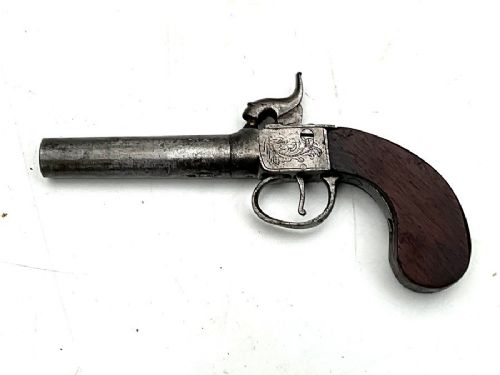


Turn Off Barrel Pistol
A turn off barrel pistol brings tangible 18th-century engineering to your collection, offering distinct mechanism and form.
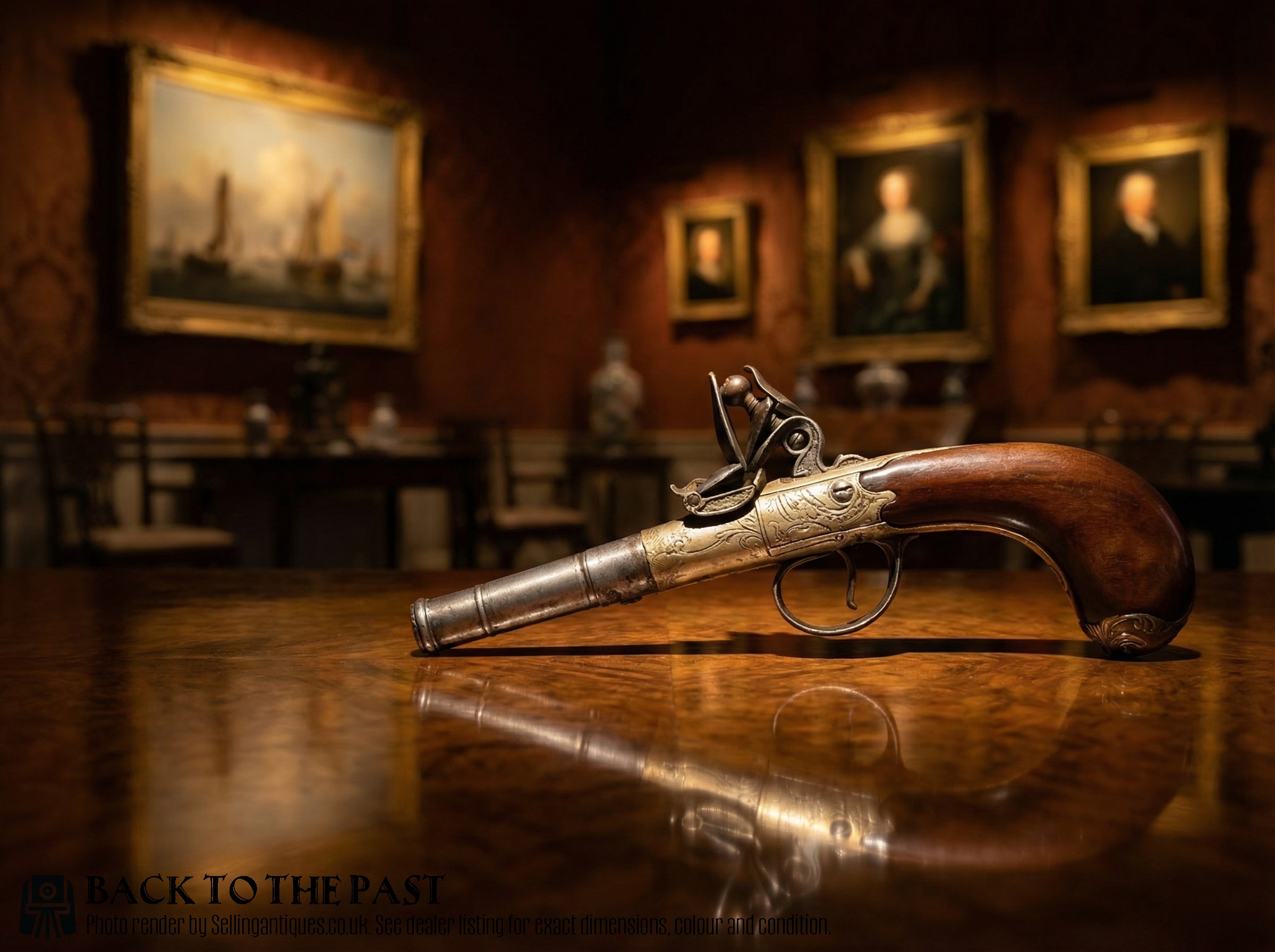
Turn Off Barrel Pistol
When you search for a turn off barrel pistol, you are looking at early pocket and overcoat firearms where the barrel unscrews from the breech to facilitate loading. The pieces appearing here span the 18th century and the 19th century, with origins recorded in London, Birmingham, Liverpool, and Bootle.
The selections frequently feature the Queen Anne style alongside boxlock actions, pocket designs, and holster or greatcoat variants. Materials range from walnut and brass to steel, iron, and silver, showing how makers adapted these compact personal defence arms.
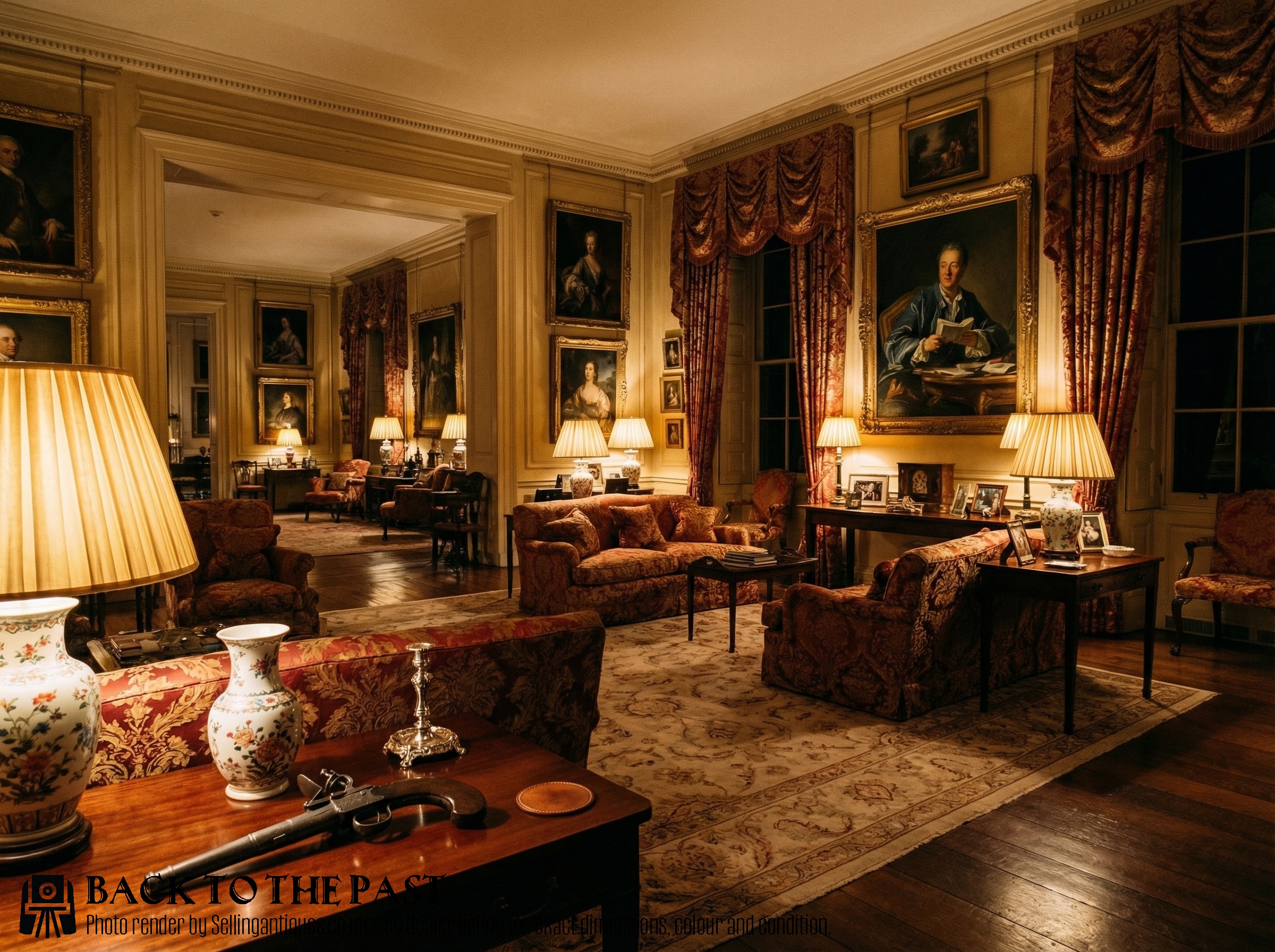
Materials and construction
The construction relies on metals such as steel, iron, and brass for the barrels and actions, often forged to endure the pressures of black powder charges. Screwed barrel designs demanded precise machining so the threaded muzzle section mated securely with the breech.
Stocks were shaped from walnut, selected for its grain and resilience during handling. Many examples incorporate silver mounts, wire inlay, and cast grotesque butt caps, demonstrating the integration of joinery and metalworking skills.
Turn Off Barrel Pistol Retail Price Guide 2026
Typical asking prices for turn off barrel pistol among the pieces listed under this phrase on Sellingantiques today, from the lower quarter to the upper quarter. They describe what is for sale here now, not the wider market.
A few pistols hid spring-loaded bayonets beneath the barrel, ready to flick out if the powder failed.
Quality and execution
The distinction between standard examples and the finest works lies in the crispness of the engraved decoration and the integration of precious metals. Master makers distinguished their firearms with detailed silver-wire inlay, cast silver cartouches, and balanced proportions.
Engineering precision in the threadwork of the turn-off barrel and the smooth operation of the flintlock or boxlock mechanism also separate ordinary arms from superior pieces. Maker signatures and clear proof marks further elevate the standing of individual pieces.
James Barber·R. Willoughby·I Parr·J. Robinson
The Turn Off Barrel Pistol Glossary
- Turn-off barrel
- A barrel designed to unscrew from the frame, allowing the ball to be loaded directly into the breech for a tighter fit.
- Boxlock action
- A firearm design where the lock mechanism is enclosed within the metal frame rather than mounted on a separate sideplate.
- Flintlock
- An ignition system utilising a piece of flint struck against a steel frizzen to create sparks that ignite the priming powder.
- Percussion cap
- A later ignition method employing a small metal cap containing detonating powder struck by the hammer.
- Grotesque butt cap
- An ornamental metal terminal shaped in a stylised human or mythical face, popular on early pistol grips.
Turn Off Barrel Pistol: Frequently Asked Questions
How does a turn-off barrel work?
The barrel unscrews from the breech entirely, allowing the lead ball to be pushed directly into the chamber from behind.
This method removed the need for a ramrod in tight pocket pistols, creating a compact weapon for personal defence.
What is a boxlock pistol?
A boxlock pistol integrates the hammer and lock mechanism directly into the frame rather than attaching them to the side.
This streamlined construction reduced bulk and made the firearm easier to conceal in an overcoat pocket.
Were these pistols used for military or civilian defence?
Most examples served as private arms for travellers, merchants, and gentlemen needing protection on unlit roads.
Their compact size allowed them to be carried discreetly in pockets or holster rigs during the Georgian and Victorian eras.
How do flintlock and percussion pistols differ?
Flintlock pistols rely on a flint striking a steel frizzen to generate sparks for ignition, which dominated the 18th century.
Percussion pistols, emerging in the 19th century, use an external hammer striking a detonating cap placed on a nipple.
Why are some stocks inlaid with wire?
Silver wire inlay added decorative contrast to the dark walnut wood grips, showcasing the artisan's skill.
Such embellishments were typical of high-status Queen Anne style pistols produced by metropolitan gunsmiths.