


Queen Anne Pistol
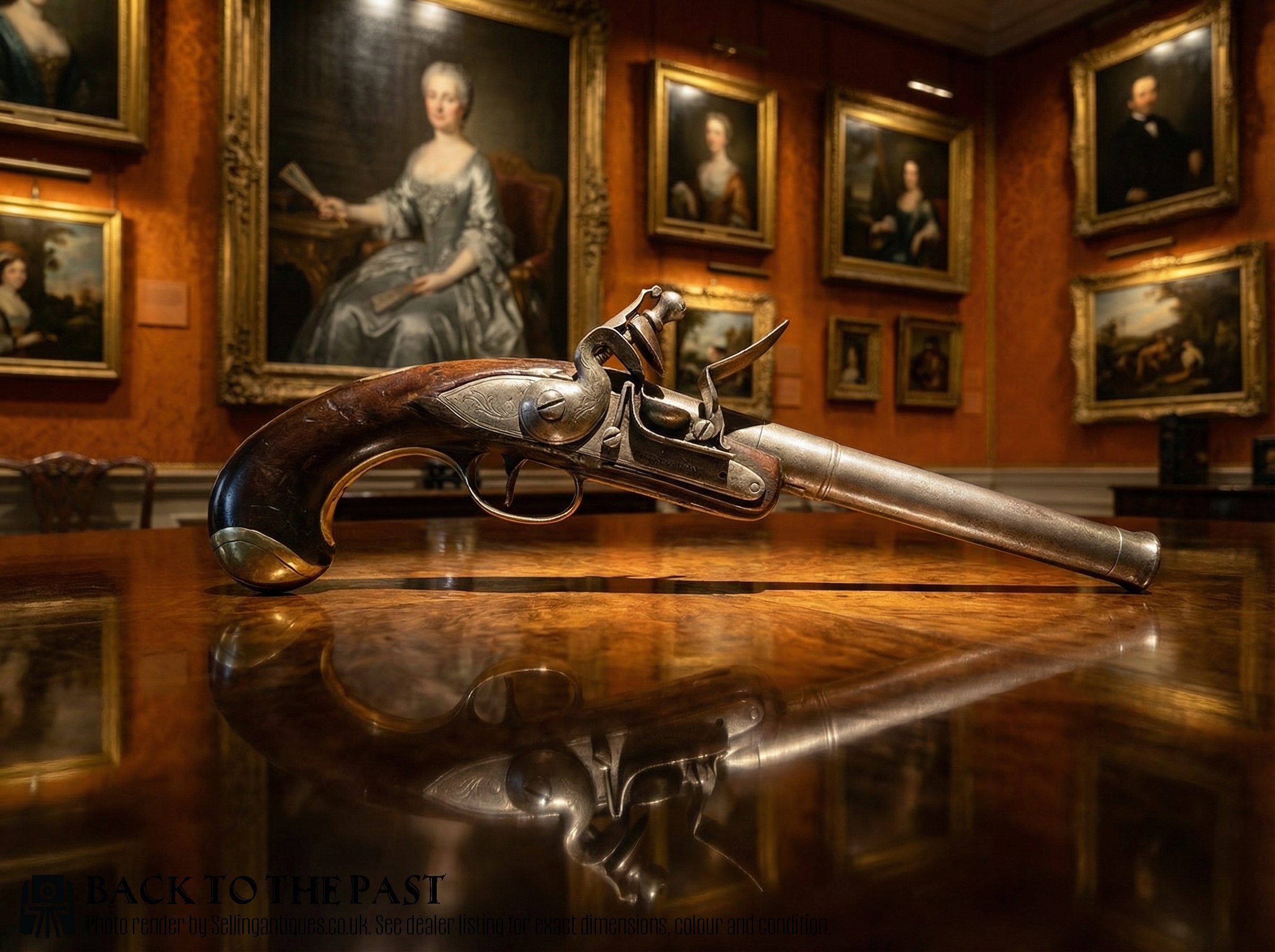
These queen anne pistol pieces are striking examples of 18th Century firearm design that collectors prize for their distinctive form and mechanism.
Queen Anne Pistol
When you search for a queen anne pistol, you are looking at antique firearms and weaponry originating primarily from the 18th Century and the Georgian period. These pieces encompass pocket pistols, greatcoat pistols, and holster pistols, often featuring the distinctive cannon barrel configuration associated with the style.
The versions you are most likely to meet on this page include flintlock pocket pistols and turn-off pistols built in London and Birmingham. Makers such as Twigg, James Barber, Thomas Henshaw, R. Willoughby, and I Parr represent the origins and forms recorded in the evidence.
The style spans both authentic period pieces from the early to mid 18th century and later variants from around 1750. These arms bridge the gap between functional weaponry and decorative antique craftsmanship.
How they were made
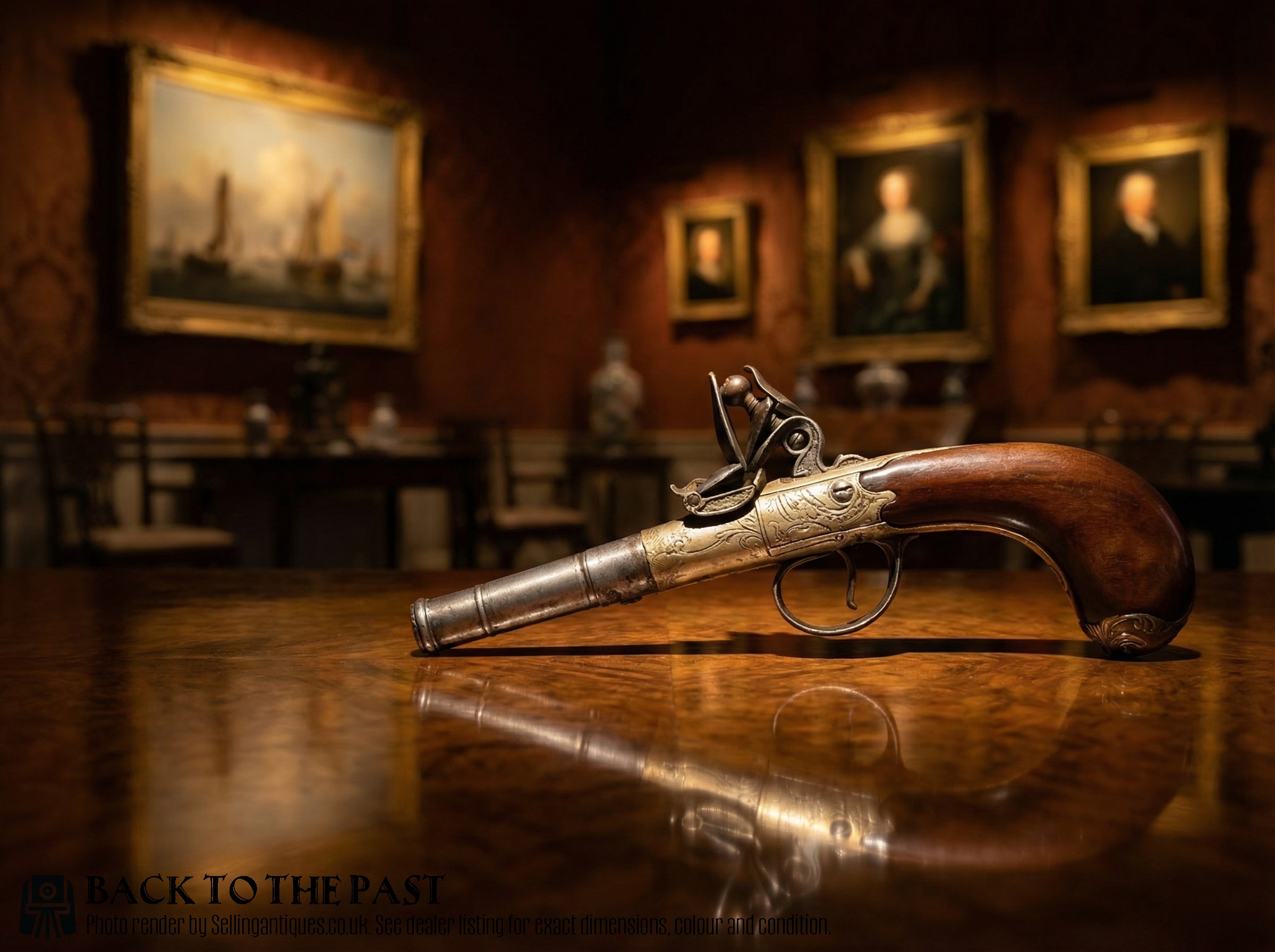
Makers utilised robust metals like steel and brass for the barrels and actions, ensuring mechanical strength. Stocks were typically turned from walnut and other dense hardwoods.
Decoration involved intricate silver-wire inlay embedded into the wooden grips. Skilled artisans also applied silver grotesque butt caps and silver vacant cartouches to the top and side of the stock.
Queen Anne Pistol Retail Price Guide 2026
Typical asking prices for queen anne pistol among the pieces listed under this phrase on Sellingantiques today, from the lower quarter to the upper quarter. They describe what is for sale here now, not the wider market.
Listings show materials including steel, walnut, silver, brass, and hardwood across 18th Century and Georgian periods.
What varies in quality
The distinction between tiers rests on the sophistication of the metalwork and the presence of precious metal ornamentation. Pistols featuring detailed silver-wire inlays and cast silver grotesque butt caps sit at the refined end of the scale.
The reputation of the maker and the clarity of London or Birmingham signatures influence the standing of an individual arm. Integration of the turn-off cannon barrel mechanism demonstrates the mechanical competence of the workshop.
Twigg London·James Barber·Thomas Henshaw·R Willoughby·I Parr
The Queen Anne Pistol Glossary
- Flintlock
- A firearm mechanism that uses a flint held in a cock to strike a steel frizzen, creating sparks to ignite the gunpowder. This system dominated firearms technology throughout the 18th century.
- Cannon barrel
- A barrel shape that tapers outwards toward the muzzle, resembling a miniature artillery piece. This form is a hallmark characteristic of the queen anne pistol style.
- Turn-off barrel
- A barrel that unscrews entirely from the breech to allow direct loading of the powder and ball. This design eliminated the need for a ramrod in pocket pistols.
- Grotesque butt cap
- An ornamental metal cap fitted to the end of the pistol grip, often cast in a fantastical or mask-like face. It provides both counterweight and decoration.
- Vacant cartouche
- A small blank plate inset into the wood of the stock, designed to be engraved with the owner's initials or crest. These shields remain blank on many surviving pieces.
Queen Anne Pistol: Frequently Asked Questions
How do these pistols work?
These pieces operate using a flintlock mechanism where pulling the trigger releases the cock to strike sparks against the steel frizzen. The resulting spark ignites the priming powder in the pan.
This flash travels through the touchhole to fire the main charge inside the barrel.
What is a turn-off barrel?
A turn-off barrel unscrews completely from the frame of the pistol to permit muzzle loading from the rear. This allowed the lead ball to be seated directly into the rifling or bore.
It was a popular feature on 18th century pocket pistols for ease of loading.
Where were they made?
The recorded pieces originate primarily from major English manufacturing centres such as London and Birmingham. Master gunsmiths in these cities signed their work on the lock plates.
Regional styles often reflected the specific techniques favoured by these urban workshops.
How should I display one?
Display these arms in a stable environment away from high humidity and direct sunlight to protect the walnut stocks and steel components. Secure wall mounts or dedicated glass-fronted cabinets work well for presentation.
Ensure the room maintains a consistent temperature to preserve the timber and metal.