



Silver Inlay Pistol
A silver inlay pistol brings centuries of craftsmanship to your collection, uniting practical firearms history with intricate decorative metalwork.
Silver Inlay Pistol
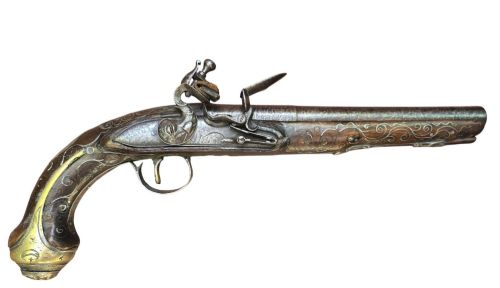
A silver inlay pistol represents historical weaponry produced across diverse regions including England, Scotland, France, and the Ottoman Empire. These pieces span the eighteenth and nineteenth centuries, taking forms such as pocket pistols, travelling pieces, and large holster pistols.
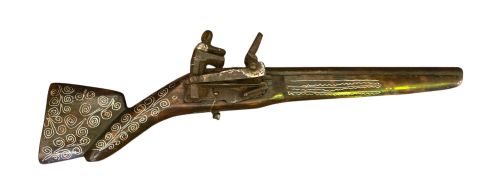
Makers utilised distinct regional designs, from Scottish scroll-butt mechanisms to Ottoman cavalry arms and English Queen Anne style pocket pistols. Flintlock and snaphaunce firing mechanisms dominate the selection, often paired with wooden stocks of walnut or general wood.
The decorative embellishment varies from delicate silver wire winding through the grip to extensive silver parcel work and cast mounts. Buyers frequently encounter eighteenth-century origins alongside early nineteenth-century examples on this page.
Materials and construction methods
Makers built these firearms using robust structural metals such as steel and iron for barrels and locks, while brass and silver served for mounts and decorative applications. Stocks were shaped from dense woods like walnut, providing a stable foundation for intricate metal insertion.
Artisans hammered thin silver wire or shaped sheet silver into channels carved directly into the wooden stock. Additional ornamentation often involved cast barrel decoration, sometimes incorporating gilt inlay alongside the silver work.
Silver Inlay Pistol Retail Price Guide 2026
Typical asking prices for silver inlay pistol among the pieces listed under this phrase on Sellingantiques today, from the lower quarter to the upper quarter. They describe what is for sale here now, not the wider market.
Some travel pistols packed enough punch to double as pocket artillery while remaining small enough for a gentleman's muff.
Quality variations in historical firearms
The standard of execution in the silver wire inlay dictates much of the visual appeal, separating simple line work from dense, profuse decoration. Precision in the casting of brass or silver mounts and barrels also marks the distinction between standard production and higher grade work.
The integrity of the mechanism and the preservation of the original wooden stock influence the overall character of the piece. Surviving examples that retain their original signed locks and crisp metalwork represent the finer end of the surviving range.
John Campbell of Doune·James Barber·R. Willoughby
The Silver Inlay Pistol Glossary
- Flintlock
- A firearm ignition mechanism that uses a piece of flint struck against a steel frizzen to create sparks. This system dominated European and Mediterranean pistol design during the eighteenth century.
- Cannon barrel
- A barrel shaped with a flared muzzle resembling a naval cannon, commonly found on eighteenth-century pocket pistols. This form allowed for easier removal and cleaning of the bore.
- Scroll-butt
- A distinctive grip shape curving downward into a scroll profile, frequently seen on Scottish Highland pistols. It offered a secure hold for the shooter's hand.
- Holster pistol
- A large firearm designed to be carried in a saddle holster rather than on a belt. These pieces typically feature substantial barrels and robust mounts for military or travel use.
- Snaphaunce
- An early type of flintlock ignition using a sliding pan cover linked to the dog. It represents a transitional stage in the evolution of firearms technology.
Silver Inlay Pistol: Frequently Asked Questions
What periods do these pistols come from?
The available evidence points primarily to the eighteenth and early nineteenth centuries, covering periods like the Georgian era and the Ottoman frontier. Makers during these decades produced diverse regional styles ranging from Scottish Highland to English pocket models.
Dates span from the early seventeen-hundreds through to the eighteen-hundreds, capturing distinct stylistic shifts in European and Ottoman firearm design. Each era introduced specific mechanical refinements and decorative preferences.
How were silver inlays applied to the wood?
Artisans channelled grooves into wooden stocks made of walnut or other timber, then tapped thin silver wire or shaped sheet metal directly into the recesses. This technique required considerable skill to secure the metal flush with the surrounding grain.
The resulting patterns ranged from subtle geometric wire lines to profuse decorative scrollwork across the grip and stock. The permanence of the inlay relied entirely on the precision of the initial carving.
Where were these firearms manufactured?
Production centres recorded in the listings include England, Scotland, France, and various territories of the Ottoman Empire, including the Balkans and Afghan regions. Each region developed unique lock mechanisms and stock profiles tailored to local military or civilian requirements.
English makers such as those in London and Birmingham focused on pocket and holster pistols, while Scottish smiths produced distinct scroll-butt designs. Ottoman workshops favoured long holster and snaphaunce arms with extensive surface decoration.
How do I care for a silver inlay pistol?
Preserving these pieces involves maintaining a stable environment with low humidity to protect both the wooden stock and the ferrous metal components. Gentle dusting helps prevent particulate buildup in the recessed areas of the silver work.
Harsh chemical cleaners must be avoided on both the metal and the wood to preserve the original finish and patina. Periodic light oiling of steel parts helps guard against active corrosion.