
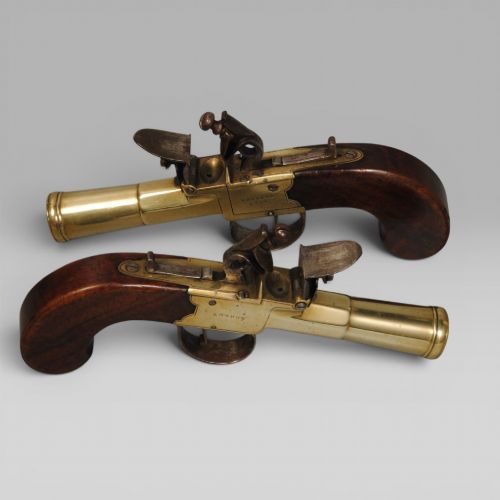


Georgian Pocket Pistol
These georgian pocket pistol examples are compact personal defence pieces from the eighteenth and nineteenth centuries that collectors prize for their precision engineering.
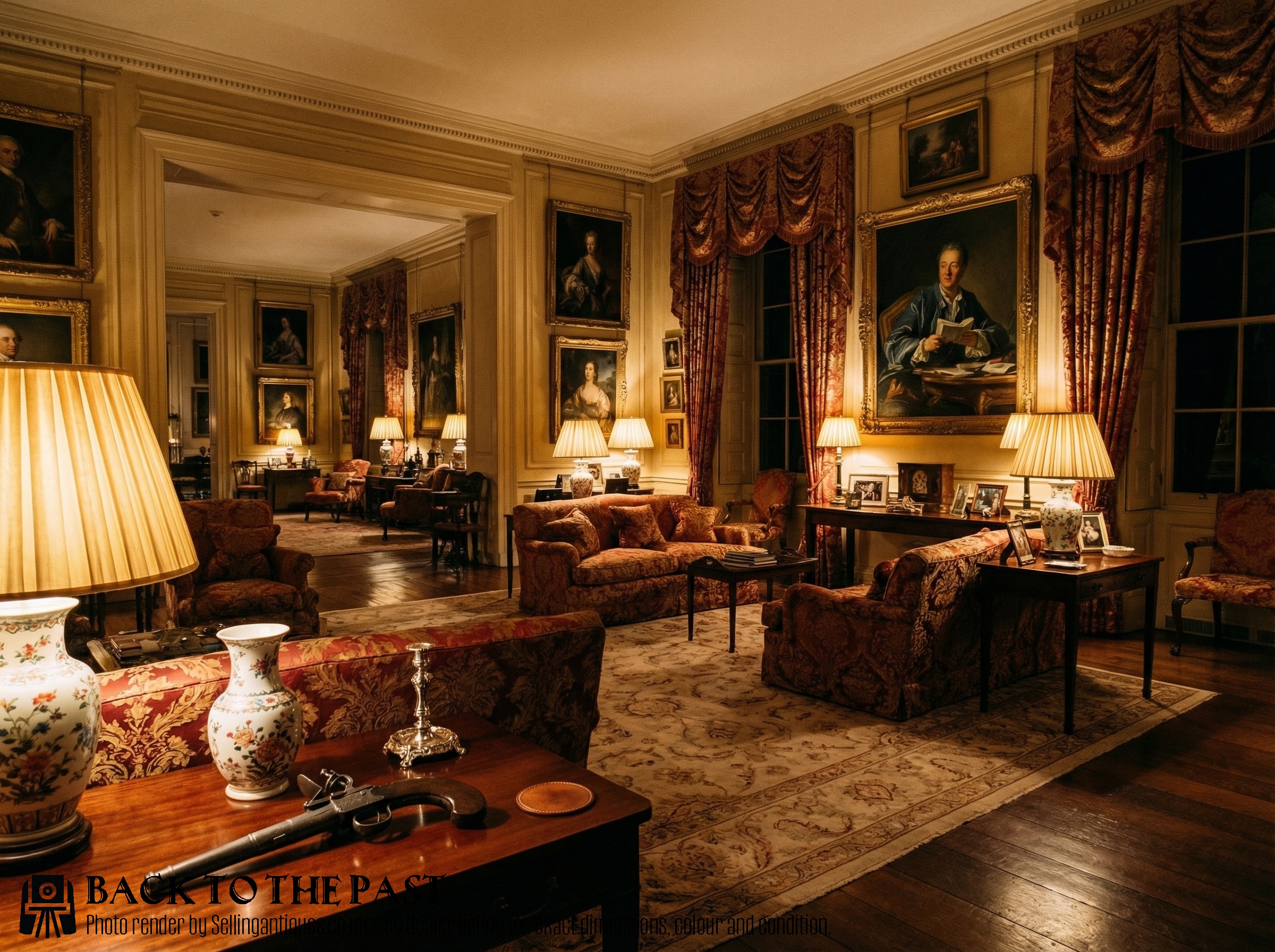
Georgian Pocket Pistol
A georgian pocket pistol is a compact personal firearm designed for concealment in a pocket, muff or greatcoat during the eighteenth and nineteenth centuries. These pieces appear in forms such as boxlock pocket pistols, turn-off pistols and cannon barrel overcoat variants.
The pieces on this page span the eighteenth and nineteenth centuries, with specific examples carrying dates around 1750 and 1800. Styles range across Georgian, Regency, Victorian and Queen Anne periods, reflecting the shifting tastes of gunmakers.
Makers working in London, Birmingham, Liverpool and Scotland produced these weapons to meet the demands of travellers, coach inspectors and citizens requiring discreet protection. Surviving examples often retain original signature engravings on the metal action or sideplate.
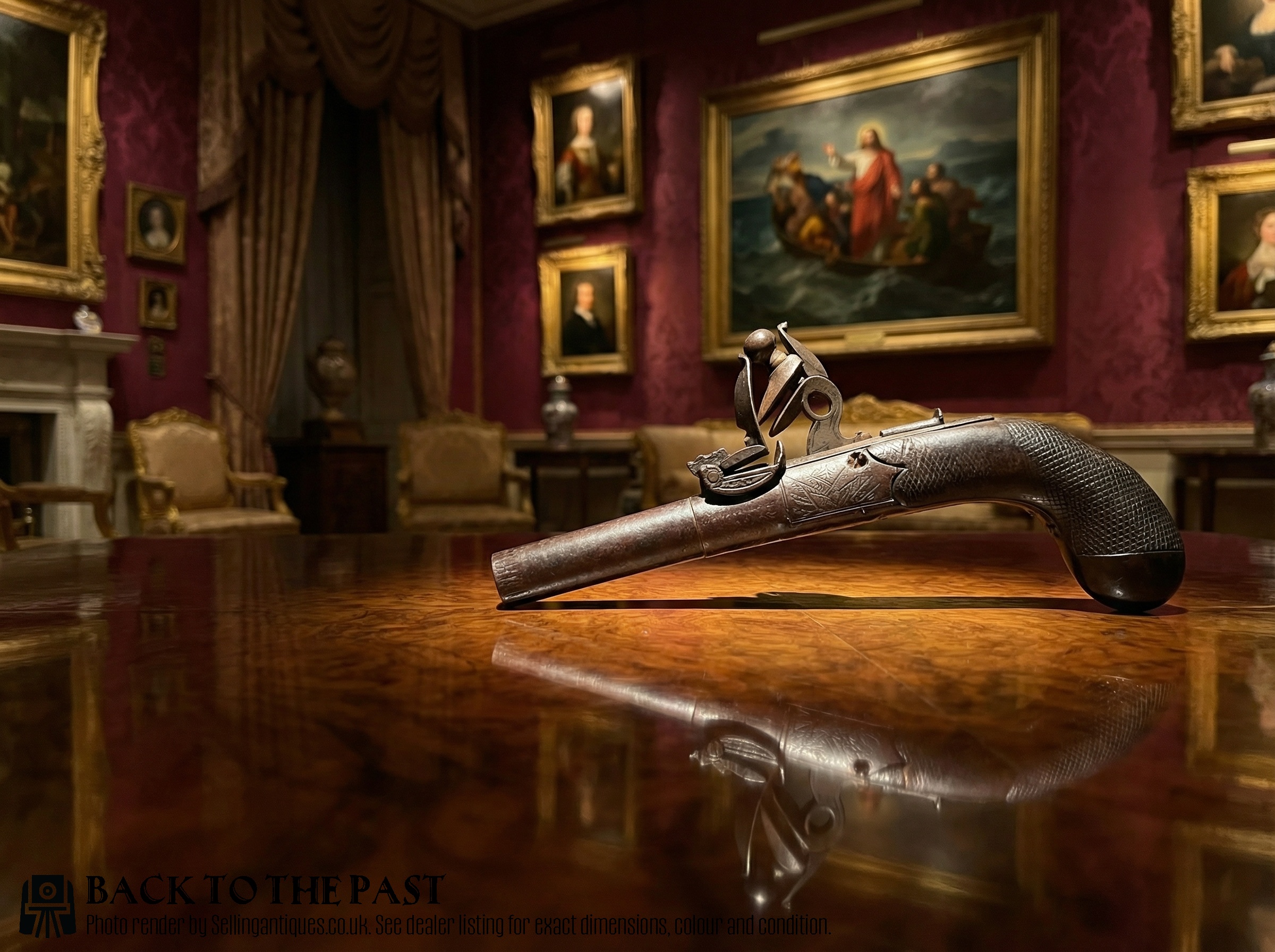
Judging quality in pocket pistols
Quality rests on the crispness of the engraving and the crisp movement of the flintlock or percussion action. Maker signatures by known London or provincial gunsmiths elevate a piece above standard unmarked examples.
The integration of decorative elements such as silver wire inlay, Birmingham proof marks and accessories like flick bayonets demonstrates superior workshop output. Original matching pairs hold greater distinction than single surviving arms.
Georgian Pocket Pistol Retail Price Guide 2026
Typical asking prices for georgian pocket pistol among the pieces listed under this phrase on Sellingantiques today, from the lower quarter to the upper quarter. They describe what is for sale here now, not the wider market.
Some pocket pistols came equipped with spring-loaded flick bayonets for when the gunpowder ran dry.
Twigg London·James Barber·Thomas Henshaw·I Parr·John Rimes·Meyer And Mortimer·J Robinson·Sutherland Of London
The Georgian Pocket Pistol Glossary
- Flintlock
- An ignition mechanism that uses a piece of flint held in a cock to strike a steel frizzen, creating sparks to ignite the priming powder. This system dominated firearms production through the eighteenth century.
- Boxlock
- A design where the breech and the lock frame are forged as a single piece, with the hammer enclosed within the casing. This configuration provides a clean profile suited to pocket weapons.
- Cannon barrel
- A barrel shaped with a flared muzzle resembling the silhouette of a naval cannon, commonly found on early eighteenth-century turn-off pistols. The form adds structural strength at the breech.
- Turn-off
- A barrel design that unscrews entirely from the frame for muzzle loading, eliminating the need for a ramrod. This method allowed a tight shot fit for improved accuracy.
- Percussion cap
- A later ignition system introduced in the nineteenth century that replaced flintlock mechanisms with a small explosive cap struck by a hammer. It offered greater reliability in damp weather.
Georgian Pocket Pistol: Frequently Asked Questions
How do I date a pocket pistol?
Dating relies on stylistic clues, proof marks and maker records that indicate active workshop years between the early eighteenth and mid nineteenth centuries. Transition points from flintlock to percussion mechanisms offer clear chronological markers.
Barrel shapes and engraving styles also shift across the Georgian and Regency periods, helping to narrow the decade of manufacture.
Were these pistols used for duelling?
Pocket pistols were generally too short-ranged and compact for formal duelling, which required balanced, long-barrelled flintlock duelling pistols designed for accuracy at a distance.
Instead, these smaller arms served as personal protection weapons for travellers, merchants and mail coach inspectors against highwaymen.
What is a turn-off barrel?
A turn-off barrel is a threaded barrel that unscrews completely from the frame, allowing the shooter to drop the lead ball directly into the breech from behind.
This method ensured a tight fit between ball and bore without needing a ramrod, which improved velocity in close encounters.
How should I display my pistol?
Displaying antique firearms requires a stable environment away from direct sunlight and damp air to protect the wooden stock and steel components from corrosion.
Many collectors use custom glass cabinets or lined shadow boxes that secure the piece safely while allowing the engraved details to be viewed.