
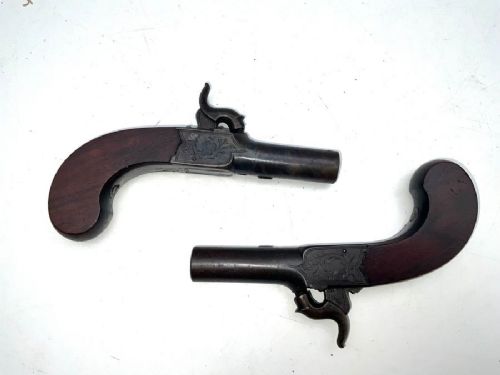
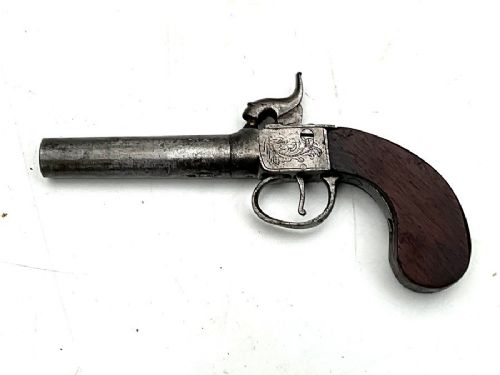


Antique Muff Pistol
These antique muff pistols are compact personal firearms designed to slip inside a pocket or muff for discreet self-defence.
Antique Muff Pistol
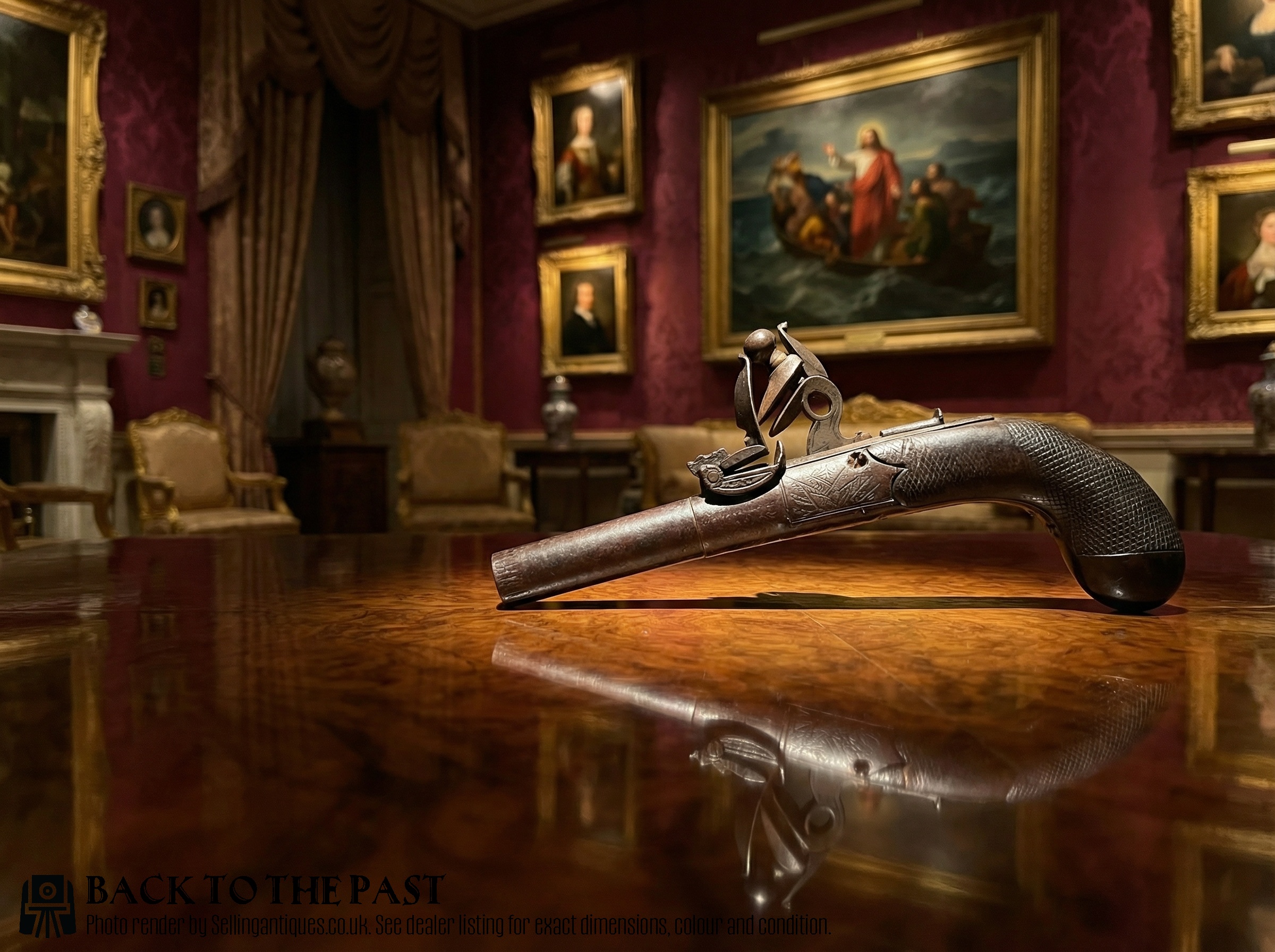
An antique muff pistol is a small, concealed firearm designed for personal protection and easily slipped into a pocket, handbag, or fur muff during the Georgian and Victorian eras. These pocket-sized defenders range from early flintlock mechanisms to later percussion ignition systems, reflecting the technological shifts in personal defence over the eighteenth and nineteenth centuries.
The specimens seen here include robust examples from the eighteenth century, such as flintlock turn-off and Queen Anne types, alongside mid-nineteenth-century percussion pocket pistols. Makers represented in these listings span regional English workshops in Liverpool and London, as well as continental production centres in Liège.
Buyers encountering this search phrase will find variations in barrel design, including cannon barrels and box-lock actions, often paired with wooden grips made from walnut or other hardwoods. These pieces capture a specific domestic use, providing protection for travellers and citizens in an era before modern policing.
How they were made
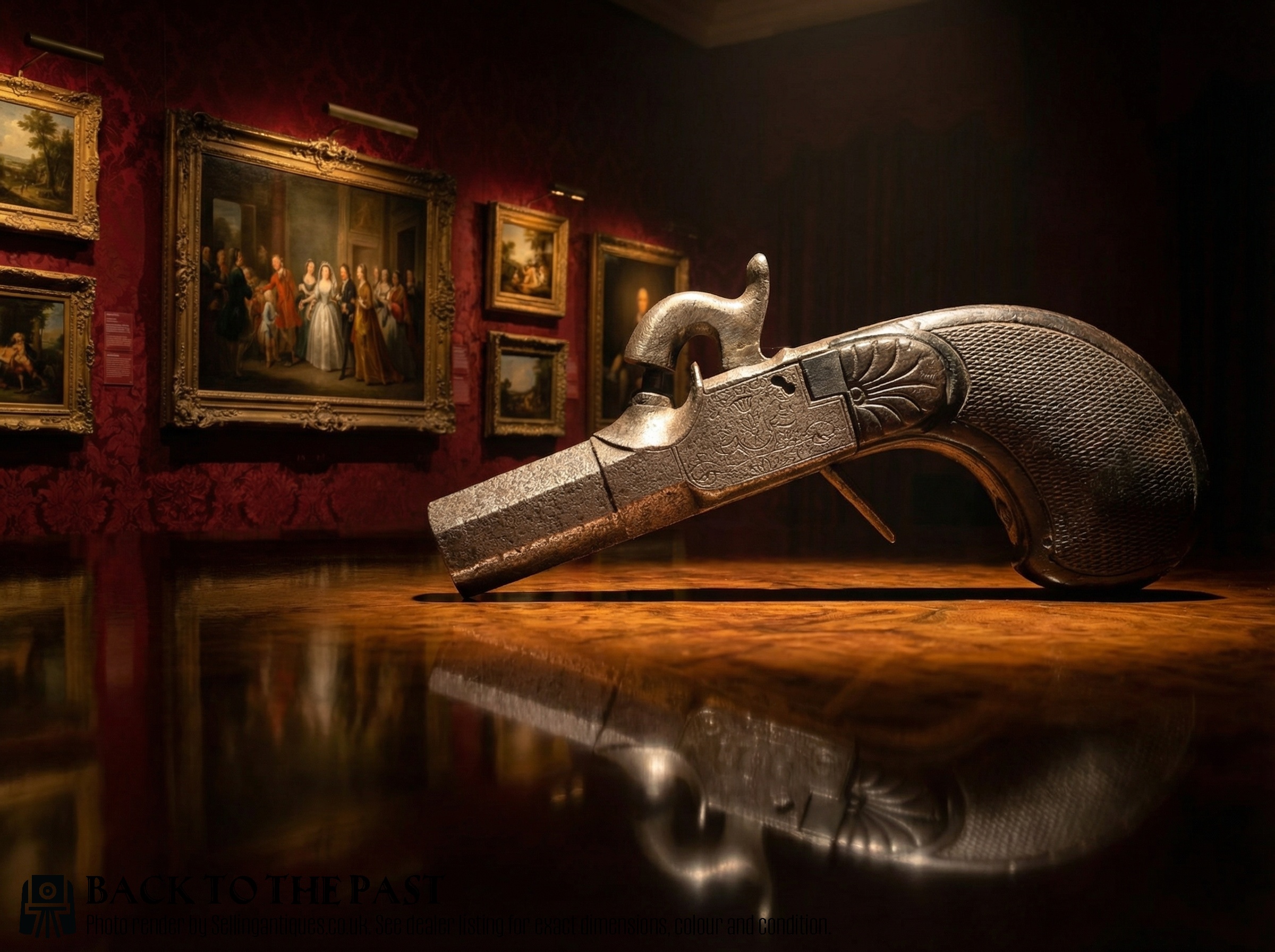
The construction of these firearms relies on traditional metalworking and woodworking techniques, combining forged iron or steel lock mechanisms with brass or steel barrels. Stocks are shaped from dense timbers like walnut and other hardwoods, carved precisely to house the internal lockwork and provide a secure, compact grip.
Mechanisms utilise either flintlock ignition, which relies on a piece of flint striking a steel frizzen to create a spark, or the later percussion cap system developed in the nineteenth century. Barrels are often threaded to screw off for loading from the breech end, a characteristic feature of turn-off pocket pistols from the Georgian period.
Antique Muff Pistol Retail Price Guide 2026
Typical asking prices for muff pistol among the pieces listed under this phrase on Sellingantiques today, from the lower quarter to the upper quarter. They describe what is for sale here now, not the wider market.
Materials utilised across these pieces include steel, iron, brass, walnut, and various other hardwoods.
What varies in quality
Quality in these pocket firearms is determined by the precision of the lock mechanism, the crispness of any engraving on the metal action, and the integration of the woodwork with the metal components. Finer pieces demonstrate tight tolerances in the moving parts, smooth transitions between the brass or steel frame and the wooden grip, and legible maker signatures or proof marks.
The sophistication of the mechanical design also separates standard utility pieces from more advanced specimens, such as those featuring double barrels, sliding rear sights, or concealed folding triggers. The preservation of original metal finishes and the clarity of maker stamps from workshops in London, Liverpool, or Liège further distinguish the overall standard of a piece.
Twigg·Auguste Francotte·J. Robinson
The Antique Muff Pistol Glossary
- Flintlock
- An ignition mechanism utilising a piece of flint held in a cock to strike a steel frizzen, creating sparks to ignite the gunpowder charge. This system predates the percussion cap and defines most eighteenth-century pocket firearms.
- Percussion
- A later ignition system where a hammer strikes a small metal cap containing detonating powder placed on a nipple. This method largely replaced the flintlock by the nineteenth century due to its greater reliability in damp weather.
- Turn-off barrel
- A barrel designed to unscrew from the frame for loading the ball and powder directly into the breech. This feature eliminates the need for a ramrod and allows for a more compact silhouette.
- Box-lock
- A firearm design where the lock mechanism is integrated directly into the breech frame rather than mounted on a separate side plate. This configuration creates a clean, sturdy appearance common on pocket pistols.
- Proof marks
- Official stamps struck onto the metal components of a firearm to indicate that it has been tested for safety against standard powder charges. These marks often help identify the place of manufacture, such as Birmingham or London.
Antique Muff Pistol: Frequently Asked Questions
How did people carry antique muff pistols?
These firearms were designed to be compact enough to slip into a pocket, a small bag, or a fur muff, which was a cylindrical hand warmer popular in cold weather. Their small size and concealed triggers made them practical for discreet carriage by civilians travelling through unsafe areas.
The absence of protruding parts, such as belt hooks or long barrels, ensured they could be drawn quickly without snagging on clothing. This made them ideal for personal defence in urban environments during the Georgian and Victorian periods.
What is the difference between flintlock and percussion pistols?
Flintlock pistols use a piece of flint striking a steel frizzen to generate a spark that ignites the priming powder, a technology dominant during the eighteenth century. Percussion pistols, which appear by the mid-nineteenth century, use an external hammer striking a small primed percussion cap placed on a nipple.
The percussion system proved far more reliable in wet weather and simplified the loading process, leading to the gradual phasing out of the earlier flintlock mechanism in pocket firearms.
How do you date an antique muff pistol?
Dating relies primarily on the ignition system, mechanical design, proof marks, and any maker signatures engraved on the metal frame. Flintlock mechanisms generally point to the eighteenth and early nineteenth centuries, while percussion systems and folding triggers typically indicate mid-nineteenth-century production.
Proof marks stamped on the barrels can also be cross-referenced with records from official testing houses in cities like Birmingham and London to narrow down the period of manufacture.
Were these pistols used for duelling?
These small firearms were intended for personal self-defence against highwaymen or footpads rather than formal duelling. Duelling required standardised, long-barrelled flintlock pistols with precise sights, whereas muff pistols prioritized concealment and close-range stopping power.
Their short barrels and concealed triggers made them completely unsuitable for the regulated distances and accuracy demanded by traditional duelling codes.