





Victorian Pocket Pistol
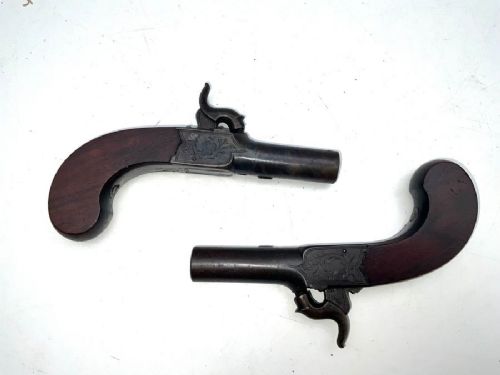
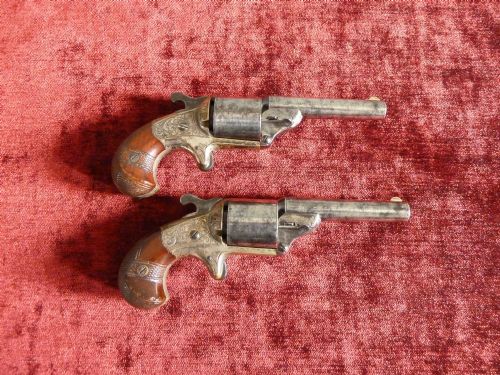
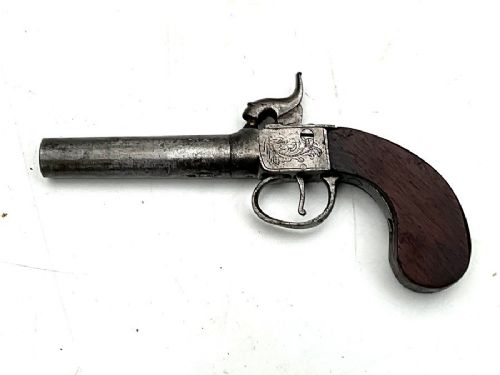
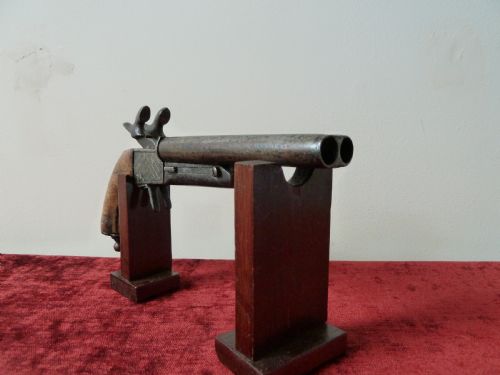
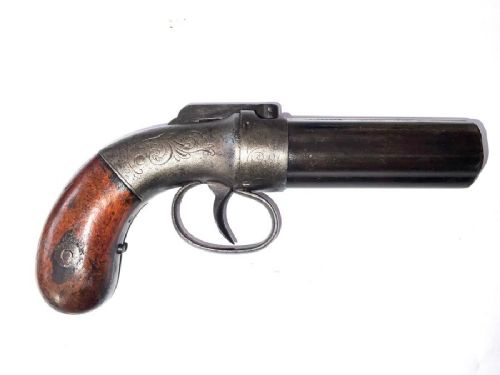
These victorian pocket pistol examples are compact nineteenth-century firearms built for personal defence, prized for their engineering and portability.
Victorian Pocket Pistol
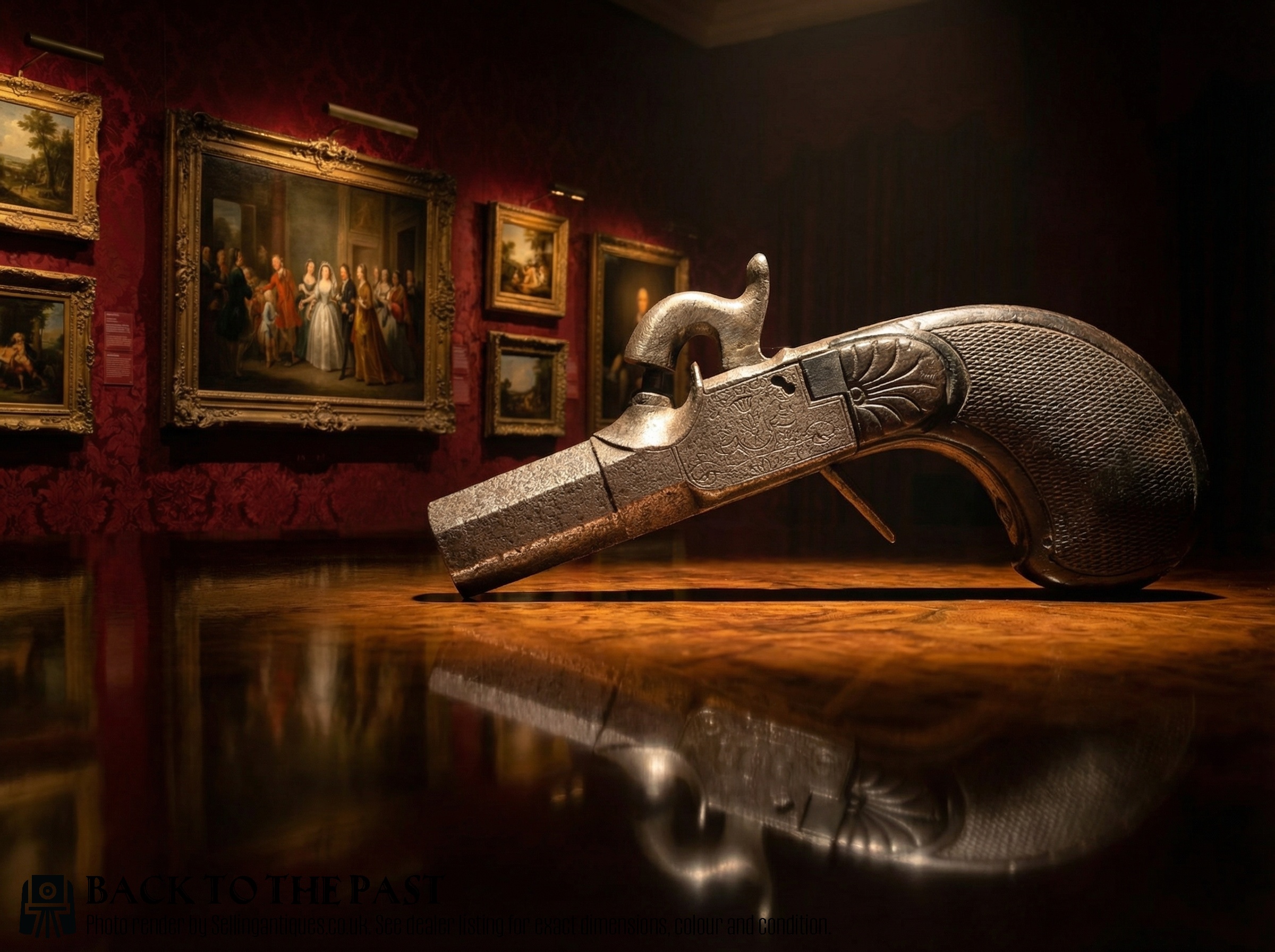
A victorian pocket pistol comprises nineteenth-century personal firearms designed for concealment and close defence, appearing in single-barrel, double-barrel, pepperbox, and revolver formats. The selection here spans early and mid-nineteenth-century British, American, and continental makers, ranging from boxlock percussion arms to rimfire and pinfire models.
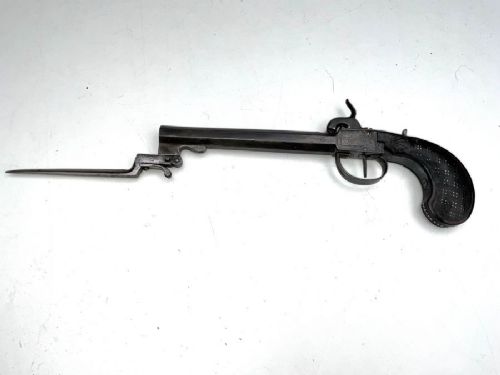
Buyers encounter variations including folding bayonets, hidden triggers, sliding rear sights, and matched pairs intended for officers or gentlemen. Materials encompass steel, iron, and brass frames paired with walnut, hardwood, or walnut wood grips.
Materials and construction
Makers utilised forged steel and iron for barrels and actions, often integrating brass for frames and mountings. Nickel-plated steel surfaces appear on later nineteenth-century examples to resist corrosion.
Stocks and grips rely on dense hardwoods, specifically walnut and walnut wood, shaped and checked to ensure a secure handhold on compact frames.
Victorian Pocket Pistol Retail Price Guide 2026
Typical asking prices for victorian pocket pistol among the pieces listed under this phrase on Sellingantiques today, from the lower quarter to the upper quarter. They describe what is for sale here now, not the wider market.
Distinctions in quality
Quality differentiates through the crispness of mechanical action, the precision of engraving on metal surfaces, and the integration of complex mechanisms like flick bayonets and sliding sights. Superior examples maintain smooth lockwork and tight tolerances across multiple barrels or revolving cylinders.
The choice of materials and the quality of timber finishing on the grips also divide standard production pieces from higher-grade bespoke arms intended for officers or presentation.
Allen And Thurber·J R Coopers Patent·Auguste Francotte·George Sherwood
The Victorian Pocket Pistol Glossary
- Percussion
- A ignition system using a percussion cap struck by a hammer to fire the powder charge. This replaced earlier flintlock mechanisms in the nineteenth century.
- Pepperbox revolver
- A multi-barrel firearm where the entire cylinder of barrels rotates around a central axis to fire successive shots. It requires no separate magazine.
- Boxlock
- A firearm action where the hammer and internal lock components are contained within a central frame rather than mounted on a sideplate. This design reduces overall bulk.
- Pinfire
- A cartridge design featuring a small internal pin struck by the hammer to ignite the priming compound. It represents an early self-contained metallic cartridge system.
- Rimfire
- A metallic cartridge where the priming mixture is spun into the rim of the base. The firing pin crushes the rim to detonate the charge.
Victorian Pocket Pistol: Frequently Asked Questions
What is a victorian pocket pistol?
A victorian pocket pistol is a small nineteenth-century firearm designed for personal protection and easily carried in a coat pocket or belt holster. These pieces utilise percussion, pinfire, or rimfire ignition systems.
Such firearms range from single-shot boxlock pistols to multi-barrel pepperboxes and early revolvers, often featuring folding bayonets or hidden triggers for concealment.
How were these pistols used?
Owners carried these arms for self-defence during travel through unfamiliar areas or urban environments. Officers, gentlemen, and gamblers relied on them for immediate personal security.
The inclusion of belt hooks, folding bayonets, and matched pairs indicates they were practical tools for defence against sudden threats at close quarters.
How do I care for a victorian pocket pistol?
Preservation requires storing the firearm in a stable, dry environment away from dampness to protect steel and iron components from rust. Light oiling helps maintain metal surfaces.
Wooden grips benefit from occasional cleaning with appropriate conservation products to prevent drying and cracking while preserving the original finish.
How can I tell the difference between percussion and rimfire models?
Percussion models rely on an external hammer striking a separate percussion cap placed on a nipple to ignite the powder. These typically date from the earlier decades of the nineteenth century.
Rimfire and pinfire models utilise self-contained metallic cartridges loaded directly into the cylinder or chambers, representing the technological transition toward modern ammunition in the mid-nineteenth century.