



Antique Caplock Pistol
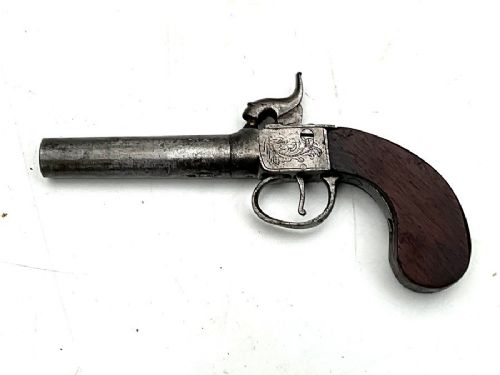
An antique caplock pistol is a nineteenth-century firearm powered by the percussion cap mechanism, offering collectors robust steel barrels and walnut grips from an era of rapid mechanical advancement.

Antique Caplock Pistol
When you search for an antique caplock pistol, you are looking at nineteenth-century firearms that replaced flintlocks with the percussion cap system. These pieces span the 1850s, Victorian, Regency, and Georgian styles.
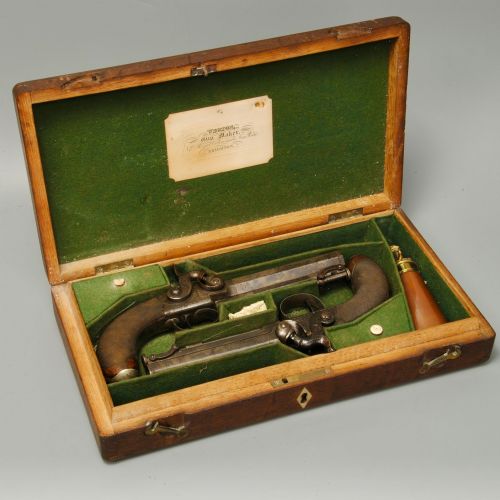
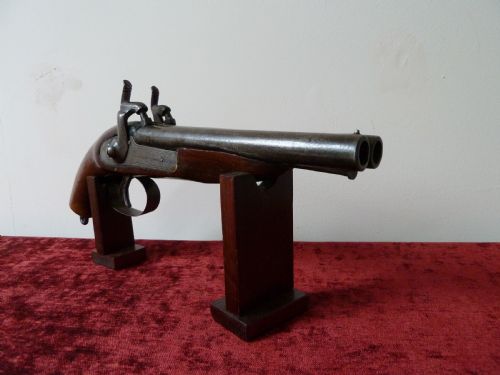
The selections on this page include pocket pistols, boxlock percussion pistols with flick bayonets, double barrel variants, and solid-frame percussion revolvers. You will also encounter military and belt pistols designed for officers and gentlemen.
Origins range from London makers to Liège workshops, demonstrating diverse manufacturing centres across Europe. Most examples pair steel and iron components with walnut stocks and brass furniture.
How they were made
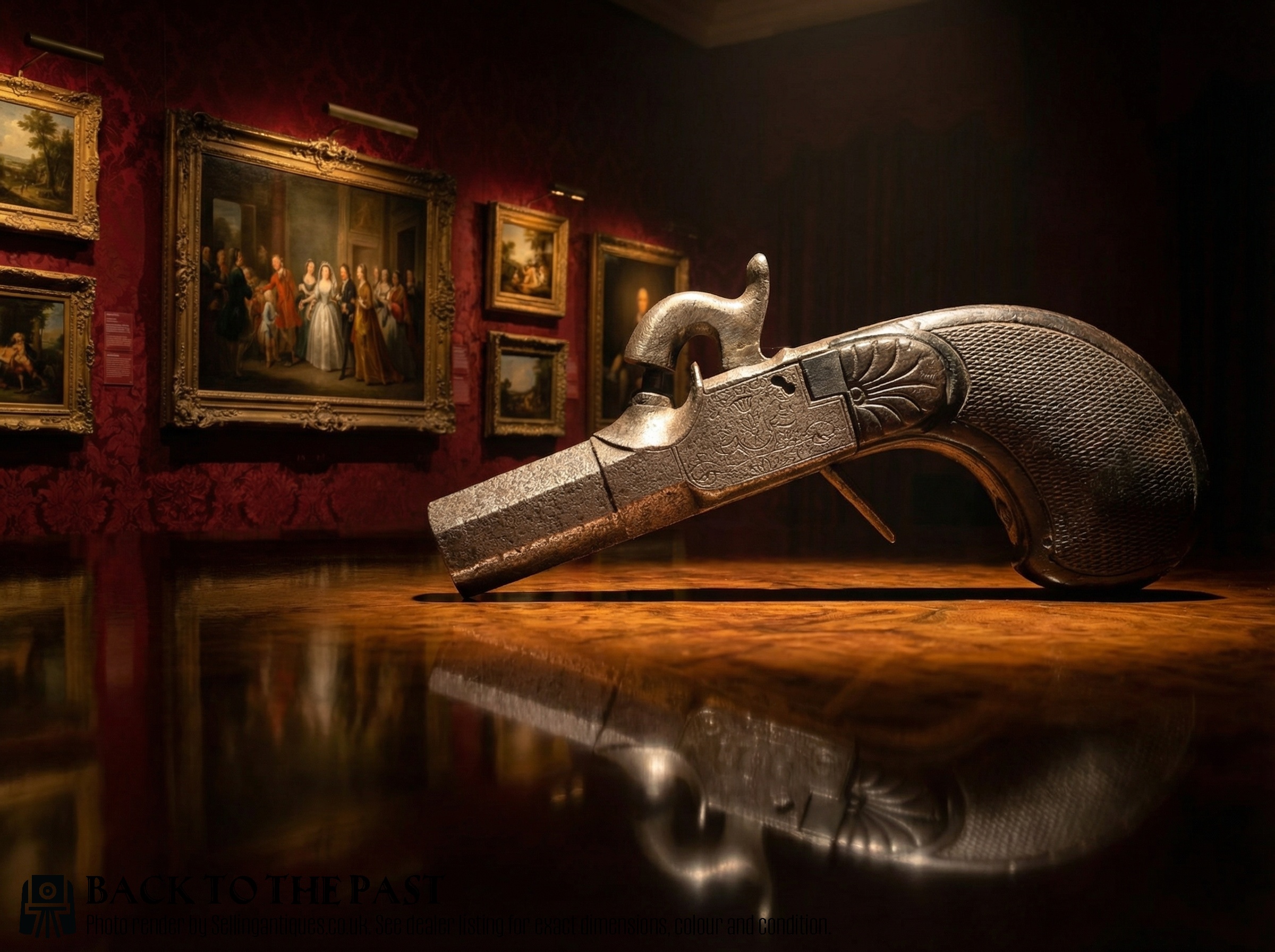
Makers constructed these firearms using forged steel and iron for barrels and lock mechanisms, ensuring the strength required to contain gunpowder charges. Components such as boxlocks and double barrels demanded precise metalworking.
Stocks were typically shaped from walnut, selected for its grain and resilience, and frequently accented with brass trigger guards, butt caps, or inlaid escutcheons. Some pocket and belt variations integrated folding flick bayonets directly beneath the steel barrel.
Antique Caplock Pistol Retail Price Guide 2026
Typical asking prices for caplock pistol among the pieces listed under this phrase on Sellingantiques today, from the lower quarter to the upper quarter. They describe what is for sale here now, not the wider market.
Some pocket pistols conceal spring-loaded flick bayonets, ready to surprise an adversary when the gunpowder runs out.
What varies in quality
The distinction between standard utility arms and exceptional pieces lies in the crispness of the lock action and the finesse of the metal engraving. High-quality examples by notable makers exhibit superior balance and tighter tolerances in moving parts.
Stock finish and timber selection also divide the range, where finely figured walnut with clean checkering contrasts with utilitarian military timber. Signed locks and specialised configurations like solid-frame revolvers command greater attention.
Mortimer·Deane Adams And Deane·Auguste Francotte
The Antique Caplock Pistol Glossary
- Caplock
- A percussion ignition system utilising a small metal cap placed on a nipple, struck by the hammer to fire the charge. This mechanism superseded the earlier flintlock.
- Boxlock
- A pistol design where the breech and the frame are forged as a single piece, placing the hammer centrally. This configuration offers a streamlined profile often seen on pocket arms.
- Flick bayonet
- A spring-loaded blade housed beneath the barrel that releases forward for close-quarters defence. It provides a secondary function without increasing the primary length.
- Solid-frame
- A revolver construction where the frame is forged in one solid piece around the cylinder, rather than hinged or open-topped. This layout provides enhanced structural rigidity during discharge.
- Percussion cap
- A small metal cup containing a priming compound that detonates when struck. It generates a flame channeled through the nipple to ignite the main powder charge.
Antique Caplock Pistol: Frequently Asked Questions
What is an antique caplock pistol?
An antique caplock pistol is a nineteenth-century firearm that uses a percussion cap and hammer system to ignite gunpowder. These pieces emerged as a reliable evolution from flintlock mechanisms.
You will find forms ranging from concealed pocket pistols to military belt pistols and revolvers, housed in steel, iron, and walnut.
How do I identify the period?
Dating relies on stylistic markers from the Georgian, Regency, and Victorian eras, alongside specific military or civilian configurations. Evidence often points toward the mid-nineteenth century around the 1850s.
Maker signatures, proof marks, and mechanical developments like solid frames or flick bayonets further narrow the manufacturing window.
Where were these pistols made?
Production centred in established European arms-making hubs, notably London and Liège. British makers supplied officers and gentlemen, while continental workshops produced versatile belt and pocket arms.
Maker inscriptions on the lockplate or barrel generally indicate the specific workshop and city of origin.
How were they used?
These pistols served primarily for personal defence by travellers, officers, and gentlemen during the nineteenth century. Pocket variants offered discreet carry, while belt and military pistols suited uniform wear.
The percussion system ensured reliable firing in damp weather compared to older flintlock designs.