






Walnut Pocket Pistol
A walnut pocket pistol is a compact firearm built for personal defence, combining steel mechanics with timber grips.
Walnut Pocket Pistol
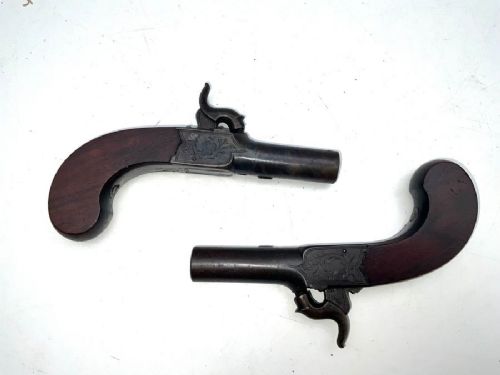
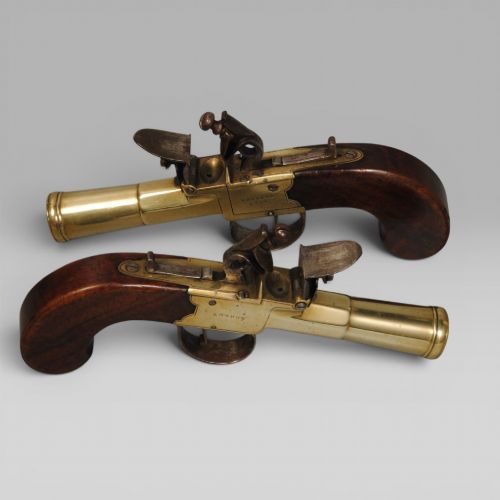
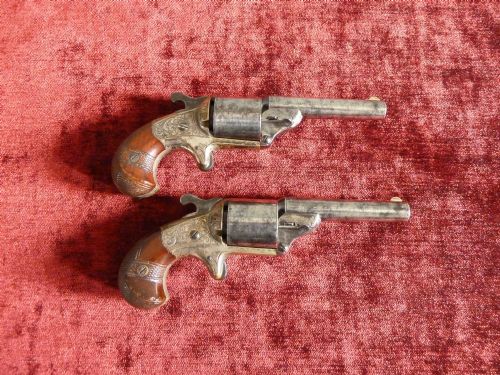
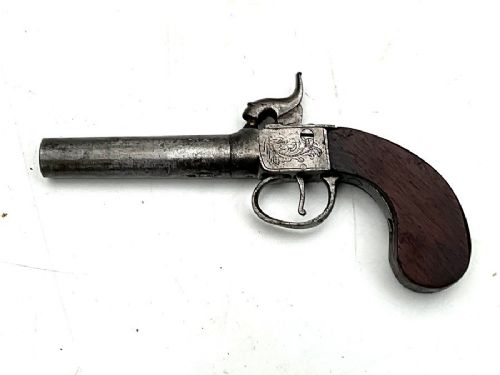
A walnut pocket pistol is a small, concealable firearm designed for personal protection, frequently encountered from the eighteenth and nineteenth centuries. These pieces span various forms, including flintlock, percussion, and boxlock designs originating from British, American, and continental makers.
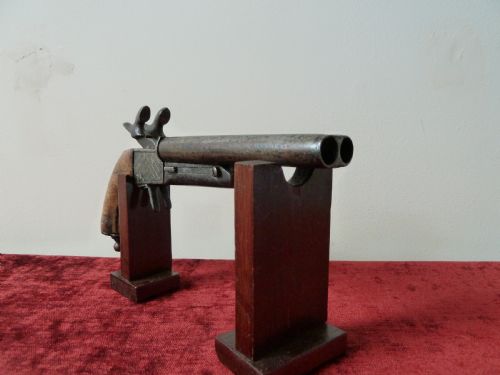
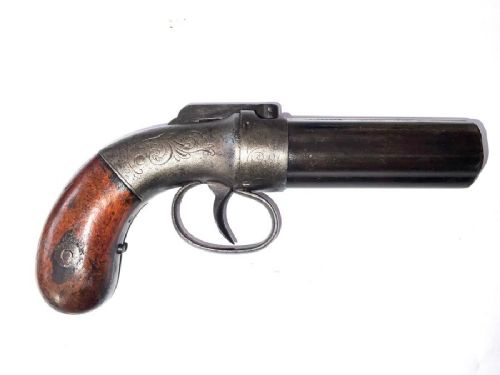
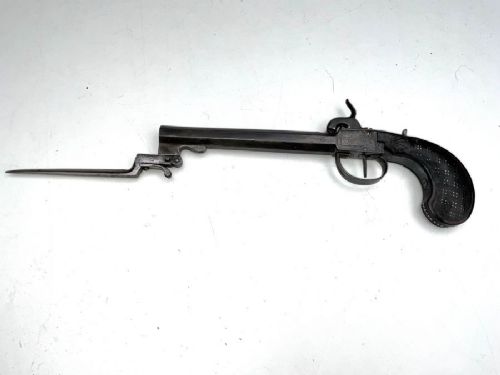
Buyers examining this page will commonly find pocket, muff, and overcoat pistols alongside pepperbox revolvers and travelling arms. The selection includes single and double barrel variations, some fitted with folding bayonets or turn-off barrels.
The materials recorded in these listings combine hardwood stocks with steel, iron, and brass mechanisms, occasionally enhanced by silver wire inlay. Dating ranges from the early eighteenth century through the Victorian era and the American Civil War period.
How they were made
Makers shaped walnut and hardwood to form ergonomic grips, often housing internal mechanisms or concealing triggers. Metal components in steel, iron, and brass were forged and machined for barrels, actions, and lockplates.
Engraving and silver wire inlay decorated the timber and metal surfaces on finer examples, while proof marks were stamped onto barrels during testing.
Listings feature walnut, hardwood, steel, brass, and iron across 18th-century, 19th-century, and Victorian periods.
What varies in quality
Quality depends upon the crispness of the maker's signature, the depth and precision of metal engraving, and the integration of wire inlay into the walnut stock. Examples bearing named maker inscriptions and Birmingham or London proof marks demonstrate higher manufacturing standards.
The complexity of the mechanism, such as turn-off barrels, flick bayonets, or revolving clusters, distinguishes standard utility arms from specialised or high-status pieces.
Twigg London·James Barber·Thomas Henshaw·I Parr·John Rimes·George Sherwood·Auguste Francotte·Allen And Thurber·J R Cooper·La Motte·J Robinson
The Walnut Pocket Pistol Glossary
- Flintlock
- An ignition mechanism utilising a flint struck against a steel frizzen to create sparks for powder ignition. This system predates percussion cap technology.
- Percussion
- A later ignition system using a hammer striking a detonating cap placed on a nipple. This method superseded the flintlock in the nineteenth century.
- Boxlock
- A firearm action where the lock mechanism is integral with the breech rather than mounted on a separate sideplate. This design provides a clean exterior profile.
- Turn-off barrel
- A barrel unscrewed for loading from the breech end rather than the muzzle. This feature appears frequently on eighteenth-century pocket arms.
- Pepperbox
- A multi-barrelled revolving firearm where the entire cluster of barrels rotates around a central axis. It allows multiple shots without a separate cylinder.
Walnut Pocket Pistol: Frequently Asked Questions
What is the difference between a flintlock and percussion pocket pistol?
A flintlock pistol uses a piece of flint striking steel to ignite loose gunpowder in a pan. This represents the older technology seen across eighteenth-century examples.
Percussion pistols use an external hammer striking a small cap filled with explosive compound, introduced during the nineteenth century for greater reliability.
How were pocket pistols carried and used?
Pocket pistols were designed for covert personal defence by travellers, officers, and civilians during the Georgian and Victorian eras. Their compact size allowed storage in pockets, muffs, or overcoats.
Some variants included folding bayonets or concealed triggers to prevent snagging when drawn quickly in an emergency.
What does a turn-off barrel mean?
A turn-off barrel allows the entire barrel assembly to be unscrewed from the breech for easier ball loading. This design appears often on eighteenth-century Queen Anne type pocket pistols.
It removes the need for a ramrod, speeding up the loading process for short-range defensive weapons.