

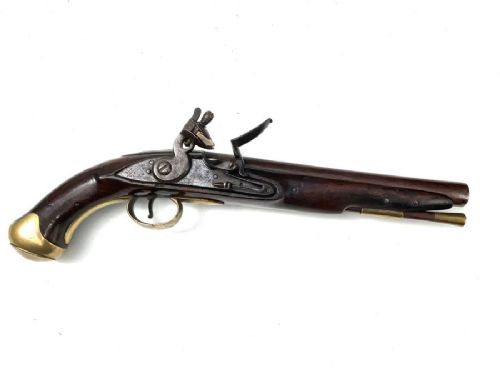
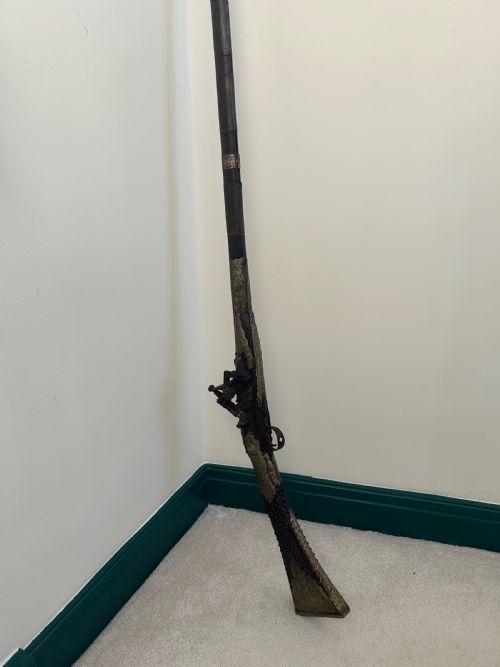


Antique Flintlock Firearm
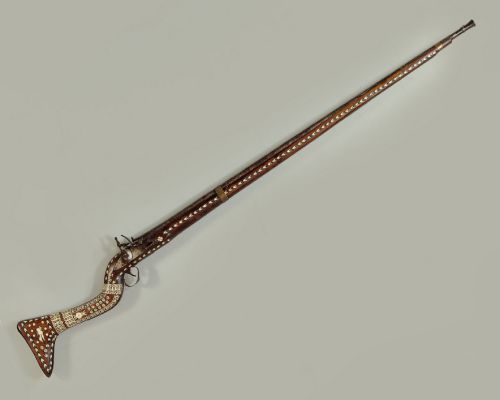
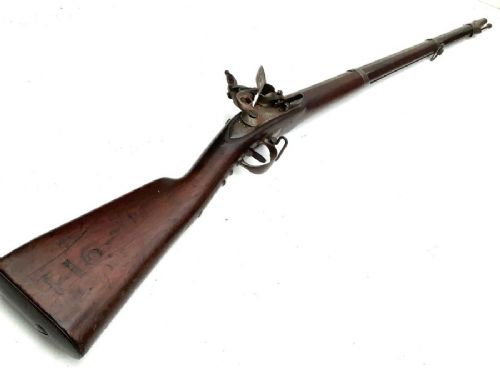
These antique flintlock firearm pieces are historical 18th-century weapons shaped by Georgian and Napoleonic craftsmanship that collectors acquire for their martial heritage.
Antique Flintlock Firearm
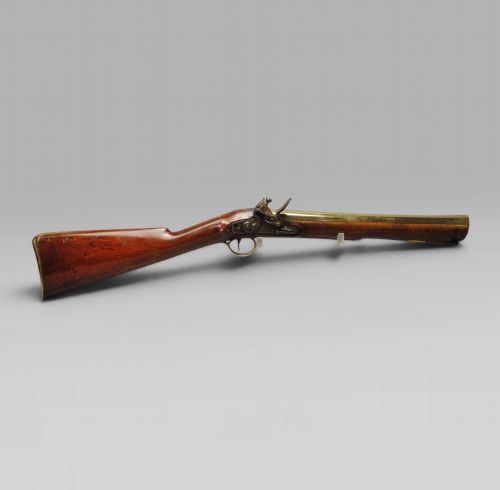
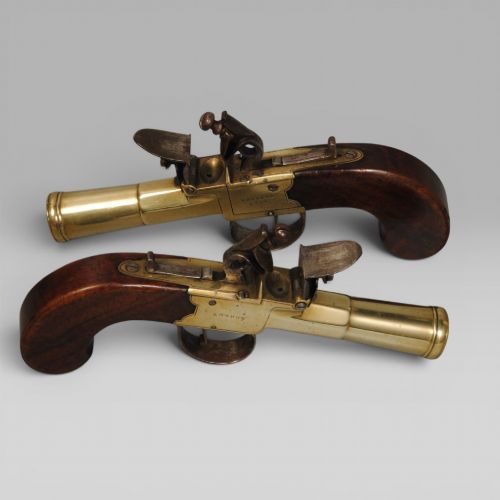
When you search for an antique flintlock firearm, you encounter 18th-century militaria spanning pocket pistols, holster pistols, duelling pistols, and blunderbusses. The selection includes British, Italian, and Russian origins reflecting military and civilian defence needs.
The most common forms on this page are holster pistols and officer variants bearing London proof marks. Makers such as T. Potts, Twigg, Barber of Newark, and Dutton represent the British output of the period.
Pieces from this era encompass Georgian and Napoleonic styles, demonstrating the transition from civilian pocket arms to military cavalry equipment.
Materials and construction
These pieces utilise forged steel and iron for barrels and lock mechanisms, paired with stocks shaped from walnut and other hardwoods. Brass furniture and mounts frequently accent the timber frames.
Makers integrated cannon barrels and flintlock mechanisms requiring precise metalworking and timber shaping. Proof marks stamped into the metal verify the testing of these functional components during the 18th century.
Antique Flintlock Firearm Retail Price Guide 2026
Typical asking prices for flintlock firearm among the pieces listed under this phrase on Sellingantiques today, from the lower quarter to the upper quarter. They describe what is for sale here now, not the wider market.
Listings feature 18th-century materials including walnut, steel, brass, iron, and hardwood.
Judging quality in flintlock pieces
Superior examples display crisp engraving upon brass furniture and signed lock plates bearing recognised maker names. The integration between the hardwood stock and the metal components reveals the skill of the original gunmaker.
The presence of official proof marks and distinct regional styles, such as Brescia-type decoration or cannon barrels, elevates the historical interest of a piece above standard military issue.
T. Potts·Twigg·Barber of Newark·Dutton
The Antique Flintlock Firearm Glossary
- Flintlock
- A lock mechanism that uses a flint held in a cock to strike a steel frizzen, creating sparks to ignite the priming powder. This system dominated firearms technology for centuries.
- Blunderbuss
- A muzzle-loading firearm with a flared barrel designed to scatter shot at close range. It appears frequently in maritime and coach defence contexts.
- Holster pistol
- A large firearm carried in a saddle holster by cavalry officers and travellers during the Georgian era. These weapons formed standard personal defence equipment.
- Proof mark
- An official stamp applied to a barrel after successful testing for strength under pressure. British pieces commonly show London inspection marks.
- Frizzen
- The vertical steel plate struck by the flint to create sparks in a flintlock mechanism. It sits directly above the priming pan.
Antique Flintlock Firearm: Frequently Asked Questions
How do I identify a Georgian flintlock pistol?
Georgian pistols typically exhibit walnut stocks, brass furniture, and flintlock mechanisms dating from the 18th century. Maker signatures and London proof marks often appear on the barrel or lock plate.
Stylistic cues such as cannon barrels and Brescia-type decorations further help place a piece within its historical period.
What is the difference between an officer pistol and a pocket pistol?
Officer pistols are larger holster weapons designed for military or travel defence, featuring longer barrels and robust walnut stocks. Pocket pistols are smaller, more compact arms intended for discreet personal carry.
Both utilise the same flintlock ignition system but serve different functional roles in the 18th century.
How should I display an antique flintlock firearm?
Display these pieces in a stable environment away from high humidity and direct sunlight to protect the hardwood stock and steel components. Secure wall mounts or enclosed cabinets suit militaria collections best.
Ensure the lock mechanism remains uncocked to reduce tension on internal springs.
Did all flintlock pistols have brass barrels?
No, brass-barrelled pieces represent a specific variant, such as the blunderbuss seen in this period. Steel and iron barrels are far more common across standard holster and duelling pistols.
Brass was chosen for certain designs to resist corrosion from sea air or powder residue.