



Antique Military Handgun
An antique military handgun carries the weight of state service, bringing tactile history and mechanical ingenuity straight to your collection.
Antique Military Handgun
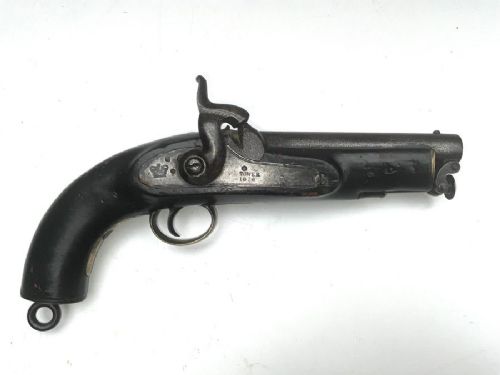
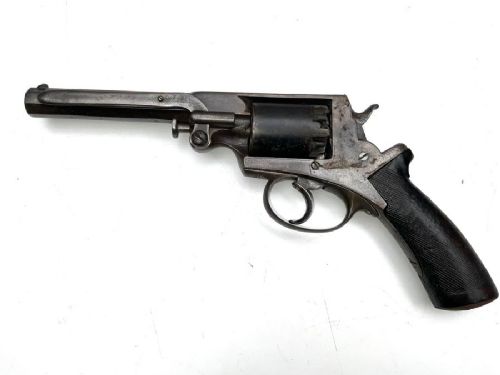
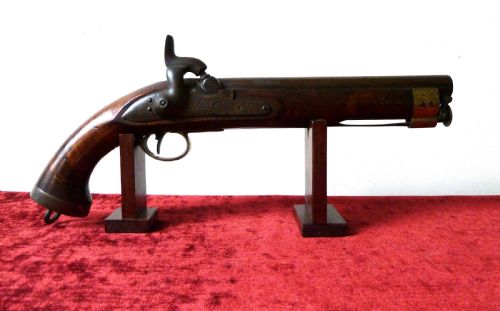
An antique military handgun represents service arms issued to troops, officers and naval forces across the eighteenth and nineteenth centuries. These pieces span standard-issue government contracts and officer sidearms from periods including the Georgian era, the Napoleonic era and the American Civil War.
The selections available here lean heavily into flintlock and percussion systems. Buyers frequently encounter holster pistols, belt pistols, dragoon pistols and revolvers stamped by official arsenals like Tower or produced by notable makers.
Originating from British, French, Belgian, Italian and American arsenals, these sidearms reflect the standard military configurations of their respective decades. They bridge the gap between early flintlock mechanisms and mid-nineteenth-century percussion and pinfire revolvers.
Materials and construction
Makers constructed these sidearms utilising robust combinations of steel, iron and brass for barrels, locks and mounts. Stocks are typically fashioned from walnut or denser hardwoods designed to withstand active field service.
Metal components often feature official proofs, stamps or engraving denoting military acceptance or maker identity. Flintlock and percussion ignition systems rely on precise spring tension and fitted mechanisms housed within metallic lock plates.
Antique Military Handgun Retail Price Guide 2026
Typical asking prices for military handgun among the pieces listed under this phrase on Sellingantiques today, from the lower quarter to the upper quarter. They describe what is for sale here now, not the wider market.
Some nineteenth-century travellers found unexpected utility in folding bayonets attached directly beneath double-barrelled pinfire pocket pistols.
Quality factors in military sidearms
The distinction between average and superior pieces lies in the crispness of the lock action and the preservation of original markings. Clear stamps from the Tower Armoury or recognised makers alongside matching serial numbers elevate an arm above standard examples.
Proportion and material integrity also dictate standard. Surviving brass furniture, untouched wooden stocks with correct patination and original barrels without excessive pitting demonstrate proper historical survival.
T. Potts·Henry Nock·Wilson·A.W Spires
The Antique Military Handgun Glossary
- Flintlock
- An ignition mechanism utilising a piece of flint held in a cock to strike a steel frizzen, creating sparks to ignite the powder charge. This system dominated military sidearms through the eighteenth and early nineteenth centuries.
- Percussion
- A later ignition system employing a small priming cap struck by a hammer to ignite the powder inside the barrel. It replaced the flintlock for greater reliability in damp weather.
- Holster Pistol
- A large sidearm designed to be carried in a saddle holster rather than on a belt. These arms typically feature longer barrels and larger bores for mounted service.
- Brass Furniture
- The decorative and protective brass mounts fitted to a pistol, including trigger guards, butt caps and side plates. This material resisted corrosion in marine and tropical environments.
- Proof Mark
- An official stamp applied to a firearm barrel or action following testing to verify it could withstand standard explosive charges. These marks assist in dating and locating the origin of the piece.
Antique Military Handgun: Frequently Asked Questions
How do I know if my military pistol is genuine?
Examine the metal components for period proof marks, arsenal stamps and maker signatures that align with known historical records.
Genuine pieces display authentic wear patterns on the wooden stock and metal surfaces consistent with age and service use.
What is the difference between flintlock and percussion pistols?
Flintlock pistols use a piece of flint striking steel to create a spark, whereas percussion pistols rely on a percussion cap struck by a hammer.
Percussion systems generally offer improved reliability and superseded flintlocks by the mid-nineteenth century.
Were these pistols used in combat?
Many examples bear the marks of government contracts, military issue numbers and arsenal stamps indicating service use during major conflicts.
Sidearms like dragoon and holster pistols served cavalry and naval forces in active theatres from the Napoleonic wars to the American Civil War.
How should I care for an antique firearm?
Keep the piece in a stable environment away from excess humidity and extreme temperature fluctuations to protect the wooden stock and metal surfaces.
Apply a light museum-grade wax or oil to metal components to prevent corrosion while preserving the historical patina.