




Antique Horse Pistol
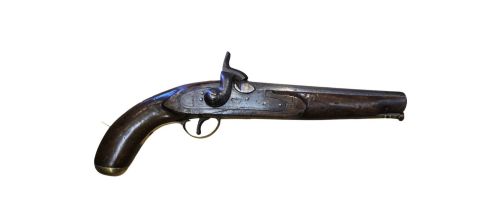
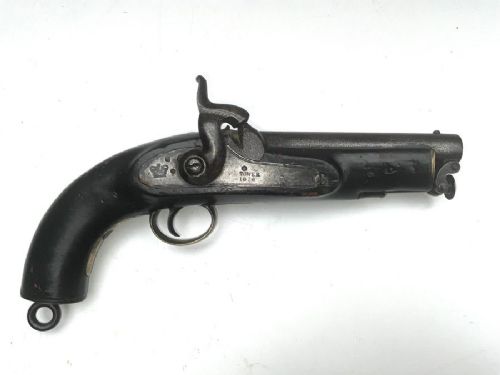
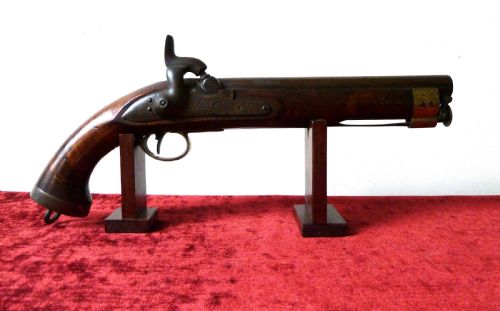
An antique horse pistol is a heavy firearm carried on horseback, prized by collectors for its robust mechanism and historical connection to cavalry service.

Antique Horse Pistol
When you search for an antique horse pistol, you encounter a range of heavy firearms designed primarily for mounted troops and officers during the seventeenth, eighteenth, and nineteenth centuries.
The selections available here span British military issues stamped by Tower, London makers such as T. Potts and Dutton, and international examples including Ottoman snaphaunce pieces and Italian holster arms.
These pieces encompass both flintlock and percussion ignition systems, reflecting the technological shifts in military and civilian armaments across Georgian and Victorian periods.
Materials and construction
Construction relies heavily on durable hardwoods like walnut for the stocks, paired with robust forged iron and steel for barrels and lock mechanisms.
Brass furniture, silver wire inlay, and cast decorative mounts frequently embellish both military service arms and civilian officers' pieces.
Locksmiths and gunsmiths utilised precision filing and hand-engraving to finish the brass mounts, side plates, and butt caps.
Antique Horse Pistol Retail Price Guide 2026
Typical asking prices for horse pistol among the pieces listed under this phrase on Sellingantiques today, from the lower quarter to the upper quarter. They describe what is for sale here now, not the wider market.
Listings feature steel, brass, iron, and walnut materials across Georgian, Victorian, and Ottoman styles.
Judgements of quality
Quality rests upon the crispness of the maker's signature on the lock plate, the depth and clarity of government or London proof marks, and the preservation of the original stock contours.
Superior examples retain untouched metal patination, legible stamps from notable gunmakers or the Tower Armoury, and intricate metal or wire embellishments that remain crisp rather than worn flat.
T. Potts·Thomas Anelli·R. Willoughby·Dutton·Wilson
The Antique Horse Pistol Glossary
- Flintlock
- An ignition mechanism utilising a piece of flint held in a cock to strike a steel frizzen, creating sparks to ignite the priming powder. This system dominated military and civilian firearms throughout the eighteenth century.
- Percussion
- A later ignition system using a hammer to strike a percussion cap placed on a nipple, transferring flame to the powder charge. It largely superseded the flintlock during the nineteenth century.
- Snaphaunce
- An early type of flintlock mechanism featuring a manually operated pan cover and steel, common in Balkan and Ottoman arms. These precede the standardised flintlock system.
- Holster Pistol
- A large handgun designed to be carried in a saddle holster by cavalrymen or travellers. They typically feature long barrels and heavy grips.
- Bore
- The interior diameter of the firearm barrel, often measured in gauge or bore size in these listings. It determines the size of the projectile the piece fires.
Antique Horse Pistol: Frequently Asked Questions
What is an antique horse pistol?
An antique horse pistol is a large, muzzle-loading firearm specifically built to be carried on horseback by cavalry troopers, officers, and travellers.
These weapons date primarily from the seventeenth to the nineteenth centuries and feature robust stocks designed to withstand mounted use.
How do I tell flintlock from percussion?
A flintlock uses a piece of flint held in a cock to strike a steel frizzen and generate sparks for ignition.
A percussion pistol uses a hammer that falls onto a small percussion cap, which is a simpler and more weather-resistant system introduced later.
Were these pistols used by the military?
Many examples on this page are military service arms produced for the Board of Ordnance and stamped by the Tower Armoury.
Others are private purchase pieces belonging to officers or gentlemen, alongside foreign military arms from Ottoman and European sources.
How should I display or store one?
Store your pistol in a stable environment away from dampness and direct sunlight to protect the walnut stock and steel components.
Display cases or wall mounts should support the weight securely without putting pressure on the lock mechanism or barrel pins.