



Brass Mounted Pistol
A brass mounted pistol brings tactile weight and historical gravity to any room, offering a direct link to the military campaigns and personal defence of past centuries.
Brass Mounted Pistol
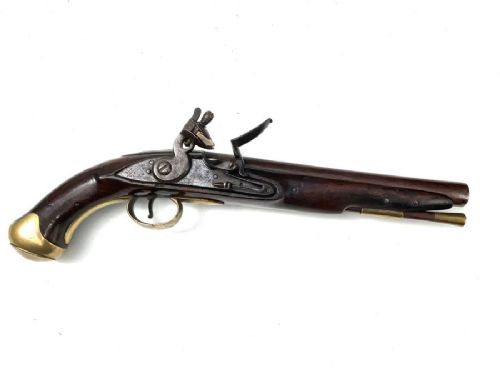
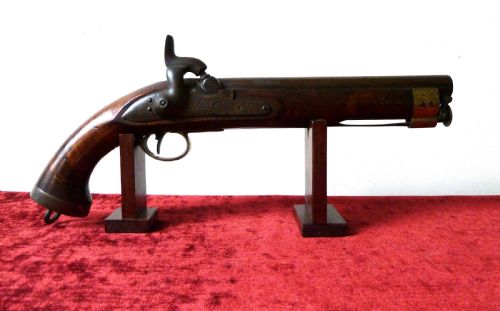
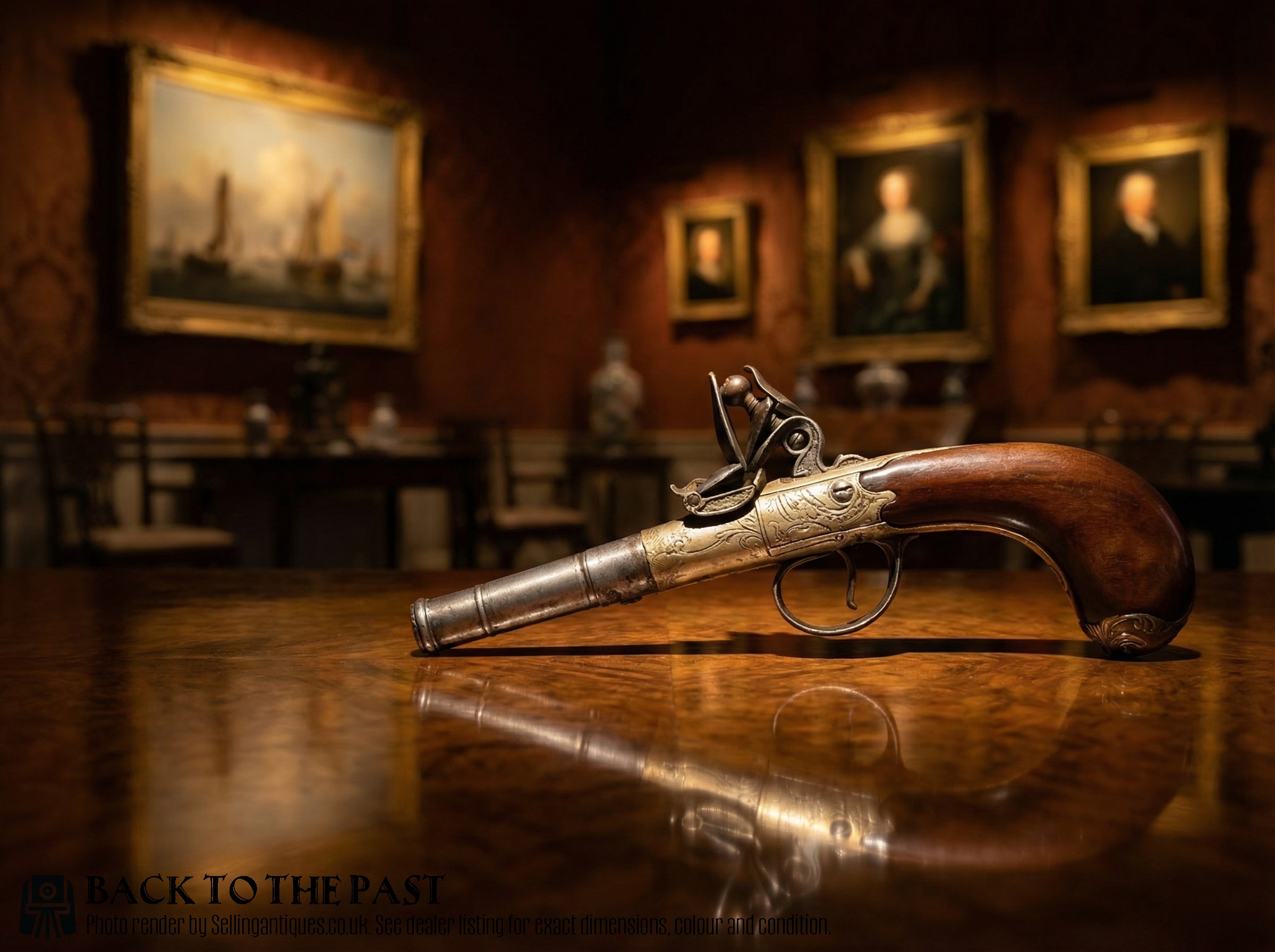
A brass mounted pistol encompasses flintlock and percussion firearms designed for military service, civilian self-defence, or regional combat across the seventeenth, eighteenth, and nineteenth centuries. When searching this phrase, buyers encounter everything from British regulation military pieces bearing Crown markings to elaborate Balkan and Ottoman holster pistols.
The most common examples on this page date from the Georgian and Napoleonic eras, reflecting standard military issue alongside domestic pocket and duelling arms. These pieces range from rugged Tower Armoury dragoon sidearms to ornate export weapons featuring intricate metalwork and regional stocks.
Origins vary widely across British, European, and Mediterranean workshops, demonstrating how local tactical requirements dictated the scale and mountings of each firearm. Whether an East India Company contract piece or a provincial English turn-off design, the brass mounting serves as both structural reinforcement and decorative punctuation.

Materials and construction
Makers built the core structure using forged steel barrels and iron lock mechanisms designed to withstand the violent mechanics of black powder ignition. Stocks were shaped from dense timbers such as walnut, selected for its ability to absorb recoil without splitting.
Cast brass furniture - including trigger guards, side plates, pommel caps, and ramrod pipes - provided durable reinforcement to high-stress areas while resisting corrosion in damp field conditions. Finer variants incorporated decorative silver inlay and mother-of-pearl panels to satisfy civilian and export markets.
Brass Mounted Pistol Retail Price Guide 2026
Typical asking prices for brass mounted pistol among the pieces listed under this phrase on Sellingantiques today, from the lower quarter to the upper quarter. They describe what is for sale here now, not the wider market.
The inventory records regional diversity, moving from British Tower service pieces to Ottoman Balkan holster pistols with intricate metalwork.
Assessing quality and execution
Superior execution reveals itself in the crispness of the lock mechanism engraving and the precise fitting of the brass mounts flush against the wooden stock. Maker-signed pieces from established London workshops demonstrate greater refinement in filing, tuning, and balance than unsigned provincial or mass-contract arms.
The preservation of original surface patination across the brass and iron, combined with unblemished wood grain around the side nails, separates museum-grade specimens from heavily altered or restored examples.

Harrison of London·Henry Nock·Thomas Henshaw·Thomas Anelli·I Parr·A.W Spires
The Brass Mounted Pistol Glossary
- Flintlock
- An ignition mechanism that uses a piece of flint held in a cock to strike a steel frizzen, creating sparks to ignite priming powder. This system dominated military and civilian arms from the seventeenth into the nineteenth century.
- Percussion cap
- A later ignition system utilising a small metal percussion cap placed on a nipple, struck by the hammer to detonate fulminate of mercury. It largely superseded the flintlock method after the 1820s.
- Turn-off barrel
- A barrel designed to unscrew from the breech, allowing the shooter to load the ball and powder directly from the front of the chamber for tighter sealing. This design is particularly associated with Queen Anne pocket pistols.
- Snaphaunce
- An early type of flintlock mechanism featuring a manually operated steel frizzen and a separate pan cover. It represents an important transitional step in firearms evolution during the seventeenth century.
- Miquelet
- A distinct form of flintlock mechanism common in Spain, Italy, and the Ottoman Empire, characterised by an external mainspring and a combined steel and pan cover. It remained popular in regional warfare and trade well into the nineteenth century.
Brass Mounted Pistol: Frequently Asked Questions
Were these pistols used in actual combat?
Many examples on this market served active military roles, ranging from British light cavalry engagements during the Napoleonic era to East India Company campaigns. Regulation service arms saw hard frontline wear, while civilian and officer pieces often experienced more protected storage.
Proof marks and government acceptance stamps frequently verify a piece's transition from ordnance stores into active operational service.
What is the difference between flintlock and percussion?
Flintlock pistols rely on a striking piece of flint creating sparks to ignite loose gunpowder in an external pan. They represent the standard technology of the eighteenth and early nineteenth centuries.
Percussion pistols utilise an enclosed cap struck by a hammer, offering faster ignition times and superior reliability in wet weather from the 1820s onward.
How can I tell a military issue from a civilian piece?
Military pieces usually feature broad arrow ownership marks, Crown inspection stamps, and standardised barrel lengths suitable for infantry or cavalry doctrine. They prioritize rugged utility over ornamental engraving.
Civilian or officer arms often display finer checkering, precious metal inlay, private maker signatures, and lighter overall dimensions tailored for discreet personal carry.