



Steel Barrel Pistol
A steel barrel pistol is a historic firearm driven by flintlock or percussion ignition, prized by collectors for its robust mechanical ingenuity.

Steel Barrel Pistol
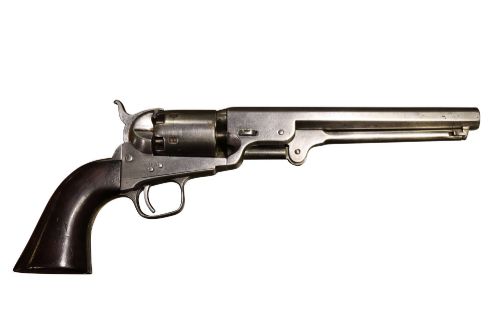
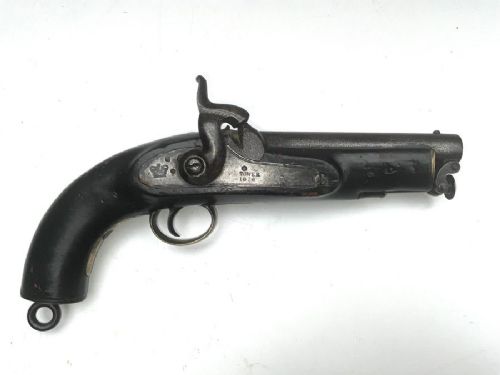
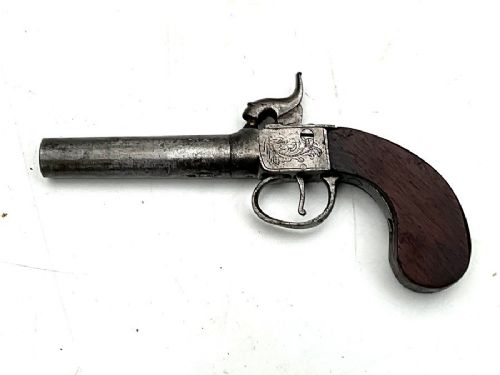
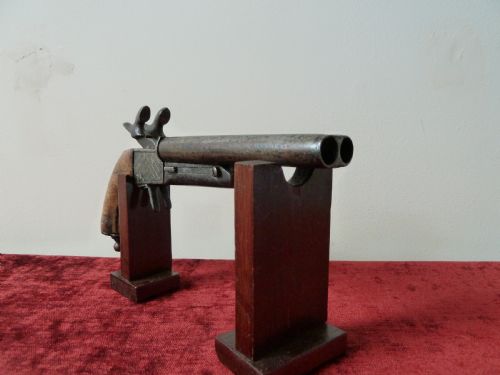
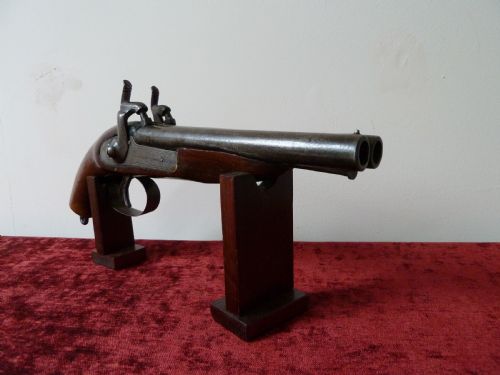
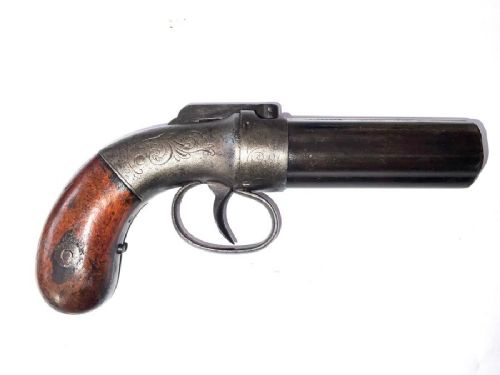
A steel barrel pistol combines utilitarian military hardware and civilian self-defence implements originating from the eighteenth and nineteenth centuries. These arms encompass diverse configurations such as heavy cavalry holster weapons, naval sea service pieces, and compact greatcoat patterns.
The dominant examples on this page are flintlock mechanisms alongside later smooth-bore percussion designs. Military iterations include marked government contracts from the Tower Armoury and London proofed cavalry carbines, while civilian or regional pieces reach from London makers to the Ottoman Adriatic.
Forms range from long dragoon arms down to Queen Anne-type pocket pieces and regional Balkan holster variations. Each specimen reflects the specific tactical requirements of its period, whether mounted warfare or personal protection.
How they were made
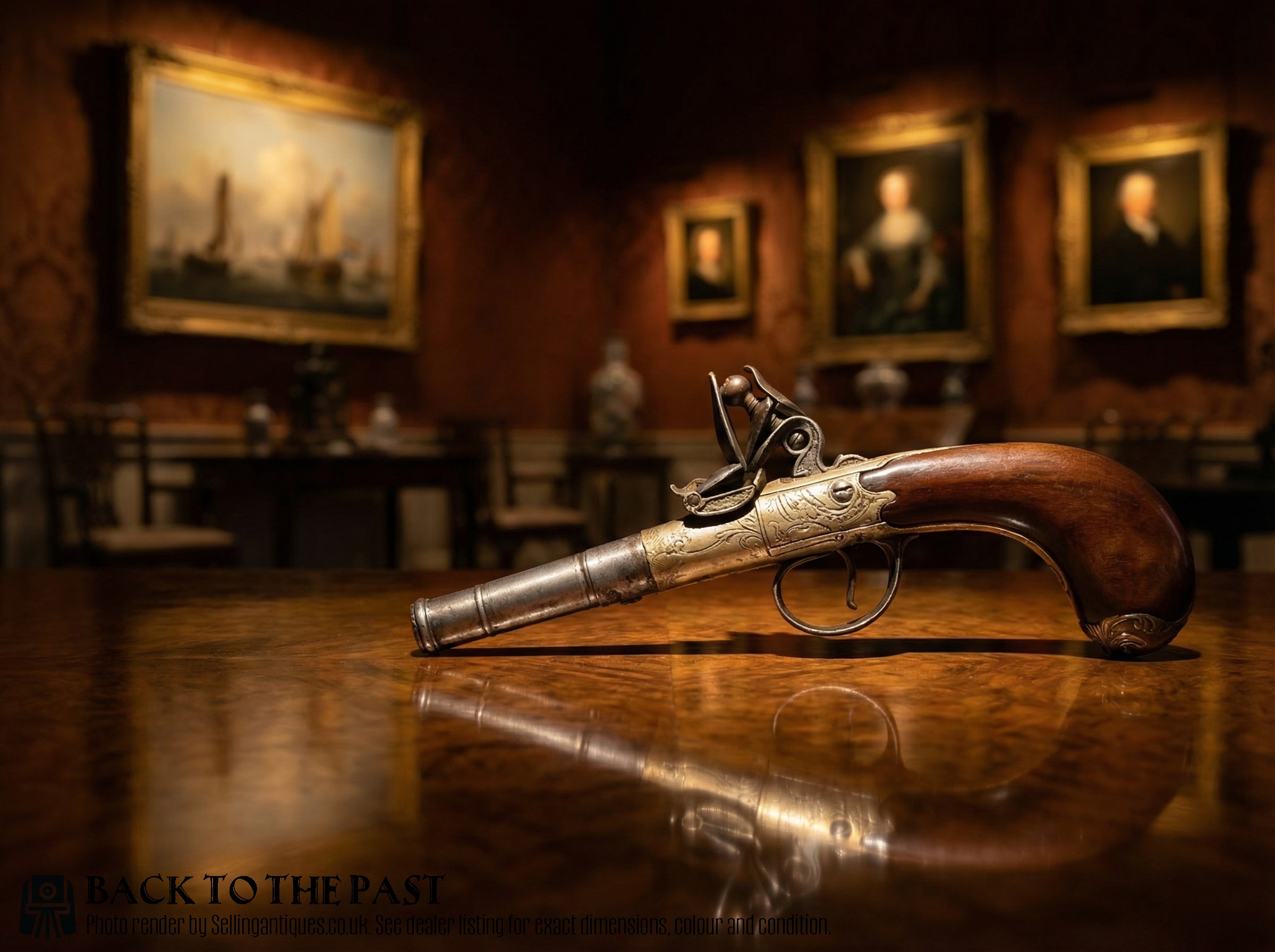
Construction relies upon forged steel barrels paired with stocks shaped from dense timber such as walnut or general hardwoods. Metal components receive secure mounting via brass furniture, iron sideplates, and pinned trigger guards.
Ignition relies on traditional flintlock mechanisms featuring a flint-striking frizzen or later percussion cap ignition systems. Barrels are forged and bored, often bearing official proof marks from the London proof house or military ordnance stamps.
Steel Barrel Pistol Retail Price Guide 2026
Typical asking prices for steel barrel pistol among the pieces listed under this phrase on Sellingantiques today, from the lower quarter to the upper quarter. They describe what is for sale here now, not the wider market.
Listings feature eighteenth-century and nineteenth-century eras, incorporating materials such as steel, walnut, brass, iron, and wood.
What varies in quality
Distinction across the range rests on the crispness of maker signatures, original metal patination, and the integrity of the wooden stock. Untouched mechanical states and legible barrel stamps elevate an example well beyond heavily modified or pitted counterparts.
Refinement of engraving on lockplates and brass mounts distinguishes bespoke London civilian pieces from standard government contract issues. Retaining original finishes and unpolished surfaces marks the summit of historical preservation.

T. Potts·I Parr·A.W Spires
The Steel Barrel Pistol Glossary
- Flintlock
- A firearm ignition mechanism that uses a piece of flint held in a cock to strike a steel frizzen, creating sparks to ignite the priming powder. This system dominated military and civilian arms throughout the eighteenth and early nineteenth centuries.
- Percussion
- An ignition system utilising a small percussion cap placed on a nipple, struck by the hammer to detonate fulminate of mercury. This method superseded the flintlock during the nineteenth century.
- Proof mark
- An official stamp applied to a barrel after passing rigorous pressure testing to ensure safety. London proofs indicate examination by the Worshipful Company of Gunmakers.
- Smooth-bore
- A barrel lacking interior rifling grooves, designed to fire lead balls. Most military and civilian pistols of the Georgian and Regency eras utilised this bore type.
- Holster pistol
- A large firearm designed to be carried in a saddle holster by cavalry troopers or travellers. These weapons required substantial steel barrels and robust stocks for mounted use.
Steel Barrel Pistol: Frequently Asked Questions
What is a steel barrel pistol?
A steel barrel pistol is a historic muzzle-loading firearm utilising flintlock or percussion mechanisms, produced primarily during the eighteenth and nineteenth centuries for military service or personal defence.
These pieces feature forged metal barrels and wooden stocks, reflecting the technological standards of Georgian and Regency armorers.
How do I date a flintlock pistol?
Dating relies upon stylistic markers, lockplate engraving, barrel proof marks, and specific military patterns recorded in ordnance history. Maker signatures and regional design traits also narrow down the year of production.
Government contracts often carry inspection stamps that assist in placing the arm within a precise decade.
What is the difference between flintlock and percussion?
Flintlock arms use a piece of flint striking a steel frizzen to generate sparks for ignition, whereas percussion pistols employ an external percussion cap struck directly by a hammer.
Percussion represents a later technological development introduced in the nineteenth century for greater reliability in damp weather.
Were these pistols used in the military?
Many examples served official military functions, including dragoon service, cavalry regiments, and naval sea service operations. These arms were built to strict government specifications.
Other pieces served civilian roles, such as pocket protection for travellers carrying greatcoat pistols.