



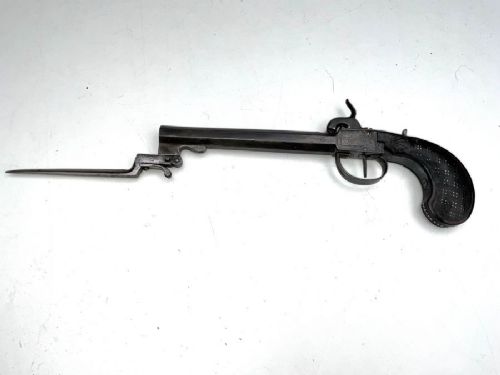


Antique Military Firearm
An antique military firearm carries the tangible weight of empire, conflict, and technological evolution from the Georgian and Victorian eras.

Antique Military Firearm
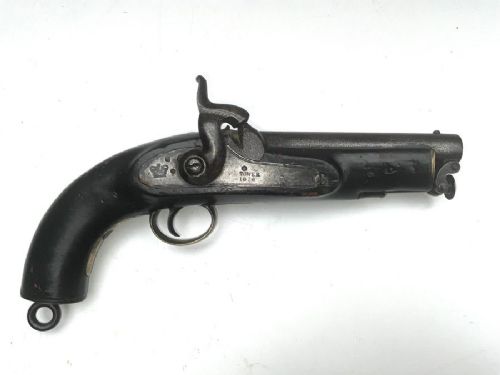
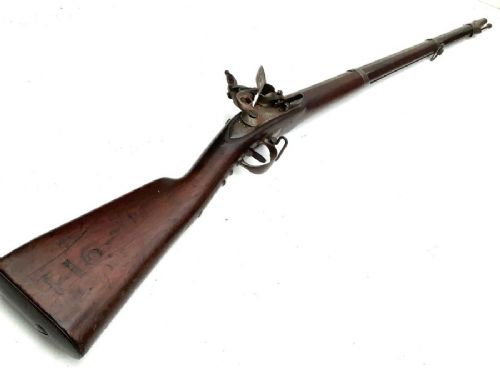
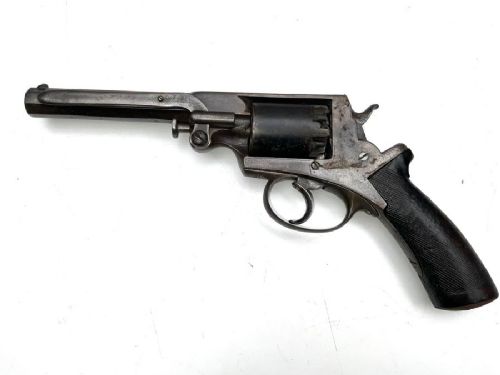
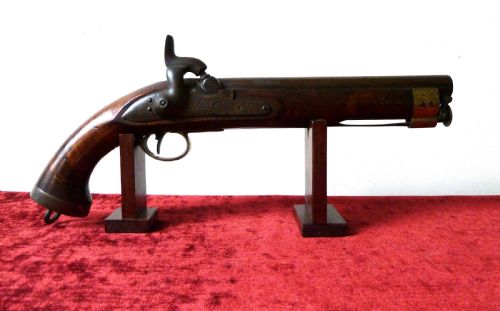
An antique military firearm encompasses service arms issued to regular forces during the Georgian and Victorian eras. These pieces range from flintlock muskets and dragoon pistols to percussion arms and breech-loading rifles.
The most common examples encountered on this page are British military pieces bearing Tower markings or associated with major conflicts such as the Napoleonic Wars. They span muzzleloaders and later mechanisms like the Martini Henry.
Collectors seek out these items for their historical association with regiments, campaigns, and state arsenals. Each piece reflects the standardisation and ordnance requirements of historical British military forces.

How they were made
Makers utilised sturdy hardwoods such as walnut for stocks, paired with durable iron and steel barrels and locks. Brass furniture frequently appeared on pistols and muskets for trigger guards, butt caps, and ramrod pipes.
Lock mechanisms relied on precise metalwork, whether flintlock or percussion, alongside leather components for accessories or slings. Blacksmiths and armorers formed barrels and metal parts through forging and machining in major centres like Birmingham and London.
Antique Military Firearm Retail Price Guide 2026
Typical asking prices for military firearm among the pieces listed under this phrase on Sellingantiques today, from the lower quarter to the upper quarter. They describe what is for sale here now, not the wider market.
Listings on this site feature arms from the Georgian and Victorian periods, incorporating walnut, steel, brass, iron, and leather.
What varies in quality
Quality depends upon the clarity of ordnance stamps, crown ciphers, and maker signatures on locks and barrels. Clear markings from the Tower Armoury or specific contractors elevate a piece's historical integrity.
The degree of original finish, crispness of stock carving, and mechanical soundness of the action determine the overall standard. Examples retaining legible regimental inscriptions and uncompromised woodwork sit higher in the range.
Sargant and Son·Tower Armoury·Brasher
The Antique Military Firearm Glossary
- Flintlock
- An ignition mechanism utilising a piece of flint held in a cock to strike a steel frizzen and create sparks. This system dominated military arms from the late seventeenth century through the early nineteenth century.
- Percussion
- A later ignition system using a small percussion cap struck by the hammer to detonate the powder charge. It largely replaced the flintlock system during the nineteenth century.
- Musket
- A smoothbore long gun designed for infantry use before the general adoption of rifled barrels. Muskets formed the primary firepower of armies during the Georgian period.
- Dragoon
- A mounted soldier armed with a shorter firearm known as a dragoon pistol or carbine. These pieces were built for portability and mounted combat.
- Tower Armoury
- The central British government facility responsible for the storage, testing, and issuing of state weapons. Many military arms bear its distinctive inspection stamps and crown markings.
Antique Military Firearm: Frequently Asked Questions
What periods do these firearms cover?
The pieces span the Georgian era, the late eighteenth century, the Napoleonic period, and the 1870s.
This covers both the flintlock era and the transition to later cartridge-firing rifles.
Which materials appear most often?
Constructors utilised walnut for stocks alongside steel, iron, and brass for barrels and furniture.
Leather also appears in the materials recorded across these service arms.
What is a Tower flintlock pistol?
It is a service pistol produced for or inspected by the British Board of Ordnance at the Tower of London.
These arms typically feature crown stamps and government acceptance marks.
How do flintlock and percussion differ?
Flintlock arms use a piece of flint striking steel to ignite priming powder, while percussion arms use a chemical cap struck by a hammer.
Percussion mechanisms offered greater reliability in damp weather conditions.