


Nineteenth Century Firearm
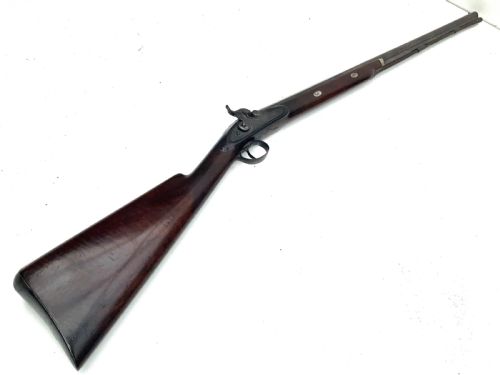
A nineteenth century firearm is a practical mechanism of steel and walnut, built for service and carried across continents.

Nineteenth Century Firearm
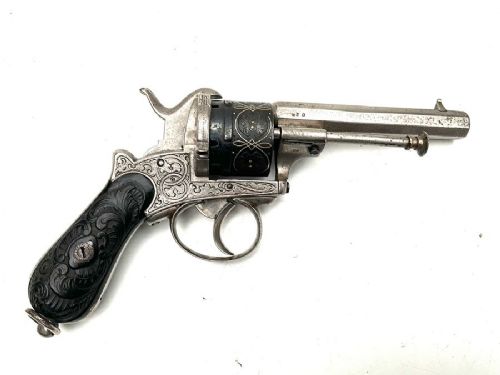
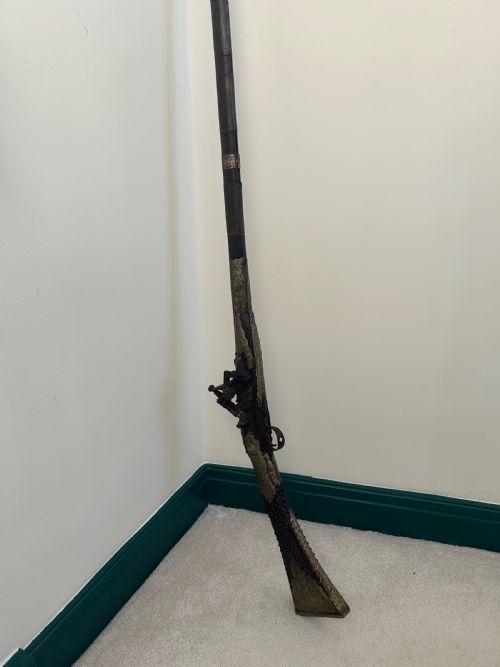
A nineteenth century firearm encompasses everything from flintlock service pistols and percussion target pieces to matchlock muskets and pinfire revolvers. The selection on this page leans heavily toward British and European military arms, along with regional forms like Indo-Persian matchlocks and Ottoman belt pistols.
Buyers encounter smoothbore fowlers, multi-shot pepperboxes, and pocket revolvers dating from the Regency era through to the Victorian period. These pieces reflect rapid shifts in military and civilian technology across the 1800s.
What varies in quality
The distinction between standard military issue and bespoke work defines the range, as seen in plain service pistols versus cased target pieces by known London makers. Precision in the lock mechanism and crispness of barrel proof marks separate working field pieces from fine exhibition arms.
The integrity of the timber stock and the subtlety of regional ornamentation, such as intricate metal engraving or specialised inlay, mark the difference between basic utility pieces and high-grade collector examples.
Nineteenth Century Firearm Retail Price Guide 2026
Typical asking prices for nineteenth century firearm among the pieces listed under this phrase on Sellingantiques today, from the lower quarter to the upper quarter. They describe what is for sale here now, not the wider market.
Design styles represented include Regency, Victorian Militaria, Afghan Tribal, and the Mughal Empire.
JOHN MANTON & SON·J.R. Cooper·Joseph Egg·Colt
The Nineteenth Century Firearm Glossary
- Percussion cap
- An ignition system introduced in the nineteenth century that used a small metal cap struck by the hammer to ignite the powder charge.
- Flintlock
- An older ignition mechanism utilising a piece of flint held in a cock to strike a steel frizzen and produce sparks.
- Pinfire
- An early self-contained metallic cartridge containing the priming composition inside the base, activated by a protruding pin.
- Smoothbore
- A barrel without rifling grooves inside, used for firing round balls or shot.
- Matchlock
- An early firearm mechanism where a burning slow match is lowered into a flash pan to ignite the powder.
Nineteenth Century Firearm: Frequently Asked Questions
How do I identify a percussion firearm?
Look for a small nipple on the breech where a copper percussion cap was placed to receive the blow of the hammer.
This system largely superseded the flintlock during the nineteenth century due to its reliability in wet weather.
Were these guns used in combat?
Many pieces on this page, such as Tower service pistols and East India Company muskets, saw active military deployment across various campaigns.
Others, like target pistols and pocket revolvers, served civilian self-defence and sporting purposes.
How should I clean the wood stock?
Apply microcrystalline wax or boiled linseed oil sparingly with a soft cloth to nourish dry hardwood without altering the surface finish.
Avoid modern chemical detergents that strip original patination from walnut or mahogany.
What is the difference between a pinfire and a percussion gun?
Percussion arms require separate loading of powder, ball, and a cap, whereas pinfire arms use an integrated cartridge with a built-in striking pin.
Pinfire technology represents a later development in self-contained metallic ammunition during the 1850s and 1860s.