

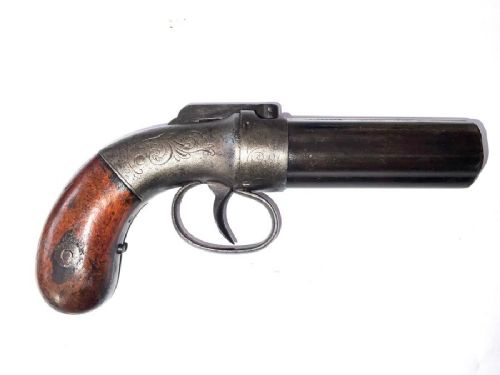


Engraved Pocket Pistol
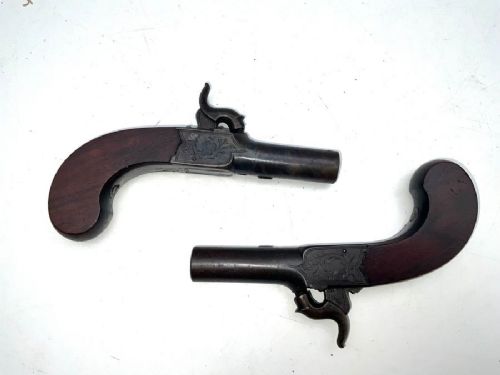
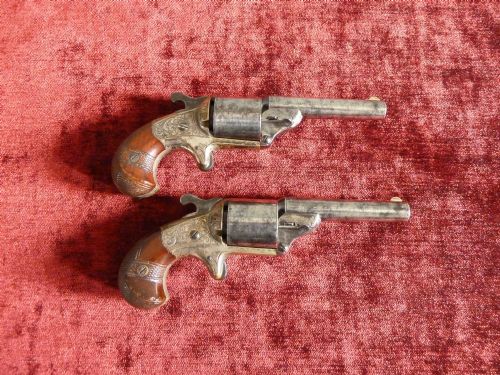
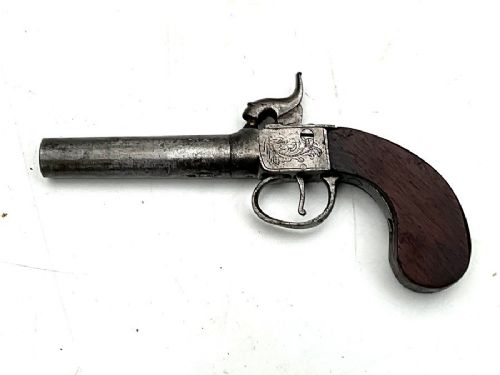
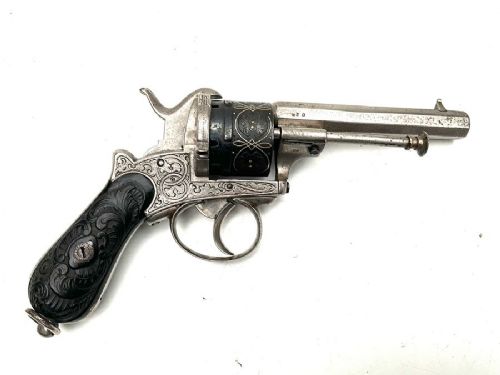
These engraved pocket pistol examples are small historical firearms designed for personal defence, prized by collectors for their intricate metalwork and compact mechanical ingenuity.
Engraved Pocket Pistol
When you search for an engraved pocket pistol, you are looking at compact personal defence firearms spanning from the eighteenth century into the Victorian era. These small arms were designed to be easily concealed in a pocket, muff, or greatcoat, offering protection to travellers and citizens alike during turbulent times.
The pieces appearing on this page most frequently represent the percussion and flintlock systems of the eighteenth and nineteenth centuries. You will encounter forms ranging from early Queen Anne turn-off barrel designs to later box-lock percussion pistols and multi-shot revolvers.
Makers from London, Birmingham, and continental workshops produced these arms, incorporating decorative engraving upon the steel actions and brass frames. Regional variations include Scottish silver-mounted pocket pistols and French travel pieces featuring delicate wire inlay.
How they were made
Gunmakers built these firearms using forged steel for barrels and actions, paired with stocks shaped from dense timbers such as walnut, ebony, and general hardwoods. Metal components received hand-chased or engraved decoration, transforming functional weapons into objects of personal adornment.
Techniques varied from early flintlock mechanisms, where a flint struck a steel frizzen to ignite gunpowder, to the later percussion cap system and pinfire ignition. Master smiths integrated folding bayonets, turn-off barrels, and revolving clusters to maximise firepower within a pocket-sized format.
Materials utilised in these historical pieces include steel, iron, brass, silver, walnut, ebony, and general hardwoods paired with decorative wire inlay.
What varies in quality
Quality rests upon the crispness of the hand-engraving across the metal surfaces and the overall harmony of the design. Superior examples display deep, sharp scrollwork executed by specialist gun engravers rather than hurried, shallow machine marks.
The execution of the woodwork and the precise fitting of metal to stock dictate the tier of a piece. High-grade makers ensured seamless transitions between silver wire inlays, brass frames, and polished walnut grips.
Allen & Thurber·Auguste Francotte·George Sherwood·I Parr·J Robinson·Meyer & Mortimer·Thomas Henshaw·Twigg
The Engraved Pocket Pistol Glossary
- Flintlock
- An ignition mechanism utilising a flint held in a cock to strike a steel frizzen, creating sparks to ignite the priming powder. This system dominated firearm production throughout the eighteenth century before the invention of percussion caps.
- Box-lock
- A firearm action where the breech and lockplate are forged as a single unified housing, typically placing the hammer centrally. This design improved mechanical strength and allowed for compact pocket pistol configurations.
- Turn-off barrel
- A barrel that unscrews from the breech to allow front-loading of powder and ball. This traditional construction method was common on Queen Anne style pocket pistols.
- Percussion
- An ignition system relying on a small metal cap struck by a hammer to detonate fulminate of mercury, sending flame through a nipple to fire the charge. It replaced the flintlock mechanism during the nineteenth century.
- Bore
- The interior diameter of the barrel, historically measured in gauge sizes or fractions of an inch. It determined the projectile weight a pistol could discharge.
Engraved Pocket Pistol: Frequently Asked Questions
How do I date an antique pocket pistol?
Dating relies upon identifying the ignition mechanism, proof marks, and stylistic indicators such as grip shape and trigger guard design. Flintlock mechanisms generally point to the eighteenth and early nineteenth centuries, while percussion systems and pinfire designs indicate the mid-nineteenth century.
Maker signatures and London or Birmingham proof marks stamped onto the metal components provide further chronological anchors. Comparing the engraving style to documented regional gunsmith operating periods helps narrow the manufacturing window.
Were these pistols used for military or civilian defence?
These pocket arms served primarily as civilian personal defence tools for merchants, travellers, and gentlemen navigating unsafe roads. Their compact dimensions allowed concealment in pockets, muffs, or greatcoats against highwaymen and urban criminals.
Some variations, such as sea service pocket and belt pistols, saw official military use by naval officers and auxiliary personnel requiring a potent backup arm.
How should I display or store these firearms?
Store antique pistols in a stable environment away from high humidity and direct sunlight to preserve the wooden stocks and prevent metal oxidation. Acid-free display cases or lined wooden presentation boxes offer protection while keeping the pieces visible.
Applying a light, museum-grade microcrystalline wax to the metal surfaces helps guard against moisture without harming the original finish or softening the engraved details.